DOI: https://doi.org/10.56669/LABJ6728
ABSTRACT
Cruciferous vegetable production in Malaysia (cabbage, mustard, Chinese kale, Chinese cabbage) faces significant yield constraints from lepidopteran pest complexes (Plutella xylostella, Spodoptera litura, Hellula undalis, Crocidolomia pavonana). While synthetic insecticides remain predominant, their associated ecotoxicological risks, environmental persistence, resistance development, and non-target toxicity necessitate sustainable alternatives. This study reports the development and validation of a UV-stabilized, multi-species Formulated Multi-Nucleopolyhedrovirus (FMNPV) biopesticide. The powder formulation FMNPV, developed through strategic baculovirus consortium integration and adjuvant optimization, underwent rigorous evaluation through standardized laboratory bioassays, controlled greenhouse concentration-response trials, and multi-location field efficacy studies. Empirical results showed a 86.2% reduction in pest population in organic cabbage systems, significantly higher conservation of beneficial arthropods (p < 0.05) compared to chemical controls, and optimal efficacy at a 5-day application interval, aligned with larval generation turnover dynamics. Yield maximization (20,499 ± 1,024 g) was achieved under integrated FMNPV-emamectin benzoate treatments, confirming the synergistic efficacy of pest management. The FMNPV technology (protected under MARDI Trade Secret MDI/SI/SI02/PA/073/5/45) has been transferred to Asian Perlite Industries Sdn. Bhd. for commercial scaling. These results showed FMNPV as a highly efficacious, ecologically compatible core component for Integrated Pest Management (IPM) in Malaysian brassica production systems.
Keywords: Baculovirus, nucleopolyhedrovirus (NPV), Lepidopteran pests, crucifer, FMNPV, integrated pest management.
INTRODUCTION
Cruciferous vegetables such as mustard (Brassica juncea), cabbage (B. oleracea var. capitata), Chinese kale (B. oleracea var. alboglabra), and Chinese cabbage (B. rapa subsp. pekinensis) are among Malaysia’s primary horticultural crops, occupying 17,089 hectares with an annual production of 310,723 metric tons (DOA, 2024). The rise in per capita cabbage consumption to 5.4 kg per year reflects growing demand for these nutrient-rich crops, which are valued for their dietary fiber, vitamins (C, K, E), and bioactive phytochemicals, including glucosinolates and sulforaphane, known for their anti-inflammatory, chemopreventive, and endocrinological benefits (Connolly et al., 2021).
However, these crops face significant yield threats from lepidopteran pests, which cause losses ranging from 26% to 100% through foliar herbivory across various crop phenological stages. Key pest species include the diamondback moth (Plutella xylostella), taro armyworm (Spodoptera litura), cabbage webworm (Hellula undalis), and large cabbage-heart caterpillar (Crocidolomia pavonana) (Hamid et al., 2022; Mayanglambam et al., 2021).
Traditionally, farmers have relied on synthetic insecticides to manage these pests. However, this approach has raised substantial ecotoxicological concerns, including environmental persistence, phytotoxic residues, resistance development, and unintended toxicity to non-target organisms, such as pollinators and beneficial arthropods. Consequently, there is an urgent need to adopt integrated pest management (IPM) strategies that incorporate eco-compatible alternatives. Biopesticides derived from botanical, microbial, or mineral sources offer a promising solution, providing reduced non-target effects, minimal pre-harvest intervals, negligible residue profiles, and delayed resistance development (Wilson et al., 2013). Notable commercial examples include azadirachtin-based products (Neemix®), allicin formulations, and Bacillus thuringiensis biopesticides (Monterey B.T.®).
In Malaysia, regulatory frameworks such as the Pesticides Act 1974 and the GP7/2016 Guidelines have accelerated the introduction of biopesticides to the market (Sivapragasam, 2022). Despite this progress, currently available microbial options remain restricted mainly to B. thuringiensis and entomopathogenic fungi such as Metarhizium spp. and Beauveria spp. Although viral biopesticides, including nucleopolyhedroviruses and granuloviruses, have demonstrated excellent efficacy against Lepidoptera, they remain commercially unavailable in Malaysia, in contrast to their successful registration and adoption in Thailand, Vietnam, India, and China (Harish et al., 2021).
RESEARCH AND DEVELOPMENT OF VIRUS-BASED BIOPESTICIDE (FORMULATED MULTI-NUCLEOPOLYHEDROVIRUS, FMNPV)
The Malaysian Agricultural Research and Development Institute (MARDI) previously developed a monovalent nucleopolyhedrovirus (NPV) formulation for the control of Spodoptera litura in crucifer crops. However, recognizing the limitations of host specificity within the diverse lepidopteran pest complexes affecting these crops, a systematic R&D initiative conducted between 2012 and 2020 aimed to engineer a broad-spectrum baculovirus-based biopesticide. This effort led to the development of a UV-stabilized, powdered Formulated Multi-Nucleopolyhedrovirus (FMNPV) designed to target the major lepidopteran pests of brassicas through synergistic multivalent action.
The production pipeline for this FMNPV involved five integrated phases: (1) mass rearing of the target lepidopteran species; (2) in vivo amplification of baculoviruses; (3) viral purification through differential centrifugation; (4) formulation development incorporating adjuvant matrices, including UV protectants, adhesives, and dispersants; and (5) optimization of drying processes by comparing spray-drying versus freeze-drying methodologies.
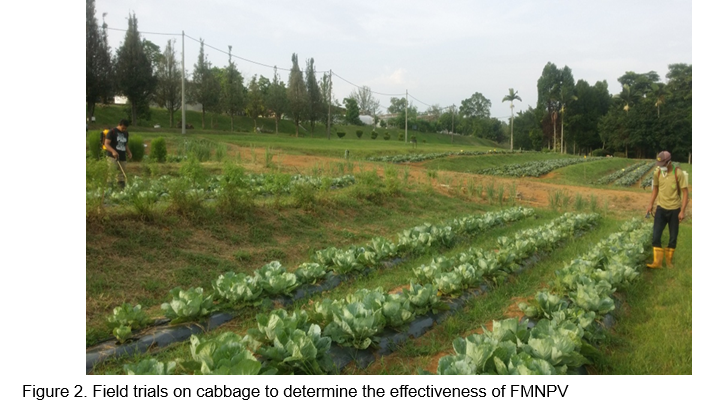
Initial research focused on identifying compatible baculovirus isolates for co-formulation, followed by screening for adjuvants to improve photostability. The selected multi-viral consortium was stabilized through spray-drying (inlet temperature: 160 °C; outlet temperature: 65 °C), and its pathogenicity was confirmed through bioassays against second-instar larvae of Plutella xylostella, Spodoptera litura, Hellula undalis, and Crocidolomia pavonana (Figure 1). Building on these results, subsequent translational research included greenhouse trials to determine the optimal application concentration (LC₉₀), alongside field evaluations to assess performance under real agronomic conditions and to optimize spray frequency (Figure 2).

Field efficacy evaluations of the Formulated Multi-Nucleopolyhedrovirus (FMNPV) were conducted across distinct agronomic systems to assess its performance comprehensively. In organic lowland cabbage production, FMNPV (T1; 1 g/L ≡ 1.0 × 10⁸ occlusion bodies (OB)/mL) was benchmarked against Crude MNPV (T2; 10 mL/L) and a commercial Bacillus thuringiensis formulation, Bio-Larva® (T3; applied at the label-specified concentration). Concurrently, conventional farming systems compared FMNPV (T1; 10 g/L ≡ 1.0 × 10⁹ OB/mL) with emamectin benzoate (T3; at the manufacturer-recommended rate) and a combined FMNPV–emamectin benzoate tank mix (T2). All treatments adhered to commercial standards for Bio-Larva® (0.5% v/v) and emamectin benzoate (150 mL/ha), with spray volumes standardized to 500 L/ha using CP3 hollow-cone nozzles operated at 300 kPa. Additionally, application frequency optimization trials tested FMNPV at 5-, 7-, 10-, and 14-day intervals. Consistent efficacy metrics, including larval mortality (%), pest population reduction (%), beneficial arthropod abundance (individuals/plot), marketable head count (mean ± SE), and total yield (g ± SE), were systematically quantified to establish standardized parameters for cross-treatment analysis.
EFFECTIVENESS OF THE FORMULATED MULTI-NUCLEOPOLYHEDROVIRUS (FMNPV) IN CONTROLLING MAJOR LEPIDOPTERAN PESTS OF CABBAGE
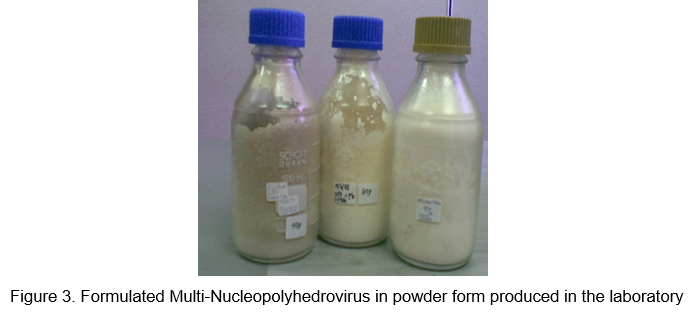
The effectiveness of FMNPV in controlling major lepidopteran pests of cabbage was further validated through laboratory and field investigations. Developed and characterized at the Biological Control Laboratory, Agrobiodiversity and Environment Research Centre, MARDI, in 2013 (Figure 3), the FMNPV formulation was rigorously tested through serial bioassays, which established LC₅₀ values ranging from 6 × 10⁵ to 1 × 10⁷ OB/mL for Plutella xylostella, Spodoptera litura, Hellula undalis, and Crocidolomia pavonana. These results showed that subsequent field validations, which determined the optimal spray concentration to be 10 g/L (equivalent to 1.0 × 10⁸ OB/mL), achieved maximum larval mortality while minimizing ecotoxicological impacts.
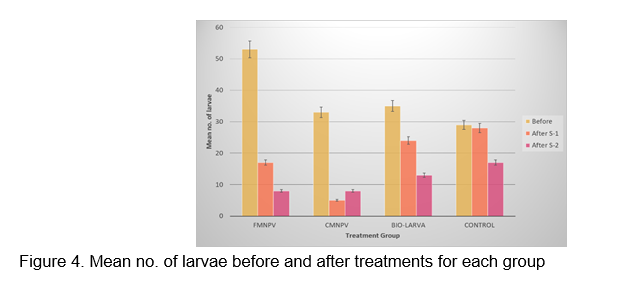
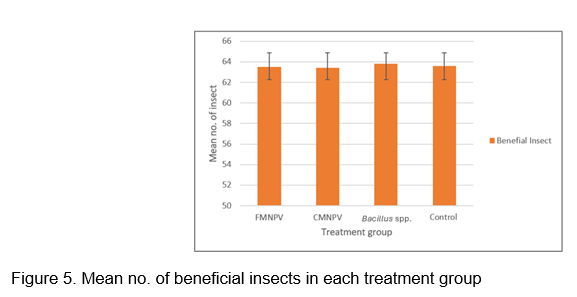
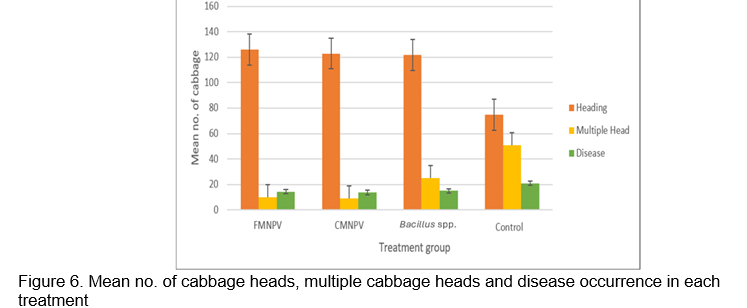
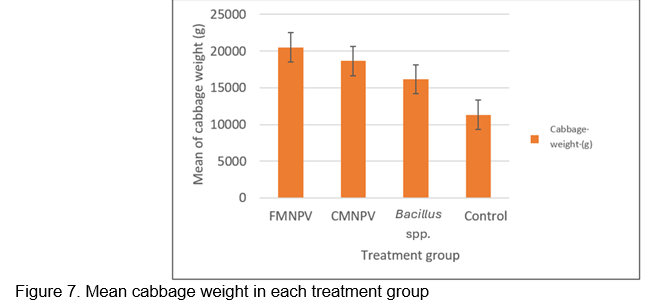
Field trials conducted on lowland organic cabbage farms demonstrated significant differences in the efficacy of various biocontrol agents against lepidopteran pests. Among the treatments, FMNPV (T1) achieved the most significant pest population reduction at 86.2%, followed by Crude MNPV (T2) with 76.0%, Bio-Larva® at 63.0%, and the untreated control at 41.0% (Figure 4). Importantly, the abundance of beneficial arthropods including parasitoids, pollinators, and predators remained statistically comparable across all treatments, indicating minimal disruption to non-target organisms (Figure 5). In terms of yield performance, FMNPV produced the highest mean marketable head count (126 ± 6.3) and total yield (20,499 ± 1,024 g), significantly surpassing Crude MNPV (123 ± 6.2 heads; 18,645 ± 932 g), Bio-Larva® (122 ± 6.1 heads; 16,153 ± 808 g), and the control (75 ± 6.2 heads; 11,300 ± 565 g) (Figures 6 & 7). These results collectively highlight the superior efficacy and yield benefits of FMNPV while maintaining compatibility with beneficial arthropod communities.
Field trials conducted on conventional cabbage farms demonstrated significant suppression of major lepidopteran pests across treatments. FMNPV (T1) achieved a 65.5% reduction in pest populations, while the FMNPV - emamectin benzoate combination (T2) achieved 77.0%, and sole emamectin benzoate (T3) achieved 74.5% (Figure 8). Notably, alternating applications of FMNPV and emamectin benzoate resulted in significantly greater pest suppression (p < 0.05) compared to individual applications, highlighting the potential of integrated rotation strategies for resistance management.
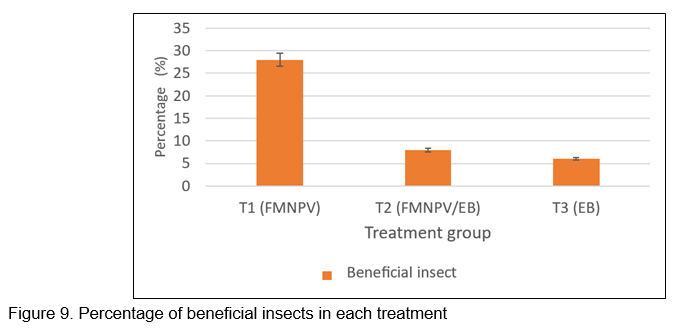
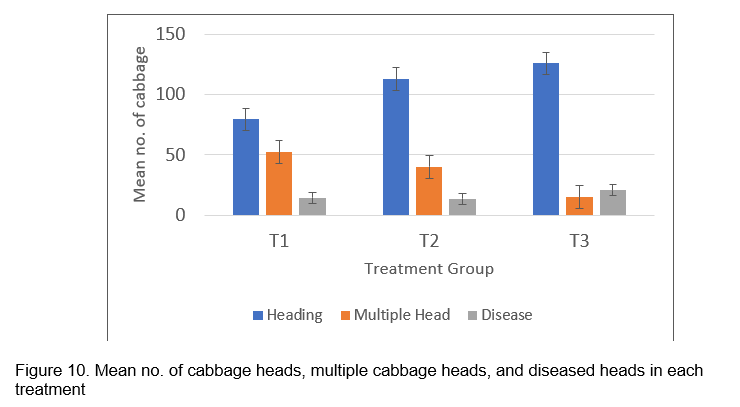
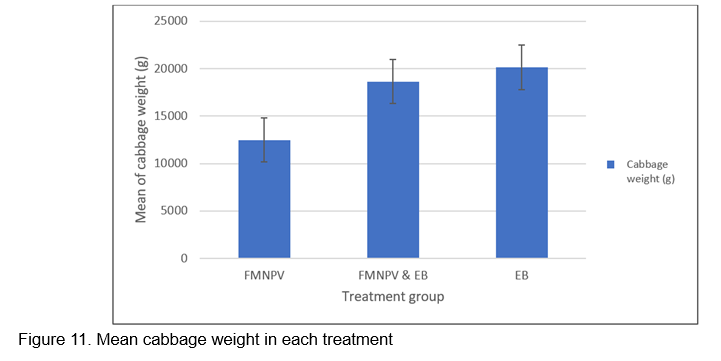
In parallel, FMNPV-treated plots (T1) conserved beneficial insect populations most effectively, showing a 28.7% higher relative abundance compared to T2 and T3 treatments (Figure 9), thereby supporting ecological sustainability goals. However, despite its superior conservation of beneficial insects, T1 produced lower agronomic outputs than chemical-based treatments. Specifically, T3 recorded the highest marketable head count (126 ± 6.3) and total yield (20,153 ± 1,006 g), followed by T2 with 113 ± 5.7 heads (18,645 ± 932 g), while T1 yielded 79 heads (12,499 ± 624 g) (Figures 10 & 11). These findings underscore a trade-off between maximizing yield and conserving beneficial arthropod communities, informing future integrated pest management strategies.
Application frequency significantly influenced the efficacy of the FMNPV against lepidopteran pests infesting cabbage crops. Optimal pest population suppression was achieved with a 5-day spray interval, demonstrating superior field performance (Hamid et al., 2022).

TURNING INTELLECTUAL ASSETS INTO COMMERCIAL VALUE
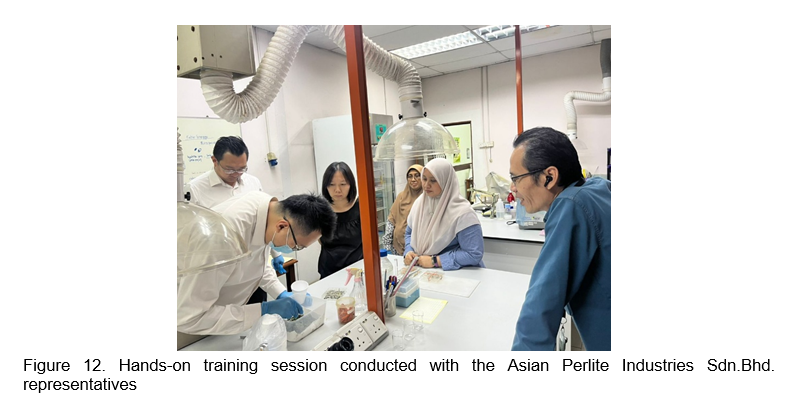
This FMNPV formulation is protected under intellectual property rights through trade secret registration (MDI/SI/SI02/PA/073/5/45) at MARDI. Commercialization rights have been licensed to Asian Perlite Industries Sdn. Bhd., with active technology transfer to the licensee currently in progress (Figure 12). Production scaling and market deployment strategies are being implemented to facilitate the global distribution of the product. Asian Perlite Industries Sdn. Bhd., established in 1997 and headquartered in Cameron Highlands, Pahang, specializes in supply chain integration for horticultural and agricultural inputs, with a primary focus on mineral perlite, agrochemicals, fertilizers, and agricultural equipment.
CONCLUSIONS
The commercialization of FMNPV marks a significant advancement in sustainable agriculture, offering targeted biological control of key lepidopteran pests in brassica crops. As a host-specific bioinsecticide, FMNPV delivers critical environmental and socioeconomic benefits compared to conventional synthetic alternatives.
From an environmental safety perspective, FMNPV exhibits narrow-spectrum activity, selectively infecting target pests through ingestion of occlusion bodies while preserving beneficial non-target arthropods (e.g., Apidae, Coccinellidae), avifauna, and soil microbiomes. Following application, rapid photodegradation through UV-mediated virion inactivation prevents terrestrial or aquatic ecotoxicological risks, thus minimizing anthropogenic contamination of hydrologic systems.
In terms of human health benefits, FMNPV shows no mammalian toxicity (LD₅₀ > 5,000 mg/kg), allowing reduced personal protective equipment (PPE) requirements during field application. This, in turn, mitigates the risk of heat stress and dermal exposure incidents for applicators. Additionally, minimal pre-harvest intervals (PHI ≤24 hours) support the safe consumption of fresh produce and align with modern food safety standards.
FMNPV also supports resistance management and economic value by leveraging the evolutionary co-adaptation between baculoviruses and their hosts, which delays resistance development compared to synthetic insecticides. This reduces chemical input dependency and lowers production costs by an estimated 18–23%. Furthermore, FMNPV-compliant crops are eligible for sustainability certifications (e.g., ISO 14001), enabling producers to access market premiums of 12–15%.
Integration into broader Integrated Pest Management (IPM) frameworks further amplifies FMNPV’s value. Its use promotes the conservation of pollination services (Hymenoptera retention > 80%), enables early intervention through high larval instar (L1–L3) susceptibility, reduces pesticide resistance selection pressure, and supports the achievement of the UN Sustainable Development Goals (SDGs 2, 3, 12, and 15).
Although FMNPV has a latency period of 72–96 hours before inducing larval mortality, its proactive application at economic thresholds— combined with optimized delivery protocols such as UV-shielded emulsifiers —maintains effective field performance. These features align with global agroecological intensification strategies, positioning FMNPV as a cornerstone technology for regenerative and climate-resilient agriculture.
REFERENCES
Connolly, E. L., Sim, M., Travica, N., Marx, W., Beasy, G., Lynch, G. S., Bondonno, C. P., Lewis, J. R., Hodgson, J. M., & Blekkenhorst, L. C. (2021). Glucosinolates From Cruciferous Vegetables and Their Potential Role in Chronic Disease: Investigating the Preclinical and Clinical Evidence, Frontiers in Pharmacology, 12, 767975. https://doi.org/10.3389/fphar.2021.767975
Department of Agriculture (2024). Booklet Statistik Tanaman (Sub-Sektor Tanaman Makanan) 2024: 138.
Hamid, S.N.A.A., Mirad, R., Jamin, N.J., Razali, R.H.M., Zulkifli, N.I.M., Shohaimi, M.S.M., Suherman, F.H.S., Saranum, M.M., & Bahari, U.K. (2022). Kekerapan semburan biopestisid multi-virus dalam mengawal perosak Lepidoptera utama tanaman kubis. Buletin Teknologi MARDI 33: 39–50.
Mayanglambam, S., Singh, K.D., & Rajashekar, Y. (2021). Current biological approaches for management of crucifer pests. Scientific Reports 11(1): 1–9.
Ndolo, D., Njuguna, E., Adetunji, C.O., Harbor, C., Rowe, A., Breeyen, A. Den, Sangeetha, J., Singh, G., Szewczyk, B., Anjorin, T.S., Thangadurai, D., & Hospet, R. (2019). Research and development of biopesticides: Challenges and prospects. Outlooks on Pest Management 30(6): 267–276.
Harish, S.M., Murugan, M., Kannan, S., Parthasarathy, S. R., & Prabhukarthikeyan, K.E. (2021). Entomopathogenic Viruses. In. Omkar (ed.) (pnyt.). Microbial Approaches for Insect Pest Management, p. 1–48. Springer Nature Singapore Pte Ltd.
Sivapragasam, A. (2022). Biopesticides and Their Regulation in Malaysia, https://apbb.fftc.org.tw/article/308.
Wilson, K., Benton, T.G., Graham, R.I., & Grzywacz, D. (2013). Pest control: Biopesticides potential. Science 342(6160): 799.

Nucleopolyhedrovirus-Based Biopesticides for Sustainable Management of Lepidopteran Pests in Cruciferous Cropping Systems
DOI: https://doi.org/10.56669/LABJ6728
ABSTRACT
Cruciferous vegetable production in Malaysia (cabbage, mustard, Chinese kale, Chinese cabbage) faces significant yield constraints from lepidopteran pest complexes (Plutella xylostella, Spodoptera litura, Hellula undalis, Crocidolomia pavonana). While synthetic insecticides remain predominant, their associated ecotoxicological risks, environmental persistence, resistance development, and non-target toxicity necessitate sustainable alternatives. This study reports the development and validation of a UV-stabilized, multi-species Formulated Multi-Nucleopolyhedrovirus (FMNPV) biopesticide. The powder formulation FMNPV, developed through strategic baculovirus consortium integration and adjuvant optimization, underwent rigorous evaluation through standardized laboratory bioassays, controlled greenhouse concentration-response trials, and multi-location field efficacy studies. Empirical results showed a 86.2% reduction in pest population in organic cabbage systems, significantly higher conservation of beneficial arthropods (p < 0.05) compared to chemical controls, and optimal efficacy at a 5-day application interval, aligned with larval generation turnover dynamics. Yield maximization (20,499 ± 1,024 g) was achieved under integrated FMNPV-emamectin benzoate treatments, confirming the synergistic efficacy of pest management. The FMNPV technology (protected under MARDI Trade Secret MDI/SI/SI02/PA/073/5/45) has been transferred to Asian Perlite Industries Sdn. Bhd. for commercial scaling. These results showed FMNPV as a highly efficacious, ecologically compatible core component for Integrated Pest Management (IPM) in Malaysian brassica production systems.
Keywords: Baculovirus, nucleopolyhedrovirus (NPV), Lepidopteran pests, crucifer, FMNPV, integrated pest management.
INTRODUCTION
Cruciferous vegetables such as mustard (Brassica juncea), cabbage (B. oleracea var. capitata), Chinese kale (B. oleracea var. alboglabra), and Chinese cabbage (B. rapa subsp. pekinensis) are among Malaysia’s primary horticultural crops, occupying 17,089 hectares with an annual production of 310,723 metric tons (DOA, 2024). The rise in per capita cabbage consumption to 5.4 kg per year reflects growing demand for these nutrient-rich crops, which are valued for their dietary fiber, vitamins (C, K, E), and bioactive phytochemicals, including glucosinolates and sulforaphane, known for their anti-inflammatory, chemopreventive, and endocrinological benefits (Connolly et al., 2021).
However, these crops face significant yield threats from lepidopteran pests, which cause losses ranging from 26% to 100% through foliar herbivory across various crop phenological stages. Key pest species include the diamondback moth (Plutella xylostella), taro armyworm (Spodoptera litura), cabbage webworm (Hellula undalis), and large cabbage-heart caterpillar (Crocidolomia pavonana) (Hamid et al., 2022; Mayanglambam et al., 2021).
Traditionally, farmers have relied on synthetic insecticides to manage these pests. However, this approach has raised substantial ecotoxicological concerns, including environmental persistence, phytotoxic residues, resistance development, and unintended toxicity to non-target organisms, such as pollinators and beneficial arthropods. Consequently, there is an urgent need to adopt integrated pest management (IPM) strategies that incorporate eco-compatible alternatives. Biopesticides derived from botanical, microbial, or mineral sources offer a promising solution, providing reduced non-target effects, minimal pre-harvest intervals, negligible residue profiles, and delayed resistance development (Wilson et al., 2013). Notable commercial examples include azadirachtin-based products (Neemix®), allicin formulations, and Bacillus thuringiensis biopesticides (Monterey B.T.®).
In Malaysia, regulatory frameworks such as the Pesticides Act 1974 and the GP7/2016 Guidelines have accelerated the introduction of biopesticides to the market (Sivapragasam, 2022). Despite this progress, currently available microbial options remain restricted mainly to B. thuringiensis and entomopathogenic fungi such as Metarhizium spp. and Beauveria spp. Although viral biopesticides, including nucleopolyhedroviruses and granuloviruses, have demonstrated excellent efficacy against Lepidoptera, they remain commercially unavailable in Malaysia, in contrast to their successful registration and adoption in Thailand, Vietnam, India, and China (Harish et al., 2021).
RESEARCH AND DEVELOPMENT OF VIRUS-BASED BIOPESTICIDE (FORMULATED MULTI-NUCLEOPOLYHEDROVIRUS, FMNPV)
The Malaysian Agricultural Research and Development Institute (MARDI) previously developed a monovalent nucleopolyhedrovirus (NPV) formulation for the control of Spodoptera litura in crucifer crops. However, recognizing the limitations of host specificity within the diverse lepidopteran pest complexes affecting these crops, a systematic R&D initiative conducted between 2012 and 2020 aimed to engineer a broad-spectrum baculovirus-based biopesticide. This effort led to the development of a UV-stabilized, powdered Formulated Multi-Nucleopolyhedrovirus (FMNPV) designed to target the major lepidopteran pests of brassicas through synergistic multivalent action.
The production pipeline for this FMNPV involved five integrated phases: (1) mass rearing of the target lepidopteran species; (2) in vivo amplification of baculoviruses; (3) viral purification through differential centrifugation; (4) formulation development incorporating adjuvant matrices, including UV protectants, adhesives, and dispersants; and (5) optimization of drying processes by comparing spray-drying versus freeze-drying methodologies.
Initial research focused on identifying compatible baculovirus isolates for co-formulation, followed by screening for adjuvants to improve photostability. The selected multi-viral consortium was stabilized through spray-drying (inlet temperature: 160 °C; outlet temperature: 65 °C), and its pathogenicity was confirmed through bioassays against second-instar larvae of Plutella xylostella, Spodoptera litura, Hellula undalis, and Crocidolomia pavonana (Figure 1). Building on these results, subsequent translational research included greenhouse trials to determine the optimal application concentration (LC₉₀), alongside field evaluations to assess performance under real agronomic conditions and to optimize spray frequency (Figure 2).
Field efficacy evaluations of the Formulated Multi-Nucleopolyhedrovirus (FMNPV) were conducted across distinct agronomic systems to assess its performance comprehensively. In organic lowland cabbage production, FMNPV (T1; 1 g/L ≡ 1.0 × 10⁸ occlusion bodies (OB)/mL) was benchmarked against Crude MNPV (T2; 10 mL/L) and a commercial Bacillus thuringiensis formulation, Bio-Larva® (T3; applied at the label-specified concentration). Concurrently, conventional farming systems compared FMNPV (T1; 10 g/L ≡ 1.0 × 10⁹ OB/mL) with emamectin benzoate (T3; at the manufacturer-recommended rate) and a combined FMNPV–emamectin benzoate tank mix (T2). All treatments adhered to commercial standards for Bio-Larva® (0.5% v/v) and emamectin benzoate (150 mL/ha), with spray volumes standardized to 500 L/ha using CP3 hollow-cone nozzles operated at 300 kPa. Additionally, application frequency optimization trials tested FMNPV at 5-, 7-, 10-, and 14-day intervals. Consistent efficacy metrics, including larval mortality (%), pest population reduction (%), beneficial arthropod abundance (individuals/plot), marketable head count (mean ± SE), and total yield (g ± SE), were systematically quantified to establish standardized parameters for cross-treatment analysis.
EFFECTIVENESS OF THE FORMULATED MULTI-NUCLEOPOLYHEDROVIRUS (FMNPV) IN CONTROLLING MAJOR LEPIDOPTERAN PESTS OF CABBAGE
The effectiveness of FMNPV in controlling major lepidopteran pests of cabbage was further validated through laboratory and field investigations. Developed and characterized at the Biological Control Laboratory, Agrobiodiversity and Environment Research Centre, MARDI, in 2013 (Figure 3), the FMNPV formulation was rigorously tested through serial bioassays, which established LC₅₀ values ranging from 6 × 10⁵ to 1 × 10⁷ OB/mL for Plutella xylostella, Spodoptera litura, Hellula undalis, and Crocidolomia pavonana. These results showed that subsequent field validations, which determined the optimal spray concentration to be 10 g/L (equivalent to 1.0 × 10⁸ OB/mL), achieved maximum larval mortality while minimizing ecotoxicological impacts.
Field trials conducted on lowland organic cabbage farms demonstrated significant differences in the efficacy of various biocontrol agents against lepidopteran pests. Among the treatments, FMNPV (T1) achieved the most significant pest population reduction at 86.2%, followed by Crude MNPV (T2) with 76.0%, Bio-Larva® at 63.0%, and the untreated control at 41.0% (Figure 4). Importantly, the abundance of beneficial arthropods including parasitoids, pollinators, and predators remained statistically comparable across all treatments, indicating minimal disruption to non-target organisms (Figure 5). In terms of yield performance, FMNPV produced the highest mean marketable head count (126 ± 6.3) and total yield (20,499 ± 1,024 g), significantly surpassing Crude MNPV (123 ± 6.2 heads; 18,645 ± 932 g), Bio-Larva® (122 ± 6.1 heads; 16,153 ± 808 g), and the control (75 ± 6.2 heads; 11,300 ± 565 g) (Figures 6 & 7). These results collectively highlight the superior efficacy and yield benefits of FMNPV while maintaining compatibility with beneficial arthropod communities.

Field trials conducted on conventional cabbage farms demonstrated significant suppression of major lepidopteran pests across treatments. FMNPV (T1) achieved a 65.5% reduction in pest populations, while the FMNPV - emamectin benzoate combination (T2) achieved 77.0%, and sole emamectin benzoate (T3) achieved 74.5% (Figure 8). Notably, alternating applications of FMNPV and emamectin benzoate resulted in significantly greater pest suppression (p < 0.05) compared to individual applications, highlighting the potential of integrated rotation strategies for resistance management.
In parallel, FMNPV-treated plots (T1) conserved beneficial insect populations most effectively, showing a 28.7% higher relative abundance compared to T2 and T3 treatments (Figure 9), thereby supporting ecological sustainability goals. However, despite its superior conservation of beneficial insects, T1 produced lower agronomic outputs than chemical-based treatments. Specifically, T3 recorded the highest marketable head count (126 ± 6.3) and total yield (20,153 ± 1,006 g), followed by T2 with 113 ± 5.7 heads (18,645 ± 932 g), while T1 yielded 79 heads (12,499 ± 624 g) (Figures 10 & 11). These findings underscore a trade-off between maximizing yield and conserving beneficial arthropod communities, informing future integrated pest management strategies.
Application frequency significantly influenced the efficacy of the FMNPV against lepidopteran pests infesting cabbage crops. Optimal pest population suppression was achieved with a 5-day spray interval, demonstrating superior field performance (Hamid et al., 2022).
TURNING INTELLECTUAL ASSETS INTO COMMERCIAL VALUE
This FMNPV formulation is protected under intellectual property rights through trade secret registration (MDI/SI/SI02/PA/073/5/45) at MARDI. Commercialization rights have been licensed to Asian Perlite Industries Sdn. Bhd., with active technology transfer to the licensee currently in progress (Figure 12). Production scaling and market deployment strategies are being implemented to facilitate the global distribution of the product. Asian Perlite Industries Sdn. Bhd., established in 1997 and headquartered in Cameron Highlands, Pahang, specializes in supply chain integration for horticultural and agricultural inputs, with a primary focus on mineral perlite, agrochemicals, fertilizers, and agricultural equipment.
CONCLUSIONS
The commercialization of FMNPV marks a significant advancement in sustainable agriculture, offering targeted biological control of key lepidopteran pests in brassica crops. As a host-specific bioinsecticide, FMNPV delivers critical environmental and socioeconomic benefits compared to conventional synthetic alternatives.
From an environmental safety perspective, FMNPV exhibits narrow-spectrum activity, selectively infecting target pests through ingestion of occlusion bodies while preserving beneficial non-target arthropods (e.g., Apidae, Coccinellidae), avifauna, and soil microbiomes. Following application, rapid photodegradation through UV-mediated virion inactivation prevents terrestrial or aquatic ecotoxicological risks, thus minimizing anthropogenic contamination of hydrologic systems.
In terms of human health benefits, FMNPV shows no mammalian toxicity (LD₅₀ > 5,000 mg/kg), allowing reduced personal protective equipment (PPE) requirements during field application. This, in turn, mitigates the risk of heat stress and dermal exposure incidents for applicators. Additionally, minimal pre-harvest intervals (PHI ≤24 hours) support the safe consumption of fresh produce and align with modern food safety standards.
FMNPV also supports resistance management and economic value by leveraging the evolutionary co-adaptation between baculoviruses and their hosts, which delays resistance development compared to synthetic insecticides. This reduces chemical input dependency and lowers production costs by an estimated 18–23%. Furthermore, FMNPV-compliant crops are eligible for sustainability certifications (e.g., ISO 14001), enabling producers to access market premiums of 12–15%.
Integration into broader Integrated Pest Management (IPM) frameworks further amplifies FMNPV’s value. Its use promotes the conservation of pollination services (Hymenoptera retention > 80%), enables early intervention through high larval instar (L1–L3) susceptibility, reduces pesticide resistance selection pressure, and supports the achievement of the UN Sustainable Development Goals (SDGs 2, 3, 12, and 15).
Although FMNPV has a latency period of 72–96 hours before inducing larval mortality, its proactive application at economic thresholds— combined with optimized delivery protocols such as UV-shielded emulsifiers —maintains effective field performance. These features align with global agroecological intensification strategies, positioning FMNPV as a cornerstone technology for regenerative and climate-resilient agriculture.
REFERENCES
Connolly, E. L., Sim, M., Travica, N., Marx, W., Beasy, G., Lynch, G. S., Bondonno, C. P., Lewis, J. R., Hodgson, J. M., & Blekkenhorst, L. C. (2021). Glucosinolates From Cruciferous Vegetables and Their Potential Role in Chronic Disease: Investigating the Preclinical and Clinical Evidence, Frontiers in Pharmacology, 12, 767975. https://doi.org/10.3389/fphar.2021.767975
Department of Agriculture (2024). Booklet Statistik Tanaman (Sub-Sektor Tanaman Makanan) 2024: 138.
Hamid, S.N.A.A., Mirad, R., Jamin, N.J., Razali, R.H.M., Zulkifli, N.I.M., Shohaimi, M.S.M., Suherman, F.H.S., Saranum, M.M., & Bahari, U.K. (2022). Kekerapan semburan biopestisid multi-virus dalam mengawal perosak Lepidoptera utama tanaman kubis. Buletin Teknologi MARDI 33: 39–50.
Mayanglambam, S., Singh, K.D., & Rajashekar, Y. (2021). Current biological approaches for management of crucifer pests. Scientific Reports 11(1): 1–9.
Ndolo, D., Njuguna, E., Adetunji, C.O., Harbor, C., Rowe, A., Breeyen, A. Den, Sangeetha, J., Singh, G., Szewczyk, B., Anjorin, T.S., Thangadurai, D., & Hospet, R. (2019). Research and development of biopesticides: Challenges and prospects. Outlooks on Pest Management 30(6): 267–276.
Harish, S.M., Murugan, M., Kannan, S., Parthasarathy, S. R., & Prabhukarthikeyan, K.E. (2021). Entomopathogenic Viruses. In. Omkar (ed.) (pnyt.). Microbial Approaches for Insect Pest Management, p. 1–48. Springer Nature Singapore Pte Ltd.
Sivapragasam, A. (2022). Biopesticides and Their Regulation in Malaysia, https://apbb.fftc.org.tw/article/308.
Wilson, K., Benton, T.G., Graham, R.I., & Grzywacz, D. (2013). Pest control: Biopesticides potential. Science 342(6160): 799.