DOI: https://doi.org/10.56669/CJKB2448
This manuscript was originally presented at the ACRI, ATRI, WorldVeg, and FFTC workshop titled “Pest and Disease Management Strategies for Sustainable Agriculture,” held in Taichung, Taiwan, on May 5–6, 2026.
ABSTRACT
Sustainable crop production in arid and semi-arid regions requires innovative strategies to manage soil-borne pathogens and improve soil health under harsh environmental conditions. Traditionally, biological control strategies relied on the application of single microbial agents; however, recent advances indicate a paradigm shift toward the use of microbial consortia, where multiple compatible microorganisms and bio-stimulants act synergistically to enhance plant growth, nutrient availability, and disease suppression. Consortium-based approaches integrate beneficial microbes such as Trichoderma, Pseudomonas, and other plant growth–promoting microorganisms with organic amendments and bio-stimulants to provide broader and more stable protection against plant diseases while improving soil biological activity. In arid agriculture, biopesticide-based technologies have shown significant potential in managing soil-borne pathogens while maintaining ecological balance. Earlier studies under arid conditions demonstrated that formulations of Trichoderma harzianum effectively suppress pathogens such as Macrophomina phaseolina and Fusarium oxysporum. Field trials indicated yield improvements of approximately 14–26%, along with enhanced seed germination, plant vigor, and improved rhizosphere microbial activity. These biocontrol agents are particularly suitable for arid soils due to their adaptability to high soil temperatures (up to 50–55 °C) and low moisture conditions, making them reliable components of integrated soil health management strategies. Cumin (Cuminum cyminum), one of the most important seed spice crops grown in arid regions of India, possesses substantial export potential due to its high demand in international spice markets. However, diseases such as Alternaria blight and wilt significantly limit productivity and quality. Recent research indicates that integrating bio-agents with bio-stimulants provides an effective and eco-friendly strategy for disease management. Application of a consortium comprising Trichoderma spp. along with bio-stimulants such as chitosan, potassium silicate, and salicylic acid has demonstrated promising results in reducing disease severity while enhancing plant defense responses, growth, and yield. The consortium approach provides multi-mechanistic disease suppression through antagonism, induced systemic resistance, improved nutrient mobilization, and enhanced microbial diversity in the rhizosphere. Therefore, shifting from single microbial applications to well-designed microbial consortia represents a significant advancement in sustainable plant disease management, particularly for high-value crops like cumin in arid ecosystems. Such strategies not only support eco-friendly agriculture but also contribute to improved soil health, enhanced crop productivity, and strengthened export competitiveness of spice crops while reducing dependence on chemical pesticides.
Keywords: Microbial consortium, Biopesticides, Soil health, PGPR, Cumin
INTRODUCTION
Hot arid and semi-arid agro-ecosystems, such as those prevailing in regions of Rajasthan, are characterized by extreme environmental conditions that pose significant challenges to sustainable crop production. These ecosystems typically experience high temperatures (often exceeding 45–50 °C during peak summer), low and erratic rainfall, high evapotranspiration rates, and frequent drought spells. Soils in these regions are generally sandy to loamy-sand in texture, with poor structure, low water-holding capacity, and limited nutrient reserves. Such harsh agro-climatic conditions create a fragile production environment where maintaining soil health and crop productivity becomes particularly difficult.
Crop production in these regions is constrained by multiple interacting factors, including moisture stress, nutrient deficiencies, and increased susceptibility to pests and diseases. Soil-borne pathogens, in particular, pose a serious threat due to their persistence in soil and ability to survive under adverse conditions (Table 1). The limited buffering capacity of arid soils further exacerbates the problem, as even minor disturbances can significantly affect soil microbial balance and plant health. As a result, achieving stable and sustainable yields remains a major challenge for farmers in these ecosystems.
Table 1: Characteristics and constraints of arid agro-ecosystems
|
Parameter
|
Characteristics
|
Implications for Crop Production
|
|
Temperature
|
Very high (up to 50–55°C)
|
Heat stress, reduced microbial survival
|
|
Rainfall
|
Low and erratic
|
Moisture stress, poor crop establishment
|
|
Soil type
|
Sandy, low organic matter
|
Poor nutrient and water retention
|
|
Soil fertility
|
Low
|
Nutrient deficiencies
|
|
Microbial activity
|
Low
|
Weak natural disease suppression
|
|
Evapotranspiration
|
High
|
Rapid moisture loss
|
Traditionally, disease management strategies have relied heavily on chemical pesticides for rapid and effective control. However, the long-term use of these chemicals has led to several serious concerns. Environmental pollution due to pesticide residues contaminates soil, water, and air, adversely affecting non-target organisms and ecosystem health. Continuous use of the same chemical groups has also resulted in the development of resistant strains of pathogens, reducing the efficacy of these pesticides over time. Moreover, the accumulation of toxic residues in agricultural produce raises food safety concerns, particularly for export-oriented crops. Another critical issue is the degradation of soil biological health, as indiscriminate pesticide use negatively impacts beneficial soil microorganisms that are essential for nutrient cycling and disease suppression.
Arid soils are inherently vulnerable due to their low organic matter content and poor microbial activity. These soils lack resilience and are highly sensitive to external inputs, making them prone to degradation under intensive agricultural practices. The decline in soil biological diversity further weakens the natural defense mechanisms against soil-borne pathogens, leading to increased disease incidence and reduced crop productivity. Therefore, there is an urgent need to adopt sustainable approaches that not only manage diseases effectively but also restore and maintain soil health. In this context, biopesticides and microbial-based approaches have emerged as promising and environmentally safe alternatives to chemical pesticides. Beneficial microorganisms such as species of Trichoderma and Pseudomonas play a crucial role in suppressing plant pathogens, enhancing nutrient availability, and promoting plant growth. These biological agents are particularly advantageous in arid conditions due to their adaptability to high temperatures and low moisture environments.
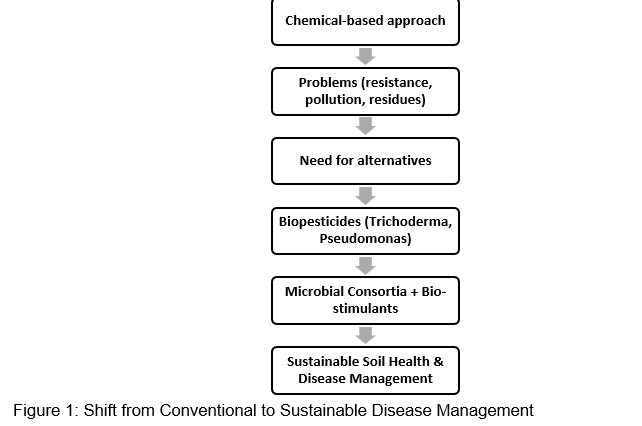
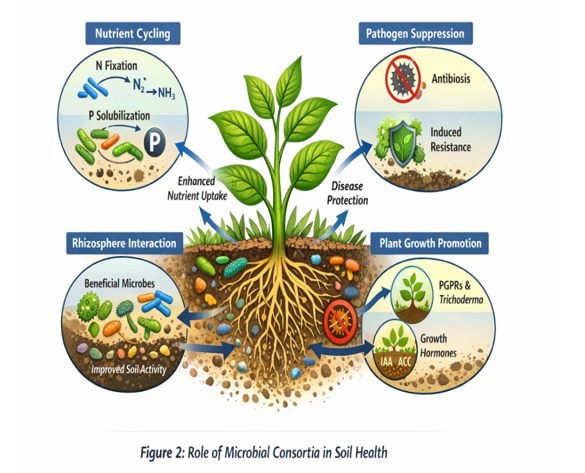
Recent advances in plant pathology and soil microbiology indicate a paradigm shift from the use of single microbial inoculants to the development of microbial consortia. Unlike single bioagents, microbial consortia involve the combined application of multiple compatible microorganisms, often integrated with bio-stimulants, to achieve synergistic effects. This approach enhances the stability, consistency, and effectiveness of biological control under field conditions. Microbial consortia not only suppress a broader spectrum of pathogens but also improve soil biological activity, nutrient cycling, and plant resilience against abiotic stresses (Fig.2) . Thus, the transition from conventional chemical-based disease management to consortium-based biological strategies represents a significant advancement in sustainable agriculture. Such integrated approaches are particularly relevant for arid and semi-arid regions, where maintaining soil health and ecological balance is essential for long-term productivity and resilience of cropping systems.
SOIL-BORNE DISEASES AND PEST DYNAMICS IN ARID AGRICULTURE
Arid and semi-arid agro-ecosystems are highly prone to soil-borne diseases and pest outbreaks due to extreme environmental conditions and fragile soil health. In regions such as Rajasthan, high temperatures, intermittent moisture stress, and low organic matter create a conducive environment for the survival and proliferation of several destructive soil-borne pathogens. These pathogens persist in soil for long periods through resistant structures such as sclerotia and chlamydospores, making their management particularly challenging under dryland conditions. Among the major soil-borne pathogens, Macrophomina phaseolina is one of the most dominant and destructive fungi in arid agriculture, causing charcoal rot in a wide range of crops. Its ability to survive at high soil temperatures (up to 50 °C) and low moisture conditions makes it highly adapted to arid environments. Similarly, Fusarium oxysporum is responsible for vascular wilt diseases, leading to severe yield losses in many economically important crops. Another important group, Alternaria spp., causes foliar blights and seed infections, particularly under fluctuating temperature and humidity conditions (Table 2).
In addition to diseases, insect pests also pose a serious constraint in arid agriculture. The prevalence of sucking pests such as aphids, whiteflies, and thrips increases under hot and dry conditions, as these environments favor rapid multiplication and reduced natural enemy activity. Defoliators and soil-dwelling insects further aggravate crop stress, especially under rainfed conditions where plants are already weakened due to moisture scarcity. The combined effect of pathogens and insect pests often leads to complex disease-pest interactions, intensifying crop damage. Climatic stress plays a crucial role in shaping disease dynamics in arid regions. High temperature stress weakens plant defense mechanisms, making crops more susceptible to pathogen invasion. Irregular rainfall patterns, including sudden showers followed by prolonged dry spells, create favorable conditions for pathogen establishment and spread. Moreover, drought stress alters root exudation patterns, influencing rhizosphere microbial communities and often reducing beneficial microbial populations that naturally suppress pathogens. The impact of soil-borne diseases and pests on crop productivity is substantial. Yield losses in arid regions can range from moderate to severe depending on the intensity of infection and environmental conditions. In addition to quantitative losses, quality deterioration is a major concern, particularly for high-value crops such as seed spices. Infection leads to poor seed development, discoloration, reduced essential oil content, and contamination with mycotoxins in some cases, thereby affecting market value and export potential.
Table 2: Major Soil-Borne Pathogens and Their Characteristics in Arid Agriculture
|
Pathogen
|
Disease Caused
|
Survival Mechanism
|
Favorable Conditions
|
Impact
|
|
Macrophomina phaseolina
|
Charcoal rot
|
Sclerotia
|
High temperature, low moisture
|
Severe yield loss, plant death
|
|
Fusarium oxysporum
|
Wilt
|
Chlamydospores
|
Warm soil, moderate moisture
|
Vascular blockage, wilting
|
|
Alternaria spp.
|
Leaf blight
|
Conidia (seed/air-borne)
|
Fluctuating temp. & humidity
|
Leaf spots, reduced photosynthesis
|
MICROBIAL BIOPESTICIDES: CONCEPTS AND TYPES
The increasing demand for sustainable agriculture and the adverse effects of chemical pesticides have accelerated the development and application of microbial biopesticides. These biological inputs are derived from naturally occurring microorganisms and their metabolites, offering an eco-friendly and effective alternative for managing plant diseases and pests. Recent advances highlight their critical role in improving plant health, enhancing stress tolerance, and restoring soil biological balance, particularly in arid and semi-arid agro-ecosystems.
Definition and Classification
Biopesticides are broadly categorized into three major groups based on their origin and functional properties:
a. Microbial Biopesticides: These include beneficial microorganisms such as fungi and bacteria that suppress pathogens through mechanisms like antibiosis, parasitism, competition, and induced systemic resistance. Microbial biopesticides are increasingly preferred due to their specificity and environmental safety
b. Botanical Biopesticides: Derived from plant-based compounds (e.g., neem, alkaloids, essential oils), these substances act as repellents, antifeedants, or growth inhibitors for pests. Their integration with microbial agents is gaining attention for synergistic effects
c. Biochemical Pesticides: These include natural compounds such as pheromones and plant growth regulators that disrupt pest behavior or development without direct toxicity, thus supporting environmentally safe pest management strategies.
Important Microbial Bioagents
Recent research emphasizes the importance of multifunctional microbial agents in sustainable agriculture:
- Trichoderma harzianum and Trichoderma viride: These fungi are among the most widely used biocontrol agents due to their strong antagonistic activity against soil-borne pathogens. They exhibit mycoparasitism, enzyme production, and induction of plant defense mechanisms. Their role in improving plant growth and stress tolerance has been widely documented
- Pseudomonas fluorescens: A well-known plant growth–promoting rhizobacterium (PGPR), it produces antibiotics, siderophores, and volatile compounds that inhibit pathogens and enhance plant immunity. It also plays a significant role in rhizosphere colonization and nutrient mobilization
- Bacillus subtilis, Bacillus firmus, and Bacillus thuringiensis: These spore-forming bacteria are highly resilient and effective under harsh environmental conditions.
- Bacillus subtilis contributes to disease suppression and plant growth promotion
- Bacillus firmus is effective against nematodes
- Bacillus thuringiensis produces insecticidal toxins widely used in pest management
Their multifunctional role in pest suppression and plant growth enhancement is well established
Role in Pest and Disease Management in Arid Ecosystems
Microbial biopesticides play a pivotal role in managing plant health under arid conditions characterized by high temperature, moisture stress, and poor soil fertility.
- Adaptation to Environmental Stress: Microbial agents such as Trichoderma and Bacillus exhibit remarkable tolerance to abiotic stresses, including high temperature and salinity, making them suitable for arid ecosystems
- Suppression of Soil-Borne Pathogens: These microorganisms effectively control major pathogens through multiple mechanisms, including enzyme secretion, antibiotic production, and competition for nutrients.
- Induced Systemic Resistance (ISR): Beneficial microbes activate plant defense pathways, enhancing resistance against both pathogens and insect pests.
- Improvement of Soil Health and Nutrient Cycling: Microbial inoculants enhance soil biological activity, improve nutrient availability, and support sustainable soil fertility.
- Synergistic Interaction with Other Biopesticides: Recent studies highlight the integration of microbial agents with botanical compounds for enhanced pest control efficiency and sustainability
MECHANISMS OF ACTION OF MICROBIAL BIOAGENTS
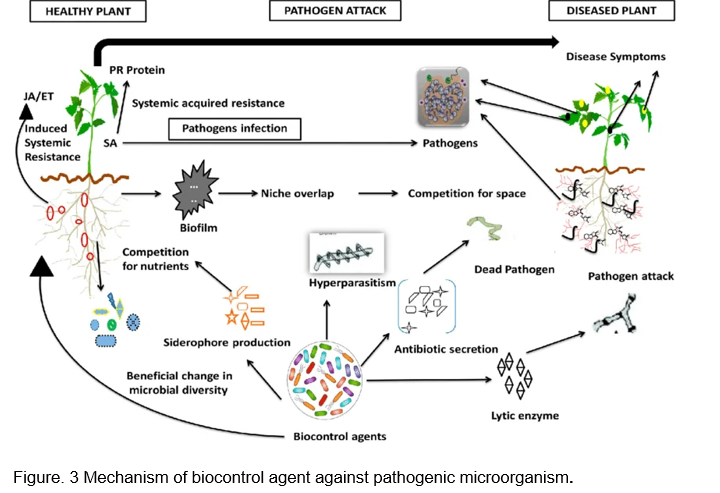
Microbial bioagents contribute to sustainable plant protection and productivity through a complex network of biochemical and ecological interactions. These mechanisms operate either independently or synergistically in the rhizosphere and phyllosphere, ultimately leading to suppression of phytopathogens, enhancement of plant growth, and improved tolerance to environmental stresses. Microbial bioagents suppress plant pathogens through multiple mechanisms, including antibiosis, competition, mycoparasitism, and induced systemic resistance (ISR), while also promoting plant growth and stress tolerance. They produce antibiotics, lytic enzymes and volatile compounds that inhibit pathogens and compete effectively for nutrients and space in the rhizosphere, limiting pathogen establishment (fig 3). Certain fungi like Trichoderma directly parasitize pathogens by degrading their cell walls. Additionally, bioagents enhance plant defense through ISR, activating protective enzymes and improving resistance against infections. Beyond disease control, they support plant growth by solubilizing nutrients and producing phytohormones, leading to better root development and yield. They also improve tolerance to abiotic stresses such as heat and drought by enhancing osmotic balance, antioxidant activity, and water-use efficiency, making them highly beneficial in arid agriculture.
SINGLE MICROBIAL INOCULANTS: ACHIEVEMENTS AND LIMITATIONS
The application of single microbial inoculants represents a fundamental approach in biological disease management and sustainable agriculture. Early developments in soil microbiology identified specific microorganisms capable of suppressing plant pathogens and promoting plant growth, leading to the commercialization of bioagents such as Trichoderma, Pseudomonas, Bacillus, and Azospirillum. These innovations marked a transition from chemical-based inputs to eco-friendly, biologically driven crop protection strategies, forming the basis of modern biofertilizers and biopesticides.
Among these, Trichoderma harzianum has been widely recognized for its effectiveness against soil-borne pathogens like Fusarium, Rhizoctonia, and Sclerotium. Its success is attributed to multiple mechanisms, including mycoparasitism, antibiosis, and induction of plant defense responses. Similarly, Pseudomonas fluorescens and Bacillus subtilis have demonstrated strong potential in controlling pathogens through antibiotic production, siderophore-mediated competition, and activation of induced systemic resistance. These bioagents not only reduce disease incidence but also improve root growth, nutrient uptake, and overall crop productivity, highlighting their role as sustainable alternatives to chemical inputs. Despite these advantages, single microbial inoculants face several limitations. Their activity is often narrow in spectrum, targeting specific pathogens and performing optimally only under certain environmental conditions. Their effectiveness is highly influenced by external factors such as temperature, soil moisture, pH, and native microbial populations, particularly in arid and semi-arid regions. Moreover, inconsistent field performance remains a major challenge, as results obtained under controlled conditions are not always reproducible in diverse agricultural environments.
These constraints emphasize the need for integrated approaches in microbial crop management. The complexity of plant–soil–microbe interactions has led to growing interest in microbial consortia, where multiple beneficial organisms work synergistically. Such systems offer broader disease control, improved nutrient availability, and enhanced stress tolerance, providing a more stable and effective solution for sustainable agriculture.
MICROBIAL CONSORTIUM: CONCEPT AND PARADIGM SHIFT
The concept of microbial consortia has emerged as a transformative advancement in biological crop management, representing a shift from reductionist approaches toward systems-based strategies that better reflect the complexity of natural agroecosystems. A microbial consortium is defined as a structured or naturally occurring community of two or more microorganisms that interact synergistically to perform complementary biological functions. These consortia may consist of taxonomically diverse groups such as bacteria, fungi, and actinomycetes, designed either as synthetic consortia with specific functional traits or derived as native consortia adapted to local soil and climatic conditions. This approach aligns with the ecological principle that microbial communities, rather than individual strains, govern soil health and plant productivity (Berg et al., 2020; Santoyo et al., 2021).
The scientific foundation of microbial consortia is rooted in the principles of compatibility and synergistic interactions. Compatibility ensures that selected microorganisms can coexist without antagonism, maintaining viability during formulation and after field application. This requires rigorous screening for non-inhibitory interactions, metabolic complementarity, and ecological fitness. More importantly, synergistic interactions enable cooperative functioning, where different microbes contribute distinct yet interconnected roles. For example, phosphate-solubilizing bacteria may enhance nutrient availability, while other members induce systemic resistance or produce antifungal metabolites. Such cooperative interactions are often mediated through quorum sensing, metabolic exchange, and co-colonization dynamics, leading to enhanced functional efficiency compared to individual strains (Compant et al., 2019; Santoyo et al., 2021).
A key strength of microbial consortia lies in their functional diversity and ecological stability, which are essential for consistent performance under variable field conditions. Unlike single inoculants, which are often limited to one or two functions, consortia integrate multiple biological activities, including nutrient cycling, pathogen suppression, and stress mitigation. This diversity enhances resilience by enabling the microbial community to adapt to environmental fluctuations such as changes in temperature, moisture, and soil chemistry. Furthermore, functional redundancy within consortia ensures that if one microbial member becomes inactive, others can compensate, thereby maintaining system stability. Such ecological robustness is particularly critical in field conditions where environmental variability is high (Berg et al., 2020; Compant et al., 2019). The advantages of microbial consortia over single inoculants are increasingly evident, particularly in terms of their broader functional scope and adaptability. One of the most significant benefits is their ability to achieve broader spectrum disease suppression, as different microbial members target diverse pathogens through multiple mechanisms, including antibiosis, competition, and induced resistance. This multi-layered defense strategy is more effective in managing complex disease systems compared to single-strain applications.
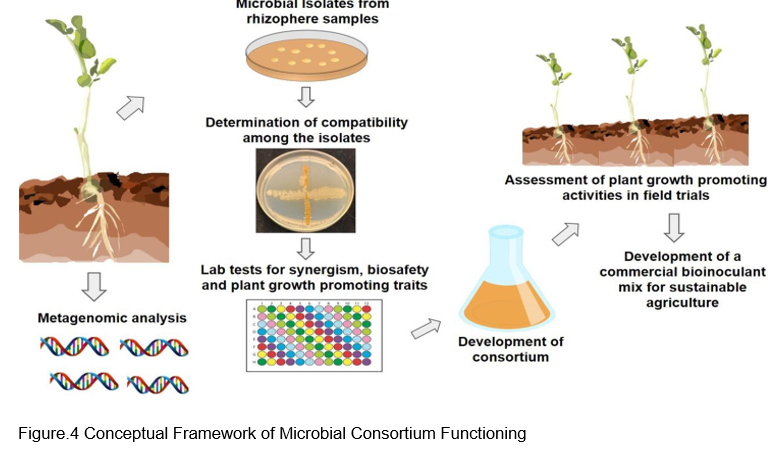
Moreover, microbial consortia exhibit enhanced resilience in arid and semi-arid environments, where extreme climatic conditions often limit the survival and efficacy of individual bioagents. The combined activity of diverse microbes improves plant tolerance to heat and drought through mechanisms such as osmotic adjustment, enhanced root development, and activation of antioxidant systems. These traits are particularly relevant in fragile ecosystems, where sustainable productivity depends on the ability of crops to withstand environmental stress while maintaining growth and yield (Niu et al., 2021; Berg et al., 2020). In this context, microbial consortia represent a paradigm shift toward integrated, multi-functional, and climate-resilient agricultural practices. By leveraging the collective capabilities of microbial communities, this approach addresses the inherent limitations of single inoculants and offers a more reliable and sustainable solution for crop production in diverse and challenging environments (Fig.4).
CONSORTIUM-BASED MECHANISMS FOR SOIL AND PLANT HEALTH
Microbial consortia function as integrated biological systems that regulate soil and plant health through multiple, interconnected mechanisms operating simultaneously in the rhizosphere. Unlike single-strain inoculants, consortium-based approaches rely on coordinated interactions among diverse microbial members, enabling the delivery of multiple ecosystem services within a single framework. This multi-layered functionality is particularly important in complex agroecosystems, where plant performance is governed by the combined effects of biotic and abiotic factors (Table 3).
A central feature of microbial consortia is multi-mechanistic disease suppression, which arises from the integration of antagonism, induced systemic resistance (ISR), and nutrient mobilization. Different members of the consortium contribute distinct protective roles: some produce antibiotics and lytic enzymes that directly inhibit pathogens, while others compete for ecological niches and essential nutrients, thereby limiting pathogen establishment. Simultaneously, certain microbes activate plant defense pathways through ISR, priming the plant for rapid and effective responses against pathogen attack. In addition, nutrient-mobilizing microbes improve plant nutritional status, indirectly enhancing resistance by strengthening host vigor. The convergence of these mechanisms creates a robust and layered defense system that is far more effective than individual modes of action operating in isolation (Compant et al., 2019; Santoyo et al., 2021).
Another important outcome of consortium application is the enhancement of rhizosphere microbial diversity, which plays a crucial role in maintaining soil health and ecological balance. The introduction of compatible microbial groups promotes beneficial shifts in the native microbial community, increasing functional diversity and suppressing opportunistic pathogens. A diverse microbial community enhances nutrient cycling, stabilizes soil structure, and improves resilience against environmental perturbations. Moreover, increased diversity often leads to functional redundancy, ensuring that key processes such as nutrient transformation and pathogen suppression are maintained even under fluctuating environmental conditions (Berg et al., 2020; Trivedi et al., 2020).
The ability of microbial consortia to form biofilms and effectively colonize plant roots further strengthens their functional performance. Biofilm formation involves the aggregation of microbial cells within a self-produced extracellular matrix, allowing them to adhere firmly to root surfaces and protect themselves from environmental stresses. Within these biofilms, microorganisms engage in close physical and metabolic interactions, facilitating nutrient exchange, signaling, and coordinated activity. This structured colonization enhances the persistence and stability of the consortium in the rhizosphere, ensuring sustained delivery of beneficial functions such as pathogen suppression and nutrient solubilization (Flemming et al., 2016; Compant et al., 2019).
The combined effects of these processes result in improved plant growth and enhanced tolerance to environmental stresses. Microbial consortia promote plant development by increasing nutrient availability, producing phytohormones, and improving root architecture. At the same time, they enhance the plant’s ability to withstand abiotic stresses such as drought, salinity, and high temperature by regulating osmotic balance, activating antioxidant defense systems, and modulating stress-responsive genes. These benefits are particularly significant in resource-limited environments, where plant growth is constrained by multiple stress factors acting simultaneously (Trivedi et al., 2020; Santoyo et al., 2021).
The role of microbial consortia becomes even more critical under extreme arid conditions, where harsh environmental factors severely limit microbial activity and plant productivity. In such environments, consortia improve soil fertility by enhancing organic matter decomposition and nutrient cycling, while also increasing soil moisture retention through improved aggregation. Their ability to sustain functional activity under high temperature and low moisture conditions makes them valuable tools for climate-resilient agriculture. By supporting plant establishment, reducing stress-induced damage, and maintaining soil biological activity, microbial consortia provide a sustainable solution for enhancing crop productivity in fragile desert ecosystems (Berg et al., 2020; Trivedi et al., 2020).
Overall, consortium-based mechanisms represent a highly efficient and ecologically sound approach for improving soil and plant health. By integrating multiple biological functions within a single system, microbial consortia offer enhanced reliability, adaptability, and performance compared to conventional approaches, making them a cornerstone of next-generation sustainable agriculture.
Table 3. Functional Contributions of Microbial Consortia to Soil and Plant Health
|
Functional Aspect
|
Mechanism Involved
|
Outcome
|
|
Disease suppression
|
Antibiosis, ISR, competition
|
Reduced pathogen incidence
|
|
Nutrient mobilization
|
Solubilization, mineralization
|
Improved nutrient availability
|
|
Microbial diversity
|
Community enrichment
|
Soil ecological stability
|
|
Root colonization
|
Biofilm formation
|
Enhanced persistence
|
|
Plant growth promotion
|
Hormone production, nutrient uptake
|
Increased biomass and yield
|
|
Stress tolerance
|
Osmoregulation, antioxidant activation
|
Drought/heat resilience
|
INTEGRATION OF BIO-STIMULANTS WITH MICROBIAL CONSORTIA
The integration of bio-stimulants with microbial consortia represents a synergistic and advanced approach for improving plant health, productivity, and resilience under both biotic and abiotic stresses. Bio-stimulants are natural or synthetic compounds that regulate plant physiological and biochemical processes without directly acting as nutrients or pesticides. When used in combination with microbial consortia, they enhance microbial activity and plant responses, leading to a more efficient and stable plant–microbe interaction system. Among the key bio-stimulants, chitosan, potassium silicate, and salicylic acid play vital roles in plant growth and defense regulation. Chitosan stimulates plant immunity by activating defense enzymes and inducing structural barriers such as callose deposition, while also improving root exudation to support beneficial microbial colonization. Potassium silicate strengthens plant cell walls through silica deposition, acting as a barrier against pathogens, and enhances tolerance to drought and heat stress by improving water-use efficiency. Salicylic acid serves as an important signaling molecule in plant defense, particularly in systemic acquired resistance, and regulates physiological functions including photosynthesis and antioxidant activity (Rouphael and Colla, 2020).
The combined use of these bio-stimulants with microbial consortia creates strong synergistic interactions. Bio-stimulants enhance microbial survival, colonization, and metabolic efficiency, while microbes improve the uptake and utilization of bioactive compounds. This interaction strengthens plant–microbe communication and enhances rhizosphere functionality. As a result, plant defense mechanisms are activated, antioxidant enzyme activities increase, and phenolic compound production is enhanced, providing protection against pathogens and environmental stresses. Ultimately, this integration leads to improved plant growth, higher yield, and better crop quality. Enhanced nutrient uptake, increased stress tolerance, and reduced disease incidence contribute to greater biomass and productivity. Additionally, improvements in quality traits such as grain size, protein content, and shelf life make this approach a sustainable alternative to chemical inputs, particularly in stress-prone environments.
ADVANCES IN BIOPESTICIDE DEVELOPMENT AND FORMULATION TECHNOLOGIES
Recent advances in biopesticide development have focused on creating robust and field-adaptable microbial products capable of performing under harsh agro-climatic conditions. A major breakthrough is the isolation of stress-tolerant microorganisms from arid and desert soils, where native microbes possess traits such as thermotolerance, desiccation resistance, and efficient resource use. Strains of Bacillus, Pseudomonas, and Trichoderma derived from these environments show enhanced survival and activity under high temperature and low moisture, making them ideal for climate-resilient agriculture. Their adaptability also improves rhizosphere colonization and ensures consistent field performance (Kaushal and Wani, 2016). Advancements in fermentation technology have further improved large-scale production of microbial bioagents. Optimized submerged and solid-state fermentation systems enhance biomass, spore formation, and metabolite production. The use of low-cost substrates, improved bioreactor designs, and techniques like fed-batch fermentation and stress conditioning have increased microbial viability and efficiency while reducing production costs (O’Brien et al., 2019).
Formulation technologies have also evolved significantly. Traditional carriers like peat, lignite, and talc are now supplemented with advanced materials such as biochar, alginate beads, and polymer encapsulations, which protect microbes and allow gradual release in soil. Liquid formulations offer higher cell counts, ease of application, and longer shelf life, while additives like osmoprotectants and stabilizers enhance survival during storage and application (Malusá et al., 2012). Shelf-life improvement remains a key achievement, with techniques such as microencapsulation and lyophilization protecting microbes from environmental stress, ensuring long-term stability. Alongside this, strict quality control measures—such as maintaining viable cell counts, strain purity, and functional efficacy—are supported by molecular tools for accurate identification and standardization (O’Brien et al., 2019).
These combined advancements have enabled the development of effective commercial biopesticides widely used in disease management and plant growth promotion. Increasing demand for eco-friendly inputs continues to drive innovation, making biopesticides a reliable component of sustainable and climate-smart agriculture.
CASE STUDY: CUMIN (CUMINUM CYMINUM) IN ARID REGIONS
Cumin (Cuminum cyminum L.) is a high-value seed spice crop widely cultivated in arid and semi-arid regions of India, particularly Rajasthan and Gujarat, where it plays a crucial role in farmer income and export earnings. Despite its adaptability to low-moisture conditions, cumin productivity is severely affected by diseases such as Alternaria blight (Alternaria burnsii) and wilt (Fusarium oxysporum f. sp. cumini), which reduce yield and seed quality. These diseases are difficult to manage due to favorable arid microclimates, long-term pathogen survival in soil, and lack of resistant varieties (Meena et al., 2022; Kumar et al., 2023; Sharma et al., 2021).
To address these challenges, consortium-based disease management has emerged as an effective and sustainable approach. Microbial consortia, consisting of compatible beneficial bacteria and fungi, suppress pathogens through multiple mechanisms such as antibiosis, improved rhizosphere health, and induction of plant defense responses. Studies have shown that these consortia significantly reduce disease severity and enhance plant growth, outperforming single microbial inoculants (Singh et al., 2023; Yadav et al., 2022). They also promote systemic resistance by activating defense enzymes, improving nutrient uptake, and limiting pathogen proliferation, resulting in better plant vigor and reduced disease incidence (Yadav et al., 2022). The integration of microbial consortia with bio-stimulants such as salicylic acid, chitosan, and silicon compounds further enhances their effectiveness. These compounds act as defense elicitors and improve plant metabolism, while also supporting microbial colonization and activity. This synergistic interaction strengthens plant immunity, increases antioxidant activity, and improves stress tolerance under arid conditions (Kumar et al., 2023).
Field studies have demonstrated that such integrated approaches lead to reduced disease intensity, improved growth parameters, and enhanced yield and quality. Overall, the combined use of microbial consortia and bio-stimulants offers an eco-friendly, sustainable, and climate-resilient strategy for cumin cultivation, marking a shift toward biologically driven disease management in dryland agriculture (Singh et al., 2023; Kumar et al., 2023)
FIELD PERFORMANCE OF MICROBIAL CONSORTIA IN ARID CONDITIONS
The successful transfer of microbial consortia from laboratory research to field conditions is essential for their effective use in arid agriculture. Harsh environments with high temperatures, low moisture, and poor soil fertility often limit the survival and activity of microbial inoculants. However, recent studies show that well-designed microbial consortia possess better adaptability, allowing them to perform efficiently under such stress conditions. A key strength of microbial consortia is their tolerance to extreme temperatures (50–55°C), common in arid regions. This is due to the presence of thermotolerant and spore-forming microbes such as Bacillus, along with stress-adapted Pseudomonas and Trichoderma. These organisms produce heat-shock proteins, protective enzymes, and osmolytes that maintain cellular function under stress. Their combined activity and biofilm formation further enhance survival and persistence in the rhizosphere (Kaushal and Wani, 2016; Nadeem et al., 2021). Microbial consortia also show strong tolerance to drought. They improve plant water-use efficiency by enhancing root growth, soil aggregation, and osmotic balance. The production of exopolysaccharides improves soil structure and water retention, supporting both plant and microbial survival under moisture stress (Vurukonda et al., 2016).
Field studies confirm their effectiveness, reporting yield increases of 14–26%, along with improved germination, plant growth, and reduced disease incidence (Kumar et al., 2022; Chaudhary et al., 2023). Additionally, they enhance soil health by increasing microbial biomass, enzyme activity, and nutrient cycling, leading to better soil fertility and long-term sustainability. Overall, microbial consortia are reliable, climate-resilient bio-inputs that improve crop productivity and soil health, making them highly suitable for sustainable agriculture in arid regions.
COMMERCIALIZATION AND GLOBAL SCENARIO OF BIOPESTICIDES
The commercialization of biopesticides has gained significant momentum over the past decade, driven by the urgent need to transition toward environmentally sustainable and residue-free agricultural practices. Globally, the biopesticide market has witnessed rapid expansion, supported by increasing regulatory restrictions on synthetic pesticides, growing consumer awareness regarding food safety, and the rising demand for organic and eco-labeled products. The global biopesticide industry is currently valued in billions of dollars and is projected to grow at a substantially higher rate than conventional agrochemicals, reflecting a paradigm shift in crop protection strategies (Marrone, 2019; Glare et al., 2020).
A key driver of this expansion is the increasing demand for residue-free food, particularly in international markets where stringent quality standards and maximum residue limits (MRLs) are strictly enforced. Consumers are becoming more conscious of the health and environmental risks associated with chemical pesticide residues, leading to a preference for safer alternatives. Biopesticides, being biodegradable and target-specific, offer a viable solution by ensuring effective pest and disease control without leaving harmful residues. This trend has significantly influenced agricultural practices, especially in export-oriented crops such as spices, fruits, and vegetables, where compliance with international standards is essential for market access (Glare et al., 2020). Biopesticides also play a crucial role in promoting sustainable agriculture and enhancing export competitiveness. Their integration into crop management systems reduces dependency on chemical inputs, preserves beneficial organisms, and improves soil health. Moreover, their compatibility with integrated pest management (IPM) strategies makes them an essential component of modern sustainable farming systems. Countries adopting biopesticide-based approaches are better positioned to meet global trade requirements, thereby enhancing their competitiveness in international markets. This is particularly relevant for developing countries like India, where agriculture forms a major part of the economy and export potential is closely linked to product quality and safety (Marrone, 2019).
In the Indian context, the biopesticide sector is expanding steadily, supported by government initiatives, research advancements, and increasing farmer awareness. India has registered a wide range of microbial biopesticides, including formulations based on Trichoderma, Pseudomonas, and Bacillus, which are widely used for disease management and plant growth promotion. The adoption of these products is particularly significant in arid and semi-arid regions, where the adverse effects of chemical pesticides are more pronounced due to fragile ecosystems and resource limitations. In such regions, biopesticides not only provide effective disease control but also contribute to improving soil biological activity and long-term sustainability (Glare et al., 2020). Despite these advancements, challenges such as inconsistent field performance, limited shelf life, and lack of awareness still hinder large-scale adoption. However, ongoing improvements in formulation technologies, quality control, and extension services are expected to address these constraints and further strengthen the commercial viability of biopesticides. Overall, the global and national trends clearly indicate that biopesticides are poised to become a central component of future agricultural systems, particularly in the context of climate change, food safety, and sustainable development.
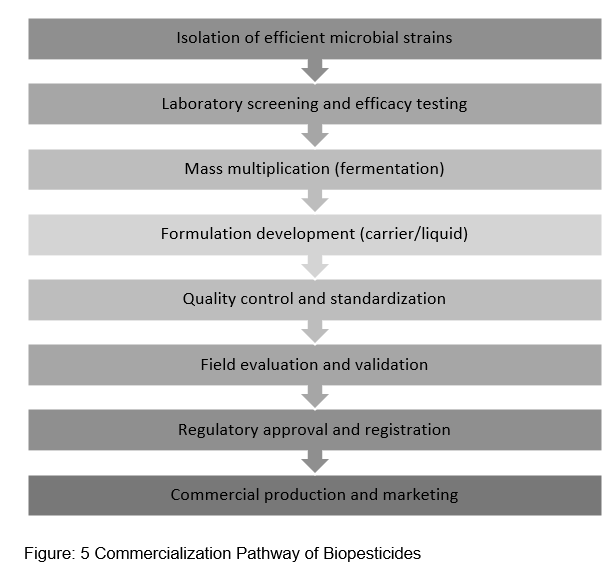
REGULATORY FRAMEWORK AND ADOPTION CHALLENGES
The commercialization and widespread adoption of biopesticides are strongly influenced by regulatory policies and practical constraints that vary across countries. Regulatory frameworks for biopesticides are generally less stringent than those for chemical pesticides; however, the approval process still involves multiple stages, including efficacy validation, toxicological assessment, environmental safety evaluation, and product registration. In India, biopesticides are regulated under the Insecticides Act, 1968, where microbial formulations must undergo registration through the Central Insecticides Board and Registration Committee (CIBRC). Despite policy support for eco-friendly inputs, the approval process is often time-consuming and complex, discouraging innovation and private-sector participation.
Several constraints hinder the effective adoption of biopesticides. One of the major challenges is the complex and lengthy regulatory approval process, which delays market entry and increases costs for manufacturers. Additionally, formulation stability issues significantly affect product shelf life and field performance, particularly under harsh environmental conditions such as high temperature and UV radiation prevalent in arid regions. Another critical limitation is inconsistent field efficacy, as microbial agents are highly sensitive to environmental variability, soil conditions, and crop management practices.
Moreover, limited farmer awareness and technical knowledge restrict the large-scale adoption of biopesticides. Farmers often prefer chemical pesticides due to their immediate and visible effects, whereas biopesticides require a more integrated and preventive approach. The lack of strong extension services and demonstration programs further widens the gap between research innovations and field-level application. To overcome these challenges, there is a pressing need for streamlined regulatory policies, fast-track approval mechanisms, and harmonization of international standards. Strengthening extension services, promoting public-private partnerships, and providing financial incentives or subsidies can significantly enhance adoption. Capacity building, farmer training, and awareness campaigns are essential to ensure that biopesticides become a viable and sustainable alternative in modern agriculture.
INTEGRATION INTO CLIMATE-RESILIENT AGRICULTURE
Biopesticides are vital for climate-resilient agriculture as they provide eco-friendly and sustainable crop protection. Integrated into Integrated Disease Management (IDM), they enhance system resilience against biotic and abiotic stresses by improving soil biological activity, promoting plant growth, and inducing systemic resistance. Microbial agents like Trichoderma, Pseudomonas, and Bacillus are widely used in organic farming due to their ability to control pathogens while enhancing soil fertility and nutrient cycling, making them suitable for fragile ecosystems such as arid regions. Biopesticides also reduce dependence on chemical pesticides, minimizing environmental pollution, residues, and resistance development in pests and pathogens. This improves food safety and export potential. Additionally, they support climate-smart agriculture by enhancing soil carbon sequestration, increasing microbial diversity, and lowering greenhouse gas emissions. Overall, biopesticides play a key role in sustainable intensification and long-term agricultural stability under changing climatic conditions.
FUTURE PROSPECTS AND RESEARCH DIRECTIONS
The future of biopesticides lies in the development of advanced and innovative technologies that enhance their efficiency, consistency, and adaptability. One of the most promising areas is the development of next-generation microbial consortia, where multiple beneficial microorganisms are combined to provide synergistic effects. These consortia can simultaneously target multiple pathogens, improve nutrient uptake, and enhance plant stress tolerance, making them more effective than single-strain formulations. Emerging approaches such as microbiome engineering and synthetic ecology are revolutionizing the field of biological crop protection. By designing and manipulating microbial communities, scientists can create tailored solutions for specific crops and environmental conditions. These approaches focus on enhancing beneficial interactions within the rhizosphere to achieve stable and long-lasting disease suppression. The application of omics technologies, including metagenomics, metabolomics, and transcriptomics, is providing deeper insights into microbial interactions, functional diversity, and mechanisms of action. These tools enable the identification of novel bioactive compounds, functional genes, and microbial strains with enhanced biocontrol potential.
Integration with precision agriculture technologies is another important direction for future research. The use of sensors, remote sensing, artificial intelligence, and data analytics can optimize the application of biopesticides, ensuring targeted delivery and improved efficacy. This integration can help overcome variability in field performance and enhance farmer confidence in biological products. Finally, efforts toward scaling up commercialization and adoption are essential. This includes improving formulation technologies (e.g. nano-formulations, encapsulation), enhancing shelf life, reducing production costs, and developing robust delivery systems. Collaboration between researchers, industry stakeholders, policymakers, and farmers will be critical in translating scientific advancements into practical agricultural solutions.
CONCLUSION
The paradigm of crop protection is undergoing a significant transformation, shifting from the use of single microbial agents to complex microbial consortia that offer multifunctional benefits. This shift reflects a deeper understanding of soil microbiology and plant–microbe interactions, highlighting the importance of holistic and ecosystem-based approaches in agriculture. In the context of arid and semi-arid regions, where environmental stresses severely limit agricultural productivity, biopesticides provide a sustainable and resilient solution. Their ability to improve soil health, enhance nutrient availability, suppress pathogens, and promote plant growth makes them indispensable tools for sustainable crop production. The adoption of biopesticides contributes not only to increased productivity and crop quality but also to environmental sustainability by reducing chemical inputs, minimizing pollution, and preserving biodiversity. These benefits are particularly important in meeting the growing demand for residue-free and export-quality agricultural produce. In the long term, the integration of biopesticides into mainstream agriculture will play a vital role in achieving sustainable intensification, climate resilience, and global food security. Strengthening research, policy support, and farmer awareness will be key to unlocking the full potential of biopesticides and ensuring their widespread adoption across diverse agro-ecosystems.
REFERENCES
Berg, G., Grube, M., Schloter, M., & Smalla, K. (2020). The plant microbiome and its importance for plant and human health. Front. Microbiol., 11, 135.
Chaudhary, M., Meena, R. S., & Jat, G. (2023). Field evaluation of microbial consortia for yield enhancement under arid conditions. Agronomy, 13, 1987.
Compant, S., Samad, A., Faist, H., & Sessitsch, A. (2019). A review on the plant microbiome: ecology, functions, and emerging trends. Microbiol. Res., 229, 126–134.
Danesh, Y.R. et al. (2025). Microbial and phytochemical biopesticides for sustainable crop protection. Plants.
Flemming, H.C., Wingender, J., Szewzyk, U., et al. (2016). Biofilms: an emergent form of bacterial life. Nat. Rev. Microbiol., 14, 563–575.
Glare, T., Caradus, J., Gelernter, W., et al. (2020). Have biopesticides come of age? Trends Biotechnol., 30, 250–258.
Gupta, R. et al. (2024). Employing Bacillus and Pseudomonas for phytonematode management. World J. Microbiol. Biotechnol.
Kaushal, M., & Wani, S.P. (2016). Plant-growth-promoting rhizobacteria as drought stress alleviators in drylands. Ann. Microbiol., 66, 35–42.
Kredics, L. et al. (2024). Recent advances in Trichoderma-based microbial inoculants. World J. Microbiol. Biotechnol.
Kumar, A., Meena, R.S., & Singh, B. (2023). Role of biostimulants and beneficial microbes in improving crop productivity under arid conditions. Front. Plant Sci., 14, 1187654.
Kumar, A., Singh, R., & Yadav, A.N. (2022). Role of microbial consortia in improving crop productivity under stress conditions. J. Appl. Microbiol., 132, 321–335.
Malusá, E., Vassilev, N., & Vassileva, M. (2012). Development of biofertilizers and biocontrol agents: formulation and application. Appl. Microbiol. Biotechnol., 96, 857–865.
Marrone, P.G. (2019). Pesticidal natural products – status and future potential. Pest Manag. Sci., 75, 2325–2340.
Mawcha, K.T. et al. (2025). Recent advances in biopesticide research and development. F1000Res.
Meena, R.S., Kumar, S., & Yadav, G.S. (2022). Diseases of cumin and their integrated management strategies under arid conditions. J. Spices Aromat. Crops, 31, 145–156.
Munnysha, S., & Bunker, R.N. (2024). Advances in microbial biopesticides for integrated disease and pest management. Ann. Plant Soil Res.
Nadeem, S.M., Naveed, M., Ayyub, C.M., et al. (2021). Microbial mediated stress mitigation in plants under abiotic stress conditions. Plant Physiol. Biochem., 158, 174–183.
Niu, B., Paulson, J.N., Zheng, X., & Kolter, R. (2021). Simplified and representative bacterial community of maize roots. Proc. Natl. Acad. Sci. U.S.A., 118, e2020881118.
O’Brien, P.A., Li, Y., & Stewart, A. (2019). Advances in microbial formulation technologies for sustainable agriculture. Biol. Control, 133, 75–86.
Rouphael, Y., & Colla, G. (2020). Biostimulants in agriculture: scientific basis and practical applications. Agronomy, 10, 146.
Santoyo, G., Hernández-Pacheco, C., Hernández-Salmerón, J., & Hernández-León, R. (2021). The role of microbial consortia in plant growth promotion and disease control. Agronomy, 11, 219.
Sharma, P., Singh, R., & Choudhary, R. (2021). Fusarium wilt of cumin: etiology and management strategies. Indian Phytopathol., 74, 1–10.
Singh, D., Meena, R.K., & Jat, B.L. (2023). Integrated use of microbial consortia for disease management and yield enhancement in cumin. Agronomy, 13, 2456.
Trivedi, P., Leach, J.E., Tringe, S.G., et al. (2020). Plant–microbiome interactions: from community assembly to plant health. Nat. Rev. Microbiol., 18, 607–621.
Verma, M.L. et al. (2024). Microbial production of biopesticides for sustainable agriculture. Sustainability, 16, 7496.
Vurukonda, S.S.K.P., Vardharajula, S., Shrivastava, M., & SkZ, A. (2016). Enhancement of drought stress tolerance in crops by plant growth-promoting rhizobacteria. Microbiol. Res., 184, 13–24.
Wend, K. et al. (2024). Microbial pesticides: challenges and future perspectives. Environ. Health.
Yadav, A.N., Verma, P., & Kour, D. (2022). Microbial consortia: a sustainable approach for plant growth promotion and disease management. Rhizosphere, 23, 100567.

Paradigm Shift from Single Microbial Application to Microbial Consortium for Soil and Plant Health Management in Arid Agriculture
DOI: https://doi.org/10.56669/CJKB2448
This manuscript was originally presented at the ACRI, ATRI, WorldVeg, and FFTC workshop titled “Pest and Disease Management Strategies for Sustainable Agriculture,” held in Taichung, Taiwan, on May 5–6, 2026.
ABSTRACT
Sustainable crop production in arid and semi-arid regions requires innovative strategies to manage soil-borne pathogens and improve soil health under harsh environmental conditions. Traditionally, biological control strategies relied on the application of single microbial agents; however, recent advances indicate a paradigm shift toward the use of microbial consortia, where multiple compatible microorganisms and bio-stimulants act synergistically to enhance plant growth, nutrient availability, and disease suppression. Consortium-based approaches integrate beneficial microbes such as Trichoderma, Pseudomonas, and other plant growth–promoting microorganisms with organic amendments and bio-stimulants to provide broader and more stable protection against plant diseases while improving soil biological activity. In arid agriculture, biopesticide-based technologies have shown significant potential in managing soil-borne pathogens while maintaining ecological balance. Earlier studies under arid conditions demonstrated that formulations of Trichoderma harzianum effectively suppress pathogens such as Macrophomina phaseolina and Fusarium oxysporum. Field trials indicated yield improvements of approximately 14–26%, along with enhanced seed germination, plant vigor, and improved rhizosphere microbial activity. These biocontrol agents are particularly suitable for arid soils due to their adaptability to high soil temperatures (up to 50–55 °C) and low moisture conditions, making them reliable components of integrated soil health management strategies. Cumin (Cuminum cyminum), one of the most important seed spice crops grown in arid regions of India, possesses substantial export potential due to its high demand in international spice markets. However, diseases such as Alternaria blight and wilt significantly limit productivity and quality. Recent research indicates that integrating bio-agents with bio-stimulants provides an effective and eco-friendly strategy for disease management. Application of a consortium comprising Trichoderma spp. along with bio-stimulants such as chitosan, potassium silicate, and salicylic acid has demonstrated promising results in reducing disease severity while enhancing plant defense responses, growth, and yield. The consortium approach provides multi-mechanistic disease suppression through antagonism, induced systemic resistance, improved nutrient mobilization, and enhanced microbial diversity in the rhizosphere. Therefore, shifting from single microbial applications to well-designed microbial consortia represents a significant advancement in sustainable plant disease management, particularly for high-value crops like cumin in arid ecosystems. Such strategies not only support eco-friendly agriculture but also contribute to improved soil health, enhanced crop productivity, and strengthened export competitiveness of spice crops while reducing dependence on chemical pesticides.
Keywords: Microbial consortium, Biopesticides, Soil health, PGPR, Cumin
INTRODUCTION
Hot arid and semi-arid agro-ecosystems, such as those prevailing in regions of Rajasthan, are characterized by extreme environmental conditions that pose significant challenges to sustainable crop production. These ecosystems typically experience high temperatures (often exceeding 45–50 °C during peak summer), low and erratic rainfall, high evapotranspiration rates, and frequent drought spells. Soils in these regions are generally sandy to loamy-sand in texture, with poor structure, low water-holding capacity, and limited nutrient reserves. Such harsh agro-climatic conditions create a fragile production environment where maintaining soil health and crop productivity becomes particularly difficult.
Crop production in these regions is constrained by multiple interacting factors, including moisture stress, nutrient deficiencies, and increased susceptibility to pests and diseases. Soil-borne pathogens, in particular, pose a serious threat due to their persistence in soil and ability to survive under adverse conditions (Table 1). The limited buffering capacity of arid soils further exacerbates the problem, as even minor disturbances can significantly affect soil microbial balance and plant health. As a result, achieving stable and sustainable yields remains a major challenge for farmers in these ecosystems.
Table 1: Characteristics and constraints of arid agro-ecosystems
Parameter
Characteristics
Implications for Crop Production
Temperature
Very high (up to 50–55°C)
Heat stress, reduced microbial survival
Rainfall
Low and erratic
Moisture stress, poor crop establishment
Soil type
Sandy, low organic matter
Poor nutrient and water retention
Soil fertility
Low
Nutrient deficiencies
Microbial activity
Low
Weak natural disease suppression
Evapotranspiration
High
Rapid moisture loss
Traditionally, disease management strategies have relied heavily on chemical pesticides for rapid and effective control. However, the long-term use of these chemicals has led to several serious concerns. Environmental pollution due to pesticide residues contaminates soil, water, and air, adversely affecting non-target organisms and ecosystem health. Continuous use of the same chemical groups has also resulted in the development of resistant strains of pathogens, reducing the efficacy of these pesticides over time. Moreover, the accumulation of toxic residues in agricultural produce raises food safety concerns, particularly for export-oriented crops. Another critical issue is the degradation of soil biological health, as indiscriminate pesticide use negatively impacts beneficial soil microorganisms that are essential for nutrient cycling and disease suppression.
Arid soils are inherently vulnerable due to their low organic matter content and poor microbial activity. These soils lack resilience and are highly sensitive to external inputs, making them prone to degradation under intensive agricultural practices. The decline in soil biological diversity further weakens the natural defense mechanisms against soil-borne pathogens, leading to increased disease incidence and reduced crop productivity. Therefore, there is an urgent need to adopt sustainable approaches that not only manage diseases effectively but also restore and maintain soil health. In this context, biopesticides and microbial-based approaches have emerged as promising and environmentally safe alternatives to chemical pesticides. Beneficial microorganisms such as species of Trichoderma and Pseudomonas play a crucial role in suppressing plant pathogens, enhancing nutrient availability, and promoting plant growth. These biological agents are particularly advantageous in arid conditions due to their adaptability to high temperatures and low moisture environments.
Recent advances in plant pathology and soil microbiology indicate a paradigm shift from the use of single microbial inoculants to the development of microbial consortia. Unlike single bioagents, microbial consortia involve the combined application of multiple compatible microorganisms, often integrated with bio-stimulants, to achieve synergistic effects. This approach enhances the stability, consistency, and effectiveness of biological control under field conditions. Microbial consortia not only suppress a broader spectrum of pathogens but also improve soil biological activity, nutrient cycling, and plant resilience against abiotic stresses (Fig.2) . Thus, the transition from conventional chemical-based disease management to consortium-based biological strategies represents a significant advancement in sustainable agriculture. Such integrated approaches are particularly relevant for arid and semi-arid regions, where maintaining soil health and ecological balance is essential for long-term productivity and resilience of cropping systems.
SOIL-BORNE DISEASES AND PEST DYNAMICS IN ARID AGRICULTURE
Arid and semi-arid agro-ecosystems are highly prone to soil-borne diseases and pest outbreaks due to extreme environmental conditions and fragile soil health. In regions such as Rajasthan, high temperatures, intermittent moisture stress, and low organic matter create a conducive environment for the survival and proliferation of several destructive soil-borne pathogens. These pathogens persist in soil for long periods through resistant structures such as sclerotia and chlamydospores, making their management particularly challenging under dryland conditions. Among the major soil-borne pathogens, Macrophomina phaseolina is one of the most dominant and destructive fungi in arid agriculture, causing charcoal rot in a wide range of crops. Its ability to survive at high soil temperatures (up to 50 °C) and low moisture conditions makes it highly adapted to arid environments. Similarly, Fusarium oxysporum is responsible for vascular wilt diseases, leading to severe yield losses in many economically important crops. Another important group, Alternaria spp., causes foliar blights and seed infections, particularly under fluctuating temperature and humidity conditions (Table 2).
In addition to diseases, insect pests also pose a serious constraint in arid agriculture. The prevalence of sucking pests such as aphids, whiteflies, and thrips increases under hot and dry conditions, as these environments favor rapid multiplication and reduced natural enemy activity. Defoliators and soil-dwelling insects further aggravate crop stress, especially under rainfed conditions where plants are already weakened due to moisture scarcity. The combined effect of pathogens and insect pests often leads to complex disease-pest interactions, intensifying crop damage. Climatic stress plays a crucial role in shaping disease dynamics in arid regions. High temperature stress weakens plant defense mechanisms, making crops more susceptible to pathogen invasion. Irregular rainfall patterns, including sudden showers followed by prolonged dry spells, create favorable conditions for pathogen establishment and spread. Moreover, drought stress alters root exudation patterns, influencing rhizosphere microbial communities and often reducing beneficial microbial populations that naturally suppress pathogens. The impact of soil-borne diseases and pests on crop productivity is substantial. Yield losses in arid regions can range from moderate to severe depending on the intensity of infection and environmental conditions. In addition to quantitative losses, quality deterioration is a major concern, particularly for high-value crops such as seed spices. Infection leads to poor seed development, discoloration, reduced essential oil content, and contamination with mycotoxins in some cases, thereby affecting market value and export potential.
Table 2: Major Soil-Borne Pathogens and Their Characteristics in Arid Agriculture
Pathogen
Disease Caused
Survival Mechanism
Favorable Conditions
Impact
Macrophomina phaseolina
Charcoal rot
Sclerotia
High temperature, low moisture
Severe yield loss, plant death
Fusarium oxysporum
Wilt
Chlamydospores
Warm soil, moderate moisture
Vascular blockage, wilting
Alternaria spp.
Leaf blight
Conidia (seed/air-borne)
Fluctuating temp. & humidity
Leaf spots, reduced photosynthesis
MICROBIAL BIOPESTICIDES: CONCEPTS AND TYPES
The increasing demand for sustainable agriculture and the adverse effects of chemical pesticides have accelerated the development and application of microbial biopesticides. These biological inputs are derived from naturally occurring microorganisms and their metabolites, offering an eco-friendly and effective alternative for managing plant diseases and pests. Recent advances highlight their critical role in improving plant health, enhancing stress tolerance, and restoring soil biological balance, particularly in arid and semi-arid agro-ecosystems.
Definition and Classification
Biopesticides are broadly categorized into three major groups based on their origin and functional properties:
a. Microbial Biopesticides: These include beneficial microorganisms such as fungi and bacteria that suppress pathogens through mechanisms like antibiosis, parasitism, competition, and induced systemic resistance. Microbial biopesticides are increasingly preferred due to their specificity and environmental safety
b. Botanical Biopesticides: Derived from plant-based compounds (e.g., neem, alkaloids, essential oils), these substances act as repellents, antifeedants, or growth inhibitors for pests. Their integration with microbial agents is gaining attention for synergistic effects
c. Biochemical Pesticides: These include natural compounds such as pheromones and plant growth regulators that disrupt pest behavior or development without direct toxicity, thus supporting environmentally safe pest management strategies.
Important Microbial Bioagents
Recent research emphasizes the importance of multifunctional microbial agents in sustainable agriculture:
Their multifunctional role in pest suppression and plant growth enhancement is well established
Role in Pest and Disease Management in Arid Ecosystems
Microbial biopesticides play a pivotal role in managing plant health under arid conditions characterized by high temperature, moisture stress, and poor soil fertility.
MECHANISMS OF ACTION OF MICROBIAL BIOAGENTS
Microbial bioagents contribute to sustainable plant protection and productivity through a complex network of biochemical and ecological interactions. These mechanisms operate either independently or synergistically in the rhizosphere and phyllosphere, ultimately leading to suppression of phytopathogens, enhancement of plant growth, and improved tolerance to environmental stresses. Microbial bioagents suppress plant pathogens through multiple mechanisms, including antibiosis, competition, mycoparasitism, and induced systemic resistance (ISR), while also promoting plant growth and stress tolerance. They produce antibiotics, lytic enzymes and volatile compounds that inhibit pathogens and compete effectively for nutrients and space in the rhizosphere, limiting pathogen establishment (fig 3). Certain fungi like Trichoderma directly parasitize pathogens by degrading their cell walls. Additionally, bioagents enhance plant defense through ISR, activating protective enzymes and improving resistance against infections. Beyond disease control, they support plant growth by solubilizing nutrients and producing phytohormones, leading to better root development and yield. They also improve tolerance to abiotic stresses such as heat and drought by enhancing osmotic balance, antioxidant activity, and water-use efficiency, making them highly beneficial in arid agriculture.
SINGLE MICROBIAL INOCULANTS: ACHIEVEMENTS AND LIMITATIONS
The application of single microbial inoculants represents a fundamental approach in biological disease management and sustainable agriculture. Early developments in soil microbiology identified specific microorganisms capable of suppressing plant pathogens and promoting plant growth, leading to the commercialization of bioagents such as Trichoderma, Pseudomonas, Bacillus, and Azospirillum. These innovations marked a transition from chemical-based inputs to eco-friendly, biologically driven crop protection strategies, forming the basis of modern biofertilizers and biopesticides.
Among these, Trichoderma harzianum has been widely recognized for its effectiveness against soil-borne pathogens like Fusarium, Rhizoctonia, and Sclerotium. Its success is attributed to multiple mechanisms, including mycoparasitism, antibiosis, and induction of plant defense responses. Similarly, Pseudomonas fluorescens and Bacillus subtilis have demonstrated strong potential in controlling pathogens through antibiotic production, siderophore-mediated competition, and activation of induced systemic resistance. These bioagents not only reduce disease incidence but also improve root growth, nutrient uptake, and overall crop productivity, highlighting their role as sustainable alternatives to chemical inputs. Despite these advantages, single microbial inoculants face several limitations. Their activity is often narrow in spectrum, targeting specific pathogens and performing optimally only under certain environmental conditions. Their effectiveness is highly influenced by external factors such as temperature, soil moisture, pH, and native microbial populations, particularly in arid and semi-arid regions. Moreover, inconsistent field performance remains a major challenge, as results obtained under controlled conditions are not always reproducible in diverse agricultural environments.
These constraints emphasize the need for integrated approaches in microbial crop management. The complexity of plant–soil–microbe interactions has led to growing interest in microbial consortia, where multiple beneficial organisms work synergistically. Such systems offer broader disease control, improved nutrient availability, and enhanced stress tolerance, providing a more stable and effective solution for sustainable agriculture.
MICROBIAL CONSORTIUM: CONCEPT AND PARADIGM SHIFT
The concept of microbial consortia has emerged as a transformative advancement in biological crop management, representing a shift from reductionist approaches toward systems-based strategies that better reflect the complexity of natural agroecosystems. A microbial consortium is defined as a structured or naturally occurring community of two or more microorganisms that interact synergistically to perform complementary biological functions. These consortia may consist of taxonomically diverse groups such as bacteria, fungi, and actinomycetes, designed either as synthetic consortia with specific functional traits or derived as native consortia adapted to local soil and climatic conditions. This approach aligns with the ecological principle that microbial communities, rather than individual strains, govern soil health and plant productivity (Berg et al., 2020; Santoyo et al., 2021).
The scientific foundation of microbial consortia is rooted in the principles of compatibility and synergistic interactions. Compatibility ensures that selected microorganisms can coexist without antagonism, maintaining viability during formulation and after field application. This requires rigorous screening for non-inhibitory interactions, metabolic complementarity, and ecological fitness. More importantly, synergistic interactions enable cooperative functioning, where different microbes contribute distinct yet interconnected roles. For example, phosphate-solubilizing bacteria may enhance nutrient availability, while other members induce systemic resistance or produce antifungal metabolites. Such cooperative interactions are often mediated through quorum sensing, metabolic exchange, and co-colonization dynamics, leading to enhanced functional efficiency compared to individual strains (Compant et al., 2019; Santoyo et al., 2021).
A key strength of microbial consortia lies in their functional diversity and ecological stability, which are essential for consistent performance under variable field conditions. Unlike single inoculants, which are often limited to one or two functions, consortia integrate multiple biological activities, including nutrient cycling, pathogen suppression, and stress mitigation. This diversity enhances resilience by enabling the microbial community to adapt to environmental fluctuations such as changes in temperature, moisture, and soil chemistry. Furthermore, functional redundancy within consortia ensures that if one microbial member becomes inactive, others can compensate, thereby maintaining system stability. Such ecological robustness is particularly critical in field conditions where environmental variability is high (Berg et al., 2020; Compant et al., 2019). The advantages of microbial consortia over single inoculants are increasingly evident, particularly in terms of their broader functional scope and adaptability. One of the most significant benefits is their ability to achieve broader spectrum disease suppression, as different microbial members target diverse pathogens through multiple mechanisms, including antibiosis, competition, and induced resistance. This multi-layered defense strategy is more effective in managing complex disease systems compared to single-strain applications.
Moreover, microbial consortia exhibit enhanced resilience in arid and semi-arid environments, where extreme climatic conditions often limit the survival and efficacy of individual bioagents. The combined activity of diverse microbes improves plant tolerance to heat and drought through mechanisms such as osmotic adjustment, enhanced root development, and activation of antioxidant systems. These traits are particularly relevant in fragile ecosystems, where sustainable productivity depends on the ability of crops to withstand environmental stress while maintaining growth and yield (Niu et al., 2021; Berg et al., 2020). In this context, microbial consortia represent a paradigm shift toward integrated, multi-functional, and climate-resilient agricultural practices. By leveraging the collective capabilities of microbial communities, this approach addresses the inherent limitations of single inoculants and offers a more reliable and sustainable solution for crop production in diverse and challenging environments (Fig.4).
CONSORTIUM-BASED MECHANISMS FOR SOIL AND PLANT HEALTH
Microbial consortia function as integrated biological systems that regulate soil and plant health through multiple, interconnected mechanisms operating simultaneously in the rhizosphere. Unlike single-strain inoculants, consortium-based approaches rely on coordinated interactions among diverse microbial members, enabling the delivery of multiple ecosystem services within a single framework. This multi-layered functionality is particularly important in complex agroecosystems, where plant performance is governed by the combined effects of biotic and abiotic factors (Table 3).
A central feature of microbial consortia is multi-mechanistic disease suppression, which arises from the integration of antagonism, induced systemic resistance (ISR), and nutrient mobilization. Different members of the consortium contribute distinct protective roles: some produce antibiotics and lytic enzymes that directly inhibit pathogens, while others compete for ecological niches and essential nutrients, thereby limiting pathogen establishment. Simultaneously, certain microbes activate plant defense pathways through ISR, priming the plant for rapid and effective responses against pathogen attack. In addition, nutrient-mobilizing microbes improve plant nutritional status, indirectly enhancing resistance by strengthening host vigor. The convergence of these mechanisms creates a robust and layered defense system that is far more effective than individual modes of action operating in isolation (Compant et al., 2019; Santoyo et al., 2021).
Another important outcome of consortium application is the enhancement of rhizosphere microbial diversity, which plays a crucial role in maintaining soil health and ecological balance. The introduction of compatible microbial groups promotes beneficial shifts in the native microbial community, increasing functional diversity and suppressing opportunistic pathogens. A diverse microbial community enhances nutrient cycling, stabilizes soil structure, and improves resilience against environmental perturbations. Moreover, increased diversity often leads to functional redundancy, ensuring that key processes such as nutrient transformation and pathogen suppression are maintained even under fluctuating environmental conditions (Berg et al., 2020; Trivedi et al., 2020).
The ability of microbial consortia to form biofilms and effectively colonize plant roots further strengthens their functional performance. Biofilm formation involves the aggregation of microbial cells within a self-produced extracellular matrix, allowing them to adhere firmly to root surfaces and protect themselves from environmental stresses. Within these biofilms, microorganisms engage in close physical and metabolic interactions, facilitating nutrient exchange, signaling, and coordinated activity. This structured colonization enhances the persistence and stability of the consortium in the rhizosphere, ensuring sustained delivery of beneficial functions such as pathogen suppression and nutrient solubilization (Flemming et al., 2016; Compant et al., 2019).
The combined effects of these processes result in improved plant growth and enhanced tolerance to environmental stresses. Microbial consortia promote plant development by increasing nutrient availability, producing phytohormones, and improving root architecture. At the same time, they enhance the plant’s ability to withstand abiotic stresses such as drought, salinity, and high temperature by regulating osmotic balance, activating antioxidant defense systems, and modulating stress-responsive genes. These benefits are particularly significant in resource-limited environments, where plant growth is constrained by multiple stress factors acting simultaneously (Trivedi et al., 2020; Santoyo et al., 2021).
The role of microbial consortia becomes even more critical under extreme arid conditions, where harsh environmental factors severely limit microbial activity and plant productivity. In such environments, consortia improve soil fertility by enhancing organic matter decomposition and nutrient cycling, while also increasing soil moisture retention through improved aggregation. Their ability to sustain functional activity under high temperature and low moisture conditions makes them valuable tools for climate-resilient agriculture. By supporting plant establishment, reducing stress-induced damage, and maintaining soil biological activity, microbial consortia provide a sustainable solution for enhancing crop productivity in fragile desert ecosystems (Berg et al., 2020; Trivedi et al., 2020).
Overall, consortium-based mechanisms represent a highly efficient and ecologically sound approach for improving soil and plant health. By integrating multiple biological functions within a single system, microbial consortia offer enhanced reliability, adaptability, and performance compared to conventional approaches, making them a cornerstone of next-generation sustainable agriculture.
Table 3. Functional Contributions of Microbial Consortia to Soil and Plant Health
Functional Aspect
Mechanism Involved
Outcome
Disease suppression
Antibiosis, ISR, competition
Reduced pathogen incidence
Nutrient mobilization
Solubilization, mineralization
Improved nutrient availability
Microbial diversity
Community enrichment
Soil ecological stability
Root colonization
Biofilm formation
Enhanced persistence
Plant growth promotion
Hormone production, nutrient uptake
Increased biomass and yield
Stress tolerance
Osmoregulation, antioxidant activation
Drought/heat resilience
INTEGRATION OF BIO-STIMULANTS WITH MICROBIAL CONSORTIA
The integration of bio-stimulants with microbial consortia represents a synergistic and advanced approach for improving plant health, productivity, and resilience under both biotic and abiotic stresses. Bio-stimulants are natural or synthetic compounds that regulate plant physiological and biochemical processes without directly acting as nutrients or pesticides. When used in combination with microbial consortia, they enhance microbial activity and plant responses, leading to a more efficient and stable plant–microbe interaction system. Among the key bio-stimulants, chitosan, potassium silicate, and salicylic acid play vital roles in plant growth and defense regulation. Chitosan stimulates plant immunity by activating defense enzymes and inducing structural barriers such as callose deposition, while also improving root exudation to support beneficial microbial colonization. Potassium silicate strengthens plant cell walls through silica deposition, acting as a barrier against pathogens, and enhances tolerance to drought and heat stress by improving water-use efficiency. Salicylic acid serves as an important signaling molecule in plant defense, particularly in systemic acquired resistance, and regulates physiological functions including photosynthesis and antioxidant activity (Rouphael and Colla, 2020).
The combined use of these bio-stimulants with microbial consortia creates strong synergistic interactions. Bio-stimulants enhance microbial survival, colonization, and metabolic efficiency, while microbes improve the uptake and utilization of bioactive compounds. This interaction strengthens plant–microbe communication and enhances rhizosphere functionality. As a result, plant defense mechanisms are activated, antioxidant enzyme activities increase, and phenolic compound production is enhanced, providing protection against pathogens and environmental stresses. Ultimately, this integration leads to improved plant growth, higher yield, and better crop quality. Enhanced nutrient uptake, increased stress tolerance, and reduced disease incidence contribute to greater biomass and productivity. Additionally, improvements in quality traits such as grain size, protein content, and shelf life make this approach a sustainable alternative to chemical inputs, particularly in stress-prone environments.
ADVANCES IN BIOPESTICIDE DEVELOPMENT AND FORMULATION TECHNOLOGIES
Recent advances in biopesticide development have focused on creating robust and field-adaptable microbial products capable of performing under harsh agro-climatic conditions. A major breakthrough is the isolation of stress-tolerant microorganisms from arid and desert soils, where native microbes possess traits such as thermotolerance, desiccation resistance, and efficient resource use. Strains of Bacillus, Pseudomonas, and Trichoderma derived from these environments show enhanced survival and activity under high temperature and low moisture, making them ideal for climate-resilient agriculture. Their adaptability also improves rhizosphere colonization and ensures consistent field performance (Kaushal and Wani, 2016). Advancements in fermentation technology have further improved large-scale production of microbial bioagents. Optimized submerged and solid-state fermentation systems enhance biomass, spore formation, and metabolite production. The use of low-cost substrates, improved bioreactor designs, and techniques like fed-batch fermentation and stress conditioning have increased microbial viability and efficiency while reducing production costs (O’Brien et al., 2019).
Formulation technologies have also evolved significantly. Traditional carriers like peat, lignite, and talc are now supplemented with advanced materials such as biochar, alginate beads, and polymer encapsulations, which protect microbes and allow gradual release in soil. Liquid formulations offer higher cell counts, ease of application, and longer shelf life, while additives like osmoprotectants and stabilizers enhance survival during storage and application (Malusá et al., 2012). Shelf-life improvement remains a key achievement, with techniques such as microencapsulation and lyophilization protecting microbes from environmental stress, ensuring long-term stability. Alongside this, strict quality control measures—such as maintaining viable cell counts, strain purity, and functional efficacy—are supported by molecular tools for accurate identification and standardization (O’Brien et al., 2019).
These combined advancements have enabled the development of effective commercial biopesticides widely used in disease management and plant growth promotion. Increasing demand for eco-friendly inputs continues to drive innovation, making biopesticides a reliable component of sustainable and climate-smart agriculture.
CASE STUDY: CUMIN (CUMINUM CYMINUM) IN ARID REGIONS
Cumin (Cuminum cyminum L.) is a high-value seed spice crop widely cultivated in arid and semi-arid regions of India, particularly Rajasthan and Gujarat, where it plays a crucial role in farmer income and export earnings. Despite its adaptability to low-moisture conditions, cumin productivity is severely affected by diseases such as Alternaria blight (Alternaria burnsii) and wilt (Fusarium oxysporum f. sp. cumini), which reduce yield and seed quality. These diseases are difficult to manage due to favorable arid microclimates, long-term pathogen survival in soil, and lack of resistant varieties (Meena et al., 2022; Kumar et al., 2023; Sharma et al., 2021).
To address these challenges, consortium-based disease management has emerged as an effective and sustainable approach. Microbial consortia, consisting of compatible beneficial bacteria and fungi, suppress pathogens through multiple mechanisms such as antibiosis, improved rhizosphere health, and induction of plant defense responses. Studies have shown that these consortia significantly reduce disease severity and enhance plant growth, outperforming single microbial inoculants (Singh et al., 2023; Yadav et al., 2022). They also promote systemic resistance by activating defense enzymes, improving nutrient uptake, and limiting pathogen proliferation, resulting in better plant vigor and reduced disease incidence (Yadav et al., 2022). The integration of microbial consortia with bio-stimulants such as salicylic acid, chitosan, and silicon compounds further enhances their effectiveness. These compounds act as defense elicitors and improve plant metabolism, while also supporting microbial colonization and activity. This synergistic interaction strengthens plant immunity, increases antioxidant activity, and improves stress tolerance under arid conditions (Kumar et al., 2023).
Field studies have demonstrated that such integrated approaches lead to reduced disease intensity, improved growth parameters, and enhanced yield and quality. Overall, the combined use of microbial consortia and bio-stimulants offers an eco-friendly, sustainable, and climate-resilient strategy for cumin cultivation, marking a shift toward biologically driven disease management in dryland agriculture (Singh et al., 2023; Kumar et al., 2023)
FIELD PERFORMANCE OF MICROBIAL CONSORTIA IN ARID CONDITIONS
The successful transfer of microbial consortia from laboratory research to field conditions is essential for their effective use in arid agriculture. Harsh environments with high temperatures, low moisture, and poor soil fertility often limit the survival and activity of microbial inoculants. However, recent studies show that well-designed microbial consortia possess better adaptability, allowing them to perform efficiently under such stress conditions. A key strength of microbial consortia is their tolerance to extreme temperatures (50–55°C), common in arid regions. This is due to the presence of thermotolerant and spore-forming microbes such as Bacillus, along with stress-adapted Pseudomonas and Trichoderma. These organisms produce heat-shock proteins, protective enzymes, and osmolytes that maintain cellular function under stress. Their combined activity and biofilm formation further enhance survival and persistence in the rhizosphere (Kaushal and Wani, 2016; Nadeem et al., 2021). Microbial consortia also show strong tolerance to drought. They improve plant water-use efficiency by enhancing root growth, soil aggregation, and osmotic balance. The production of exopolysaccharides improves soil structure and water retention, supporting both plant and microbial survival under moisture stress (Vurukonda et al., 2016).
Field studies confirm their effectiveness, reporting yield increases of 14–26%, along with improved germination, plant growth, and reduced disease incidence (Kumar et al., 2022; Chaudhary et al., 2023). Additionally, they enhance soil health by increasing microbial biomass, enzyme activity, and nutrient cycling, leading to better soil fertility and long-term sustainability. Overall, microbial consortia are reliable, climate-resilient bio-inputs that improve crop productivity and soil health, making them highly suitable for sustainable agriculture in arid regions.
COMMERCIALIZATION AND GLOBAL SCENARIO OF BIOPESTICIDES
The commercialization of biopesticides has gained significant momentum over the past decade, driven by the urgent need to transition toward environmentally sustainable and residue-free agricultural practices. Globally, the biopesticide market has witnessed rapid expansion, supported by increasing regulatory restrictions on synthetic pesticides, growing consumer awareness regarding food safety, and the rising demand for organic and eco-labeled products. The global biopesticide industry is currently valued in billions of dollars and is projected to grow at a substantially higher rate than conventional agrochemicals, reflecting a paradigm shift in crop protection strategies (Marrone, 2019; Glare et al., 2020).
A key driver of this expansion is the increasing demand for residue-free food, particularly in international markets where stringent quality standards and maximum residue limits (MRLs) are strictly enforced. Consumers are becoming more conscious of the health and environmental risks associated with chemical pesticide residues, leading to a preference for safer alternatives. Biopesticides, being biodegradable and target-specific, offer a viable solution by ensuring effective pest and disease control without leaving harmful residues. This trend has significantly influenced agricultural practices, especially in export-oriented crops such as spices, fruits, and vegetables, where compliance with international standards is essential for market access (Glare et al., 2020). Biopesticides also play a crucial role in promoting sustainable agriculture and enhancing export competitiveness. Their integration into crop management systems reduces dependency on chemical inputs, preserves beneficial organisms, and improves soil health. Moreover, their compatibility with integrated pest management (IPM) strategies makes them an essential component of modern sustainable farming systems. Countries adopting biopesticide-based approaches are better positioned to meet global trade requirements, thereby enhancing their competitiveness in international markets. This is particularly relevant for developing countries like India, where agriculture forms a major part of the economy and export potential is closely linked to product quality and safety (Marrone, 2019).
In the Indian context, the biopesticide sector is expanding steadily, supported by government initiatives, research advancements, and increasing farmer awareness. India has registered a wide range of microbial biopesticides, including formulations based on Trichoderma, Pseudomonas, and Bacillus, which are widely used for disease management and plant growth promotion. The adoption of these products is particularly significant in arid and semi-arid regions, where the adverse effects of chemical pesticides are more pronounced due to fragile ecosystems and resource limitations. In such regions, biopesticides not only provide effective disease control but also contribute to improving soil biological activity and long-term sustainability (Glare et al., 2020). Despite these advancements, challenges such as inconsistent field performance, limited shelf life, and lack of awareness still hinder large-scale adoption. However, ongoing improvements in formulation technologies, quality control, and extension services are expected to address these constraints and further strengthen the commercial viability of biopesticides. Overall, the global and national trends clearly indicate that biopesticides are poised to become a central component of future agricultural systems, particularly in the context of climate change, food safety, and sustainable development.
REGULATORY FRAMEWORK AND ADOPTION CHALLENGES
The commercialization and widespread adoption of biopesticides are strongly influenced by regulatory policies and practical constraints that vary across countries. Regulatory frameworks for biopesticides are generally less stringent than those for chemical pesticides; however, the approval process still involves multiple stages, including efficacy validation, toxicological assessment, environmental safety evaluation, and product registration. In India, biopesticides are regulated under the Insecticides Act, 1968, where microbial formulations must undergo registration through the Central Insecticides Board and Registration Committee (CIBRC). Despite policy support for eco-friendly inputs, the approval process is often time-consuming and complex, discouraging innovation and private-sector participation.
Several constraints hinder the effective adoption of biopesticides. One of the major challenges is the complex and lengthy regulatory approval process, which delays market entry and increases costs for manufacturers. Additionally, formulation stability issues significantly affect product shelf life and field performance, particularly under harsh environmental conditions such as high temperature and UV radiation prevalent in arid regions. Another critical limitation is inconsistent field efficacy, as microbial agents are highly sensitive to environmental variability, soil conditions, and crop management practices.
Moreover, limited farmer awareness and technical knowledge restrict the large-scale adoption of biopesticides. Farmers often prefer chemical pesticides due to their immediate and visible effects, whereas biopesticides require a more integrated and preventive approach. The lack of strong extension services and demonstration programs further widens the gap between research innovations and field-level application. To overcome these challenges, there is a pressing need for streamlined regulatory policies, fast-track approval mechanisms, and harmonization of international standards. Strengthening extension services, promoting public-private partnerships, and providing financial incentives or subsidies can significantly enhance adoption. Capacity building, farmer training, and awareness campaigns are essential to ensure that biopesticides become a viable and sustainable alternative in modern agriculture.
INTEGRATION INTO CLIMATE-RESILIENT AGRICULTURE
Biopesticides are vital for climate-resilient agriculture as they provide eco-friendly and sustainable crop protection. Integrated into Integrated Disease Management (IDM), they enhance system resilience against biotic and abiotic stresses by improving soil biological activity, promoting plant growth, and inducing systemic resistance. Microbial agents like Trichoderma, Pseudomonas, and Bacillus are widely used in organic farming due to their ability to control pathogens while enhancing soil fertility and nutrient cycling, making them suitable for fragile ecosystems such as arid regions. Biopesticides also reduce dependence on chemical pesticides, minimizing environmental pollution, residues, and resistance development in pests and pathogens. This improves food safety and export potential. Additionally, they support climate-smart agriculture by enhancing soil carbon sequestration, increasing microbial diversity, and lowering greenhouse gas emissions. Overall, biopesticides play a key role in sustainable intensification and long-term agricultural stability under changing climatic conditions.
FUTURE PROSPECTS AND RESEARCH DIRECTIONS
The future of biopesticides lies in the development of advanced and innovative technologies that enhance their efficiency, consistency, and adaptability. One of the most promising areas is the development of next-generation microbial consortia, where multiple beneficial microorganisms are combined to provide synergistic effects. These consortia can simultaneously target multiple pathogens, improve nutrient uptake, and enhance plant stress tolerance, making them more effective than single-strain formulations. Emerging approaches such as microbiome engineering and synthetic ecology are revolutionizing the field of biological crop protection. By designing and manipulating microbial communities, scientists can create tailored solutions for specific crops and environmental conditions. These approaches focus on enhancing beneficial interactions within the rhizosphere to achieve stable and long-lasting disease suppression. The application of omics technologies, including metagenomics, metabolomics, and transcriptomics, is providing deeper insights into microbial interactions, functional diversity, and mechanisms of action. These tools enable the identification of novel bioactive compounds, functional genes, and microbial strains with enhanced biocontrol potential.
Integration with precision agriculture technologies is another important direction for future research. The use of sensors, remote sensing, artificial intelligence, and data analytics can optimize the application of biopesticides, ensuring targeted delivery and improved efficacy. This integration can help overcome variability in field performance and enhance farmer confidence in biological products. Finally, efforts toward scaling up commercialization and adoption are essential. This includes improving formulation technologies (e.g. nano-formulations, encapsulation), enhancing shelf life, reducing production costs, and developing robust delivery systems. Collaboration between researchers, industry stakeholders, policymakers, and farmers will be critical in translating scientific advancements into practical agricultural solutions.
CONCLUSION
The paradigm of crop protection is undergoing a significant transformation, shifting from the use of single microbial agents to complex microbial consortia that offer multifunctional benefits. This shift reflects a deeper understanding of soil microbiology and plant–microbe interactions, highlighting the importance of holistic and ecosystem-based approaches in agriculture. In the context of arid and semi-arid regions, where environmental stresses severely limit agricultural productivity, biopesticides provide a sustainable and resilient solution. Their ability to improve soil health, enhance nutrient availability, suppress pathogens, and promote plant growth makes them indispensable tools for sustainable crop production. The adoption of biopesticides contributes not only to increased productivity and crop quality but also to environmental sustainability by reducing chemical inputs, minimizing pollution, and preserving biodiversity. These benefits are particularly important in meeting the growing demand for residue-free and export-quality agricultural produce. In the long term, the integration of biopesticides into mainstream agriculture will play a vital role in achieving sustainable intensification, climate resilience, and global food security. Strengthening research, policy support, and farmer awareness will be key to unlocking the full potential of biopesticides and ensuring their widespread adoption across diverse agro-ecosystems.
REFERENCES
Berg, G., Grube, M., Schloter, M., & Smalla, K. (2020). The plant microbiome and its importance for plant and human health. Front. Microbiol., 11, 135.
Chaudhary, M., Meena, R. S., & Jat, G. (2023). Field evaluation of microbial consortia for yield enhancement under arid conditions. Agronomy, 13, 1987.
Compant, S., Samad, A., Faist, H., & Sessitsch, A. (2019). A review on the plant microbiome: ecology, functions, and emerging trends. Microbiol. Res., 229, 126–134.
Danesh, Y.R. et al. (2025). Microbial and phytochemical biopesticides for sustainable crop protection. Plants.
Flemming, H.C., Wingender, J., Szewzyk, U., et al. (2016). Biofilms: an emergent form of bacterial life. Nat. Rev. Microbiol., 14, 563–575.
Glare, T., Caradus, J., Gelernter, W., et al. (2020). Have biopesticides come of age? Trends Biotechnol., 30, 250–258.
Gupta, R. et al. (2024). Employing Bacillus and Pseudomonas for phytonematode management. World J. Microbiol. Biotechnol.
Kaushal, M., & Wani, S.P. (2016). Plant-growth-promoting rhizobacteria as drought stress alleviators in drylands. Ann. Microbiol., 66, 35–42.
Kredics, L. et al. (2024). Recent advances in Trichoderma-based microbial inoculants. World J. Microbiol. Biotechnol.
Kumar, A., Meena, R.S., & Singh, B. (2023). Role of biostimulants and beneficial microbes in improving crop productivity under arid conditions. Front. Plant Sci., 14, 1187654.
Kumar, A., Singh, R., & Yadav, A.N. (2022). Role of microbial consortia in improving crop productivity under stress conditions. J. Appl. Microbiol., 132, 321–335.
Malusá, E., Vassilev, N., & Vassileva, M. (2012). Development of biofertilizers and biocontrol agents: formulation and application. Appl. Microbiol. Biotechnol., 96, 857–865.
Marrone, P.G. (2019). Pesticidal natural products – status and future potential. Pest Manag. Sci., 75, 2325–2340.
Mawcha, K.T. et al. (2025). Recent advances in biopesticide research and development. F1000Res.
Meena, R.S., Kumar, S., & Yadav, G.S. (2022). Diseases of cumin and their integrated management strategies under arid conditions. J. Spices Aromat. Crops, 31, 145–156.
Munnysha, S., & Bunker, R.N. (2024). Advances in microbial biopesticides for integrated disease and pest management. Ann. Plant Soil Res.
Nadeem, S.M., Naveed, M., Ayyub, C.M., et al. (2021). Microbial mediated stress mitigation in plants under abiotic stress conditions. Plant Physiol. Biochem., 158, 174–183.
Niu, B., Paulson, J.N., Zheng, X., & Kolter, R. (2021). Simplified and representative bacterial community of maize roots. Proc. Natl. Acad. Sci. U.S.A., 118, e2020881118.
O’Brien, P.A., Li, Y., & Stewart, A. (2019). Advances in microbial formulation technologies for sustainable agriculture. Biol. Control, 133, 75–86.
Rouphael, Y., & Colla, G. (2020). Biostimulants in agriculture: scientific basis and practical applications. Agronomy, 10, 146.
Santoyo, G., Hernández-Pacheco, C., Hernández-Salmerón, J., & Hernández-León, R. (2021). The role of microbial consortia in plant growth promotion and disease control. Agronomy, 11, 219.
Sharma, P., Singh, R., & Choudhary, R. (2021). Fusarium wilt of cumin: etiology and management strategies. Indian Phytopathol., 74, 1–10.
Singh, D., Meena, R.K., & Jat, B.L. (2023). Integrated use of microbial consortia for disease management and yield enhancement in cumin. Agronomy, 13, 2456.
Trivedi, P., Leach, J.E., Tringe, S.G., et al. (2020). Plant–microbiome interactions: from community assembly to plant health. Nat. Rev. Microbiol., 18, 607–621.
Verma, M.L. et al. (2024). Microbial production of biopesticides for sustainable agriculture. Sustainability, 16, 7496.
Vurukonda, S.S.K.P., Vardharajula, S., Shrivastava, M., & SkZ, A. (2016). Enhancement of drought stress tolerance in crops by plant growth-promoting rhizobacteria. Microbiol. Res., 184, 13–24.
Wend, K. et al. (2024). Microbial pesticides: challenges and future perspectives. Environ. Health.
Yadav, A.N., Verma, P., & Kour, D. (2022). Microbial consortia: a sustainable approach for plant growth promotion and disease management. Rhizosphere, 23, 100567.