DOI: https://doi.org/10.56669/MHOH6659
This manuscript was originally presented at the ACRI, ATRI, WorldVeg, and FFTC workshop titled “Pest and Disease Management Strategies for Sustainable Agriculture,” held in Taichung, Taiwan, on May 5–6, 2026.
ABSTRACT
Biofertilizers are biological products containing beneficial microorganisms that can improve soil fertility and plant growth. In addition, biofertilizers are also capable of suppressing the development of plant pests and diseases. In Indonesia, the development and commercialization of biofertilizers have increased significantly over the past decades. This paper aims to analyses registered biofertilizers and their regulatory framework in Indonesia. This study uses a literature review approach to examine government regulations, registration requirements, and implementation challenges. The results show that Indonesia has established a comprehensive regulatory system under the Ministry of Agriculture to ensure the quality, safety, and effectiveness of biofertilizers. However, several challenges still exist, such as low farmer awareness, limited infrastructure, and weaknesses in quality control. Strengthening regulatory enforcement and fostering innovation are essential to support sustainable agriculture
Keywords: beneficial microorganism, challenges application, registration, and sustainable agriculture
INTRODUCTION
Indonesia is widely recognized as a tropical agrarian archipelagic country with highly diverse geographical conditions, ecosystems, and natural resources. More than 17,000 islands make up its territory, each characterized by different soil types, climates, and topographies. This diversity represents a significant potential for the agricultural sector, while at the same time posing complex challenges in managing the national food system. With a population that has reached approximately 287 million people, the pressure on food availability continues to increase, both in terms of production, distribution, and the sustainability of supporting resources (Badan Pusat Statistik, 2023).
In recent decades, Indonesia’s agricultural sector has faced increasingly complex global challenges, such as climate change, land degradation, declining soil quality, conversion of agricultural land into industrial and residential areas, and energy crises. Climate change, for instance, has led to uncertainty in planting seasons, increased frequency of extreme weather events, and disruptions to crop productivity. These conditions require new approaches to food system management that are not only focused on increasing production but also emphasize environmental sustainability and resource efficiency (Food and Agriculture Organization, 2017).
In line with these conditions, the Government of Indonesia places food security as one of the main pillars of national development. Food security is not only defined as the availability of sufficient food, but also includes aspects of accessibility, distribution, price stability, as well as food safety and quality. Therefore, increasing domestic food production has become a strategic priority to reduce dependence on imports and maintain national socio-economic stability (Ministry of Agriculture of the Republic of Indonesia, 2020).
Government efforts to increase food production have been carried out through various policies and programs, one of which is the development of large-scale chemical fertilizer industries. The establishment of fertilizer plants in various regions aims to ensure the availability of fertilizers for farmers in an equitable and sustainable manner. Chemical fertilizers have been proven to increase crop yields in the short term due to their readily available nutrient content. However, long-term and continuous use of chemical fertilizers can have negative impacts, such as declining soil fertility, imbalance of soil microorganisms, environmental pollution, and increased dependency of farmers on external inputs (Tilman et al., 2002).
As a more environmentally friendly alternative, the development of biofertilizers has gained increasing attention. Biofertilizers are products containing living microorganisms that function to enhance nutrient availability for plants, improve soil structure, and assist in the natural control of pests and diseases. The use of biofertilizers not only contributes to increasing crop productivity but also supports the sustainability of agricultural systems by maintaining soil ecosystem balance (Simanungkalit et al., 2006; Vessey, 2003).
The concept of biofertilizer use is also aligned with the principles of sustainable development as outlined in the global Sustainable Development Goals (SDGs), particularly Goal 2 (Zero Hunger), which aims to end hunger and improve food security, and Goal 13 (Climate Action), which emphasizes the importance of mitigating and adapting to climate change (United Nations, 2015). In this context, the development and utilization of biofertilizers become an important part of the transformation toward a more sustainable and resilient agricultural system.
To ensure that biofertilizers circulating in the market are of good quality, safe, and effective, the Government of Indonesia has established various regulations that must be complied with by producers. These regulations cover product quality standards, production processes, effectiveness testing, as well as licensing and monitoring mechanisms. Such policies are essential to protect farmers as end users and to maintain trust in biofertilizer products in the national market (Ministry of Agriculture of the Republic of Indonesia, 2020).
Thus, the development of biofertilizers is not only a technical solution to improving agricultural productivity, but also part of a broader strategy to achieve sustainable national food security. Policy support, technological innovation, and stakeholder awareness are key factors for the successful implementation of biofertilizers in Indonesia’s agricultural system in the future.
METHODOLOGY
This paper uses a literature review method by examining various secondary sources such as government regulations, scientific journals, Ministry of Agriculture reports, and international publications related to biofertilizers. The analysis is conducted descriptively to illustrate the regulatory conditions and the list of registered biofertilizers in Indonesia. (Creswell, 2018)
This approach allows the identification of regulatory patterns, registration requirements, and policy implementation challenges without conducting direct field experiments. (Ministry of Agriculture of Indonesia, 2020).
DEFINITION OF BIOFERTILIZER
Biofertilizers are agricultural inputs containing living microorganisms that function to enhance nutrient availability through biological processes in the soil. These microorganisms generally operate in the rhizosphere and contribute to improving nutrient uptake efficiency as well as plant growth. In the context of modern agriculture, biofertilizers are considered an essential component of sustainable farming systems due to their ability to reduce dependency on synthetic fertilizers while improving soil quality (Pratiwi, 2020).
Various types of microorganisms are utilized in biofertilizer formulations, including nitrogen-fixing bacteria, phosphate-solubilizing bacteria, and plant growth-promoting microorganisms. One important group is nitrogen-fixing bacteria such as Azotobacter, which play a role in converting atmospheric nitrogen into forms available for plant uptake. A study by Hindersah et al. (2017) demonstrated that the application of Azotobacter chroococcum significantly increased root growth, plant height, and nitrogen uptake in soybean plants.
In addition, Azotobacter also functions as a Plant Growth Promoting Rhizobacteria (PGPR) capable of producing phytohormones and contributing to plant disease suppression. Research by Hindersah et al. (2018) showed that Azotobacter not only enhanced the growth of long bean plants but also acted as a biocontrol agent against soil-borne pathogens.
Another international study conducted in Indonesia by Purwaningsih et al. (2022) reported that Azotobacter isolates from the rice rhizosphere possess multifunctional capabilities, including nitrogen fixation, enzyme production, synthesis of indole-3-acetic acid (IAA), and phosphate solubilization, which significantly improved rice growth and yield.
Furthermore, exploration of potential biofertilizer microorganisms continues to expand. A recent study by Yahmed et al. (2025) identified several nitrogen-fixing bacterial isolates from sugarcane plantations in East Java with high potential as biofertilizer candidates to substitute synthetic fertilizers.
In addition to nitrogen-fixing bacteria, other beneficial microorganisms such as Plant Growth Promoting Rhizobacteria (PGPR) have also been widely studied. Agustiyani et al. (2021), reported that PGPR candidates from various plant ecosystems in Indonesia exhibit important traits such as IAA production, phosphate solubilization, and enhancement of soil biological activity, all of which support biofertilizer functionality.
Overall, biofertilizers function through multiple mechanisms, including nitrogen fixation, phosphate solubilization, production of plant growth hormones, and enhancement of soil microbial activity. These combined functions make biofertilizers a key component in sustainable agricultural systems.
REGULATORY FRAMEWORK OF BIOFERTILIZERS IN INDONESIA
Main Regulation
The regulatory framework for biofertilizers in Indonesia is based on several legal instruments, including Ministerial Regulations on organic fertilizers, biological fertilizers, and soil amendments, as well as the Indonesian National Standard (SNI) for biofertilizers. The system is also strengthened by post-market surveillance to ensure continued compliance. (BSN, 2020)
The regulation includes microbial quality standards, maximum contamination limits, product labelling requirements, and distribution monitoring systems. These components are designed to maintain product quality and protect users from substandard products. (FAO, 2021)
The main objective of this regulatory framework is not only to ensure biofertilizer effectiveness but also to prevent potential ecological risks that may disrupt soil ecosystem balance. Therefore, the regulatory approach is both preventive and corrective in nature. (Vessey, 2003)
The governance of biofertilizers in Indonesia is primarily anchored in Minister of Agriculture Regulation No. 01 of 2019 concerning the registration of organic fertilizers, biofertilizers, and soil conditioners. This regulation represents a significant policy reform that consolidates previously fragmented regulatory instruments into a unified framework. It establishes legal certainty for producers, distributors, and users, while simultaneously ensuring that agricultural inputs meet standards of quality, safety, and agronomic effectiveness (Ministry of Agriculture of the Republic of Indonesia, 2019; BioInfo Asia Pacific, 2023).
From a policy perspective, this regulation reflects Indonesia’s strategic transition toward sustainable agriculture. It emphasizes not only input control but also environmental protection and soil health restoration. The inclusion of biofertilizers within the same regulatory umbrella as organic fertilizers and soil conditioners indicates a systems-based approach to soil fertility management. Such integration is essential given that biofertilizers often function synergistically with organic amendments to enhance nutrient cycling and microbial activity (Simanungkalit et al., 2006).
Furthermore, the regulation aligns with global trends in agricultural governance, where biological inputs are increasingly recognized as key components in reducing dependency on synthetic fertilizers. Countries worldwide are strengthening regulatory frameworks to ensure product credibility and farmer confidence, and Indonesia’s policy can be viewed as part of this broader movement (Bhattacharyya & Jha, 2012).
Biofertilizer Registration Process in Indonesia
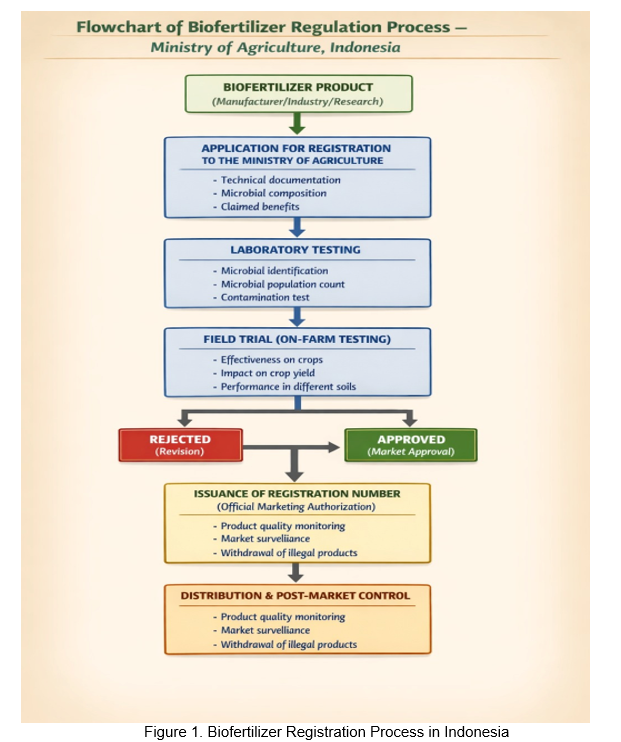
The biofertilizer registration process in Indonesia is conducted through systematic and strict stages to ensure product quality (Figure 1).
The registration process for biofertilizers in Indonesia is designed as a multi-layered evaluation system to ensure that only high-quality products enter the market. This process involves scientific validation, administrative compliance, and industrial standardization.
The first stage involves the submission of technical documentation by producers, including microbial composition, production methods, and claimed agronomic benefits. This documentation serves as the basis for scientific evaluation. (PSP Directorate, 2022)
The second stage is laboratory testing, which aims to verify microbial identity, population density, and product stability during storage. The results determine whether the product meets established microbiological standards. (Saraswati et al., 2012)
The third stage involves field trials conducted on various crops and environmental conditions to evaluate real agricultural effectiveness in improving plant growth and yield. Subsequently, an expert committee from the Ministry of Agriculture evaluates all testing data before issuing final approval. (Prasetyo et al., 2020; Sudharani et al., 2014)
If all stages are successfully completed, the product is granted an official registration number as legal authorization for distribution. This system ensures that only safe and effective products are used in Indonesian agriculture. (PSP Directorate, 2022)
- Quality Testing
Biofertilizer products must comply with Indonesian National Standards (Standar Nasional Indonesia – SNI) or minimum technical specifications. These standards typically regulate parameters such as viable microbial counts, absence of contaminants, pH levels, carrier materials, and shelf-life stability. Ensuring microbial viability is particularly critical, as the effectiveness of biofertilizers depends on the survival and activity of living microorganisms (Chemycal, 2022; Ministry of Agriculture of the Republic of Indonesia, 2019). From a scientific standpoint, quality testing addresses a key challenge in biofertilizer technology namely, the sensitivity of microbial inoculants to environmental conditions such as temperature, moisture, and storage duration. Without strict quality control, microbial populations may decline significantly before application, rendering the product ineffective.
- Effectiveness Testing
In addition to laboratory testing, biofertilizers must demonstrate agronomic effectiveness through field trials conducted under representative agroecological conditions. These trials evaluate parameters such as plant growth, nutrient uptake efficiency, and yield improvement compared to control treatments. This requirement ensures that biofertilizers are not only biologically viable but also practically beneficial under real farming conditions. Given Indonesia’s diverse agroecosystems ranging from upland drylands to irrigated rice fields effectiveness testing plays a crucial role in validating product performance across different environmental contexts (Chemycal, 2022).
- Labeling Requirements
Transparency is enforced through strict labeling regulations. Each product must include detailed information such as brand name, microbial composition, application instructions, expiration date, and official registration number. Labeling serves multiple functions: it provides farmers with essential usage guidance, facilitates traceability, and enables regulatory authorities to monitor products in circulation. Clear labeling is particularly important for biofertilizers, as improper application (e.g., incorrect dosage or timing) can significantly reduce effectiveness (BioInfo Asia Pacific, 2023).
- Production Facility Compliance
Manufacturing must take place in registered and certified facilities that meet technical and hygienic standards. This requirement ensures consistency in production processes, minimizes contamination risks, and supports scalability of biofertilizer industries. From an industrial perspective, facility compliance is essential for maintaining product standardization. Unlike chemical fertilizers, biofertilizers involve living organisms that require controlled environments during production, including sterilization procedures, inoculation protocols, and packaging systems that preserve microbial viability (Ministry of Agriculture of the Republic of Indonesia, 2019).
Supervision and Monitoring
Regulatory compliance does not end at product registration. The Indonesian government implements continuous supervision and monitoring mechanisms to ensure long-term product reliability.
One key instrument is periodic reporting, where producers are required to submit reports every six months detailing production volumes, distribution areas, and product performance. This system allows regulators to track market dynamics and identify potential issues early (BioInfo Asia Pacific, 2023).
In addition, post-market surveillance is conducted to evaluate product effectiveness under real-world conditions. This step is particularly important for biofertilizers, as field performance can vary due to environmental factors such as soil type, climate, and farming practices.
Quality control inspections are also carried out to verify that products in circulation meet established standards. These inspections may include laboratory testing of market samples to assess microbial viability and contamination levels.
Collectively, these mechanisms form a comprehensive regulatory loop from pre-market evaluation to post-market control ensuring that biofertilizers remain safe, effective, and reliable throughout their lifecycle (Ministry of Agriculture of the Republic of Indonesia, 2019; BioInfo Asia Pacific, 2023).
DEVELOPMENT OF BIOFERTILIZERS IN INDONESIA
The development of biofertilizers in Indonesia has shown a dynamic trend between 2020 and 2024. Based on data from the Ministry of Agriculture of the Republic of Indonesia, through the Directorate General of Agricultural Infrastructure and Facilities, the number of registered products including organic fertilizers, biofertilizers, and soil amendments has fluctuated but generally remained on an upward trend during this period.
In 2020, a total of 205 products were registered. This number increased significantly to 312 products in 2021. However, in 2022, the number declined to 246 products before rising sharply again in 2023, reaching a peak of 442 registered products. In 2024, the number slightly decreased to 384 products, although it remained higher than the initial level in 2020.
These fluctuations reflect the dynamics of innovation, product re-registration, and quality evaluation within Indonesia’s biofertilizer sector, which is regulated by the Ministry of Agriculture. The overall increase indicates a growing interest from both industry and research institutions in biofertilizer development, driven by the increasing demand for sustainable agricultural practices and reduced dependence on synthetic fertilizers.
Overall, these data demonstrate that the biofertilizer sector in Indonesia has experienced not only quantitative growth but also qualitative consolidation through regulatory supervision and standardization mechanisms implemented by the government.
The development of biofertilizers in Indonesia is strongly supported by the diversity of local microorganisms, particularly Plant Growth Promoting Rhizobacteria (PGPR). These microbes colonize the rhizosphere and function as biofertilizers, biostimulants, and bioprotectants against plant pathogens (Mokoginta et al., 2022). Other studies have demonstrated that PGPR isolates from various Indonesian ecosystems are capable of producing plant growth hormones such as indole-3-acetic acid (IAA), solubilizing phosphate, and significantly enhancing plant growth (Agustiyani et al., 2021). Furthermore, exploration of indigenous microbes from unique ecosystems, such as Bromo Tengger Semeru National Park, has revealed their potential as biological agents that can both promote plant growth and suppress plant pathogens (Hapsari et al., 2025).
In practice, Indonesia has a wide range of officially registered biofertilizer products, including Bioneensis, DINOSAURUS, FloraOne, Petro Biofertil, Pupuk Enero, and POMI (BioInfo Asia Pacific). These products generally contain microbial consortia such as Azotobacter, Rhizobium, Bacillus, and Pseudomonas, which are formulated according to national biofertilizer quality standards (Simanungkalit et al., 2006; Ministry of Agriculture of the Republic of Indonesia, 2020). In addition, several other commercial products are widely used by farmers, such as SIMBIOS, Bio-Trent, Azo-Trent, RIBOST Hijau, Biofertilizer Tekno Organik, and Agrimeth, reflecting the rapid development of the biofertilizer industry in Indonesia.
The application of PGPR-based biofertilizers has been extensively studied across various crops in Indonesia. For example, the application of biofertilizers in mung bean cultivation has been shown to increase nitrogen-fixing bacterial populations, soil enzyme activity, and nutrient availability (Aprianti et al., 2016). Similarly, in pakcoy (Brassica rapa), PGPR application significantly improves plant height, leaf number, and biomass (Sawal et al., 2024). In cowpea cultivation, different PGPR concentrations have demonstrated significant effects on plant growth and yield (Politeknik Negeri Jember, 2024).
One of the most widely recognized biofertilizer products in Indonesia is EM4 (Effective Microorganisms), which consists of a consortium of beneficial microorganisms such as lactic acid bacteria, photosynthetic bacteria, yeasts, and actinomycetes. EM4 functions as a bioactivator that accelerates organic matter decomposition and enhances nutrient availability in the soil (Higa & Parr, 1994; Wididana et al., 1996). In local contexts, the utilization of indigenous microbial resources such as root-associated microbes from plants like Mimosa pudica has also shown significant potential as a low-cost and adaptive biofertilizer alternative (Sinta & Anindita, 2023).
The development of biofertilizers in Indonesia is also directed toward innovations in formulation, particularly through liquid organic fertilizers enriched with microbial inoculants. These strategies include optimizing organic raw materials, utilizing microbial consortia, and improving field application effectiveness (Safitri et al., 2024). This indicates that biofertilizers are evolving not only as products but also as part of a broader sustainable agricultural innovation system.
From an international research perspective, biofertilizer development in Indonesia has focused on the exploration of indigenous microorganisms that are well adapted to tropical environmental conditions. A study by Yahmed et al. (2025) reported that nitrogen-fixing bacteria isolated from various locations in East Java demonstrated the ability to produce ammonia and adapt effectively to local soil conditions, indicating their potential as alternatives to synthetic nitrogen fertilizers.
Similarly, Purwaningsih et al. (2022) emphasized that local Azotobacter isolates not only improved crop yield but also exhibited additional biological activities such as enzyme and hormone production, thereby enhancing the effectiveness of biofertilizers in sustainable farming systems.
The development of biofertilizers in Indonesia has also progressed toward the use of microbial consortia to improve efficiency. This is supported by findings from Agustiyani et al. (2021), which showed that combining microorganisms with different functional roles, such as nitrogen fixation and phosphate solubilization, produces synergistic effects on plant growth and soil fertility.
Thus, the advancement of biofertilizers in Indonesia is characterized not only by the increasing number of commercial products but also by scientific progress in the utilization of indigenous microbes, consortium-based formulations, and the integration of biotechnology into modern agricultural practices.
An example of registered biofertilizer product presented in Table 1.
Table 1. An example of registered biofertilizer product
|
No
|
Product Name
|
Company
|
Form
|
NPP
|
Registration Decree
|
Microbial Content
|
|
1
|
Proftam
|
PT Pomal Beka Mandiri
|
Liquid
|
03.02.2019.151
|
684.OL/Kpts/SR.310/B/11/2019
|
Bacillus sp., Pseudomonas sp.
|
|
2
|
Kaya Bio
|
PT Petrokimia Kayaku
|
Granular
|
03.01.2019.148
|
683.OL/Kpts/SR.310/B/11/2019
|
Azotobacter sp., Bacillus sp.
|
|
3
|
Karya Subur
|
PT Karya Anugerah Rumpin
|
Liquid
|
03.02.2019.081
|
390.OL/Kpts/SR.310/07/2019
|
Azospirillum sp., Pseudomonas sp.
|
|
4
|
Gliotrico
|
PT Agrosid Manunggal Sentosa
|
Powder
|
03.03.2019.080
|
389.OL/Kpts/SR.310/B/07/2019
|
Trichoderma sp., Gliocladium sp.
|
|
5
|
Biokonversi
|
PT Bio Konversi Indonesia
|
Liquid
|
03.02.2018.072
|
728.OL/Kpts/SR.310/B/12/2019
|
Lactobacillus sp., Bacillus sp.
|
|
6
|
Promax
|
CV Patih Gajah Mada
|
Liquid
|
03.02.2019.171
|
779.OL/Kpts/SR.310/B/12/2019
|
Azotobacter sp., Pseudomonas sp.
|
|
7
|
Hijau Asri
|
PT Maju Makmur Utomo
|
Liquid
|
03.02.2019.174
|
012.OL/Kpts/SR.310/B/01/2020
|
Bacillus sp., Azospirillum sp.
|
|
8
|
DOCTAH
|
PT Pomal Beka Mandiri
|
Liquid
|
03.02.2020.001
|
033.OL/Kpts/SR.310/B/01/2020
|
Streptomyces sp., decomposer microbes
|
|
9
|
EXGRO
|
CV Joyo Makmur Sukses
|
Liquid
|
03.02.2020.098
|
341.OL/Kpts/SR.310/B/08/2020
|
Azotobacter sp., Bacillus sp.
|
|
10
|
LALITHA 21
|
PT Global Agro Sukses
|
Liquid
|
03.02.2020.097
|
340.OL/Kpts/SR.310/B/08/2020
|
Pseudomonas sp., Azospirillum sp.
|
|
11
|
RhizomaX
|
CV Wish Indonesia
|
Powder
|
03.03.2020.094
|
319.OL/Kpts/SR.310/B/08/2020
|
Rhizobium sp., Azospirillum sp.
|
|
12
|
POMI 4in1
|
PT Indo Acidatama Tbk
|
Liquid
|
03.02.2019.076
|
756.OL/Kpts/SR.310/B/12/2019
|
Azotobacter sp., Pseudomonas sp., fungi
|
|
13
|
Beenmax
|
PT Indo Acidatama Tbk
|
Liquid
|
03.02.2019.083
|
409.OL/Kpts/SR.310/B/07/2019
|
Bacillus sp., Pseudomonas sp.
|
|
14
|
A.O.A
|
CV Pesanggem Mitra Abadi
|
Liquid
|
03.02.2019.104
|
517.OL/Kpts/SR.310/B/08/2019
|
Azotobacter sp., Azospirillum sp.
|
|
15
|
RHIZAgold
|
PT Biotrack Technology Indonesia
|
Granular
|
03.01.2019.050
|
243.OL/Kpts/SR.310/B/03/2019
|
Rhizobium sp.
|
|
16
|
MZ2000
|
PT Intidaya Agrolestari
|
Granular
|
03.01.2019.111
|
550.OL/Kpts/SR.310/B/09/2019
|
Bacillus sp., Azotobacter sp.
|
|
17
|
PetroBoost
|
PT Petrokimia Kayaku
|
Powder
|
03.03.2019.096
|
483.OL/Kpts/SR.310/B/08/2019
|
Trichoderma sp., Bacillus sp.
|
|
18
|
SINARBIO
|
PT Petrokimia Kayaku
|
Granular
|
03.01.2016.065
|
303.OL/Kpts/SR.310/B/06/2016
|
Azotobacter sp., Pseudomonas sp.
|
|
19
|
PAENAMAXI
|
PT Prima Agro Tech
|
Powder
|
03.03.2019.016
|
097/Kpts/SR.310/B/01/2019
|
Paenibacillus sp., Bacillus sp.
|
|
20
|
ENDOHEVEA
|
PT Prima Agro Tech
|
Tablet
|
03.04.2018.100
|
495.OL/Kpts/SR.310/B/07/2018
|
Endophytic bacteria
|
|
21
|
bactoPLUS
|
PT Prima Agro Tech
|
Powder
|
03.03.2018.089
|
436.OL/Kpts/SR.310/B/06/2018
|
Bacillus sp., Pseudomonas sp.
|
|
22
|
TARUMA
|
PT Catur Mitra Taruma
|
Liquid
|
—
|
597.OL/Kpts/SR.310/B/08/2018
|
Azotobacter sp., Azospirillum sp.
|
|
23
|
EM-SBBW
|
PT Budi Starch & Sweetener Tbk
|
Liquid
|
—
|
216.OL/Kpts/SR.310/B/03/2018
|
Lactobacillus sp., yeast
|
|
24
|
GENIUS
|
PT Biotek Agro Lestari
|
Liquid
|
—
|
692/Kpts/SR.310/B/09/2018
|
PGPR consortium
|
|
25
|
BIO 7
|
PT Biotek Agro Indonesia
|
Liquid
|
—
|
113.OL/Kpts/SR.310/B/04/2016
|
Mixed microbes
|
|
26
|
Petrofast
|
PT Petrokimia Kayaku
|
Liquid
|
03.02.2019.093
|
453.OL/Kpts/SR.310/B/08/2019
|
Decomposer microbes
|
|
27
|
Kaya Bio (powder)
|
PT Petrokimia Kayaku
|
Powder
|
03.03.2019.099
|
485.OL/Kpts/SR.310/B/08/2019
|
Azotobacter sp., Bacillus sp.
|
|
28
|
MZ Bio
|
PT Intidaya Agrolestari
|
Granular
|
—
|
—
|
Bacillus sp., Azospirillum sp.
|
|
29
|
Bio Max Grow
|
CV Agro Inovasi
|
Liquid
|
—
|
—
|
PGPR consortium
|
|
30
|
Bio Growth Plus
|
PT Agro Lestari
|
Liquid
|
—
|
—
|
Azotobacter sp., Pseudomonas sp.
|
|
31
|
Agro Bio Solution
|
PT Agro Teknologi
|
Liquid
|
—
|
—
|
Mixed microbes
|
|
32
|
Bio Nature
|
CV Natural Fertilizer
|
Liquid
|
—
|
—
|
Bacillus sp., decomposer microbes
|
|
33
|
Bio Active
|
PT Bio Nusantara
|
Liquid
|
—
|
—
|
PGPR consortium
|
|
34
|
Bio Prime
|
PT Prima Bio Indonesia
|
Liquid
|
—
|
—
|
Bacillus sp., Pseudomonas sp.
|
|
35
|
Bio Agro Mix
|
CV Agro Mix Indonesia
|
Liquid
|
—
|
—
|
Mixed microbes
|
The dataset of biofertilizer products in Table 1. indicates that the biofertilizer industry in Indonesia has developed with considerable diversity in terms of formulation, microbial composition, and producing companies. Most registered products are manufactured by national companies, including PT Petrokimia Kayaku, PT Indo Acidatama Tbk, PT Prima Agro Tech, and other private enterprises, reflecting strong industrial participation in the development of biofertilizer technology.
In terms of formulation, liquid biofertilizers dominate the market, followed by powder, granular, and tablet forms. Liquid formulations are generally preferred due to their ease of application and their ability to maintain higher microbial viability during storage and field use. In contrast, granular and tablet formulations are typically applied in more controlled agricultural practices, particularly for specific crops and soil management systems.
Regarding microbial composition, most biofertilizer products contain microorganisms classified as Plant Growth-Promoting Rhizobacteria (PGPR). The most commonly identified genera include Azotobacter, Azospirillum, Bacillus, and Pseudomonas. These microorganisms play essential roles in enhancing plant growth through multiple mechanisms, such as biological nitrogen fixation (Azotobacter, Azospirillum), phosphate solubilization (Bacillus, Pseudomonas), and the production of plant growth regulators.
In addition to bacteria, several products incorporate beneficial fungi such as Trichoderma and Gliocladium, which function as biocontrol agents and organic matter decomposers. The presence of other microorganisms, including Rhizobium, Streptomyces, Paenibacillus, and endophytic bacteria, further demonstrates the functional diversification of biofertilizers, extending beyond nutrient provision to include plant health enhancement and soil quality improvement.
Furthermore, there is a clear trend toward the use of microbial consortia within single formulations, as indicated by products labeled as “PGPR consortium” or “mixed microbes.” This approach aims to improve biofertilizer effectiveness through synergistic interactions among microorganisms with complementary functions, enabling better performance across diverse soil conditions and crop types.
From a regulatory perspective, most products are registered with official registration numbers and decrees issued by the Ministry of Agriculture, indicating compliance with national standards for quality, safety, and efficacy. However, several products lack complete registration information, suggesting variability in regulatory compliance or possibly reflecting products that are still under development or limited distribution.
Overall, the data demonstrate that biofertilizer products in Indonesia have evolved into highly diverse formulations with complex microbial compositions. The dominance of PGPR and the increasing adoption of microbial consortia highlight a shift toward more biologically efficient and functionally integrated biofertilizer technologies. This trend aligns with the broader objective of sustainable agriculture, which emphasizes productivity enhancement while maintaining soil health and environmental sustainability.
EFFECTIVENESS OF REGISTERED BIOFERTILIZERS IN INDONESIA
Field studies in Indonesia demonstrate that registered biofertilizers containing nitrogen-fixing bacteria, phosphate-solubilizing microorganisms, and plant growth-promoting rhizobacteria significantly improve crop productivity. For instance, biofertilizer applications containing Azospirillum, Azotobacter, and Bacillus were reported to increase maize plant height, stem diameter, and leaf area index by 9.3%, 13%, and 19%, respectively, compared to untreated controls. In the same study, grain yield increased by approximately 23.02%, indicating strong agronomic effectiveness under acidic soil conditions. (Supriyono et al., 2020)
In soybean cultivation, biofertilizers containing phosphate-solubilizing bacteria, Azospirillum, and mycorrhiza showed even more significant effects. Nitrogen uptake increased by up to 201%, while phosphorus availability increased by more than 300% depending on treatment combinations. This improvement translated into yield increases of up to 228% compared to untreated controls, demonstrating that biofertilizers can substantially enhance soil nutrient efficiency and crop productivity in marginal lands. (Marlina & Gusmiatun, 2020)
Further studies on consortium-based biofertilizers in Indonesia show that microbial combinations containing Rhizobium, Azotobacter, Azospirillum, and Bacillus are highly effective in improving soil fertility and plant growth. Field trials indicate that such biofertilizer consortia can significantly increase soil microbial populations, nutrient availability, and crop yields under diverse environmental conditions. In some cases, yield improvements ranged from 20% to more than 200%, depending on crop type and soil characteristics. (Pratiwi, 2020)
In maize production systems, biofertilizer applications have been shown to increase yield efficiency and nutrient uptake significantly. Field experiments reported that biofertilizer doses optimized at around 12 L ha⁻¹ produced the highest yield increase of approximately 23%, while also improving plant physiological parameters such as biomass accumulation and leaf development. These findings confirm that biofertilizers are most effective when applied at optimal dosages under suitable soil conditions. (Supriyono et al., 2020)
In addition, long-term field experiments confirm that biofertilizer effectiveness is strongly influenced by microbial synergy, soil properties, and application methods. Studies show that combined inoculation of multiple beneficial microorganisms, especially when integrated with organic amendments, produces higher yield gains compared to single-strain applications. Yield increases of up to 30% or more have been observed when biofertilizers are applied under optimized agronomic practices. (IPB Repository, 2011).
EFFECTIVENESS OF BIOFERTILIZERS IN PEST AND DISEASE CONTROL
Biofertilizers not only function as plant growth promoters but also play an important role in controlling plant diseases through biocontrol mechanisms. Microorganisms such as Bacillus spp. and Trichoderma spp. are able to suppress soil-borne pathogens such as Fusarium oxysporum through competition for space and nutrients, production of antibiotic compounds, and induction of systemic resistance in plants. These mechanisms lead to a significant reduction in disease intensity while improving overall plant health. (Harman et al., 2004; Woo et al., 2014)
Research results show that the application of Trichoderma-based biofertilizers can significantly reduce the incidence of Fusarium wilt disease. In crops such as shallot and chili, the use of Trichoderma spp. has been reported to reduce disease severity by approximately 20–70% compared to untreated controls. In addition, biofertilizer application also improves plant growth parameters such as plant height, leaf number, and biomass, indicating that biocontrol effects occur alongside growth promotion. (Sataral et al., 2019; Almayuindra et al., 2022)
Furthermore, studies on banana plants show that the combination of Bacillus spp. and Trichoderma spp. can significantly suppress Fusarium wilt disease development under field conditions. This biofertilizer treatment not only reduces disease incidence but also decreases the population of Fusarium pathogens in the soil, thereby creating a healthier rhizosphere environment. This demonstrates that biofertilizers have long-term effects on soil microbiological balance. (Fateh et al., 2024)
Other studies have shown that Trichoderma harzianum is effective in controlling various soil-borne pathogens such as Rhizoctonia solani and Fusarium spp. in horticultural crops. Trichoderma-based biofertilizer applications enhance plant growth while significantly reducing disease severity through direct antagonism mechanisms and the production of cell wall-degrading enzymes. (Almayuindra et al., 2022; Abeyratne & Deshappriya, 2018)
In addition, meta-analytical studies indicate that microbial biofertilizers containing antagonistic microorganisms such as Trichoderma and Bacillus are highly effective in sustainable agricultural systems. The combined use of these microorganisms consistently enhances plant resistance to pathogen infection while improving soil structure and microbial activity. In some experimental conditions, disease reduction reached more than 50% compared to untreated controls. (Awala et al., 2024; Harman et al., 2004)
Overall, these findings confirm that biofertilizers serve a dual function, acting both as soil fertility enhancers and biological control agents against plant diseases. This dual functionality makes biofertilizers an essential component of Integrated Disease Management strategies that are environmentally friendly and sustainable. (FAO, 2021; IPCC, 2022)
CHALLENGES IN IMPLEMENTATION
Despite the robustness of the regulatory framework, several structural and operational challenges limit its effectiveness in practice.
- Low Farmer Awareness
One of the most significant barriers is the limited awareness and understanding of biofertilizers among farmers. Many farmers continue to rely heavily on chemical fertilizers due to familiarity, immediate visible effects, and established supply chains. In contrast, biofertilizers often require more knowledge regarding application methods and environmental conditions (BioInfo Asia Pacific, 2023). This highlights the importance of agricultural extension services, demonstration plots, and farmer education programs to bridge the knowledge gap and encourage adoption.
- Infrastructure Limitations
The production and distribution infrastructure for biofertilizers in Indonesia remains underdeveloped. Challenges include limited access to high-quality production facilities, inadequate storage systems, and inefficient distribution networks, particularly in remote areas. These constraints can lead to delays in product delivery and reduced microbial viability due to improper storage conditions, ultimately affecting product performance in the field (BioInfo Asia Pacific, 2023).
- Quality Variability
Variability in product quality is another critical issue. Differences in microbial strains, formulation techniques, carrier materials, and storage conditions can result in inconsistent effectiveness. From a scientific perspective, maintaining microbial stability across different batches is inherently challenging. Variability in quality not only affects crop performance but also undermines farmer confidence in biofertilizer technology.
- Limited Research and Development
Although research on biofertilizers in Indonesia has progressed, it remains insufficient to fully address the complexity of the country’s agroecosystems. Indonesia’s diverse soils, climates, and cropping systems require location-specific microbial formulations.Strengthening research and development (R&D) is essential to identify locally adapted microbial strains, improve formulation technologies, and develop more resilient products. Collaboration between universities, research institutions, and industry stakeholders is crucial to accelerate innovation in this field (Simanungkalit et al., 2006; Bhattacharyya & Jha, 2012).
CONCLUSION
Based on the results of a literature review on registered biofertilizers and their regulations in Indonesia, as well as an analysis of their integration within the Integrated Pest Management (IPM) system, several conclusions can be drawn.
First, biofertilizers are agricultural inputs based on living microorganisms whose main function is to enhance soil fertility through nitrogen fixation, phosphate solubilization, and stimulation of plant growth. Biofertilizers play a role in increasing the availability of plant nutrients through beneficial microbial activity in the rhizosphere.
Second, Indonesia already has a fairly comprehensive regulatory framework through Minister of Agriculture Regulation No. 01 of 2019, which governs the registration, testing, and distribution of biofertilizers. This regulation emphasizes that every biofertilizer product must undergo quality testing, effectiveness testing, and safety testing before being marketed.
Third, results from various studies in Indonesia indicate that officially registered biofertilizers have significant effectiveness in improving plant growth and yield.
Fourth, in the context of Integrated Pest Management (IPM), biofertilizers function as biological agents that can enhance plant resistance to diseases through mechanisms such as microbial competition, antibiosis, and induced systemic resistance. Thus, biofertilizers not only serve as fertilizers but also as part of an environmentally friendly plant disease control strategy.
However, the effectiveness of biofertilizer implementation in Indonesia still faces several challenges, such as variations in product quality, low farmer adoption, and a high dependency on chemical fertilizers and pesticides.
REFERENCES
Abeyratne, K. P., & Deshappriya, N. 2018. Antagonistic potential of Trichoderma harzianum against soil-borne pathogens. Journal of Agricultural Science, 10(3), 45–56.
Agustiyani, D., Dewi, T. K., Laili, N., & Nditasari, A. 2021. Exploring biofertilizer potential of plant growth-promoting rhizobacteria candidates from different plant ecosystems. Biodiversitas Journal of Biological Diversity, 22(5).
Almayuindra, A., Parawansa, A. K., & Saida, S. 2022. Effectiveness of Trichoderma sp. and compost on Fusarium disease suppression in shallot. Agrogenesis Journal of Sustainable Agriculture and Innovation, 3(2), 45–56.
Aprianti, R., Laili, N., & Handayanto, E. 2016. Effect of PGPR application on mung bean growth. Journal of Soil and Land Resources.
Awala, M. A., et al. 2024. Mechanisms of Trichoderma spp. in controlling Fusarium wilt in horticultural crops. Cogent Food & Agriculture, 10(1), 2394685
Bhattacharyya, P. N., & Jha, D. K. 2012. Plant growth-promoting rhizobacteria (PGPR): Emergence in agriculture. World Journal of Microbiology and Biotechnology, 28(4), 1327–1350.
Badan Pusat Statistik. 2023. Statistik Indonesia 2023. Jakarta: BPS.
BioInfo Asia Pacific. 2023. Biofertilizer regulation and market overview in Indonesia.
BSN. 2020. Indonesian National Standard for biological fertilizers and soil amendments. National Standardization Agency of Indonesia.
Chemycal. 2022. Regulatory requirements for fertilizer registration in Indonesia.
Creswell, J. W. 2018. Research Design: Qualitative, Quantitative, and Mixed Methods Approaches. Sage Publications.
Directorate of Fertilizers and Pesticides. 2022. Biofertilizer Registration Database. Ministry of Agriculture of Indonesia.
Food and Agriculture Organization (FAO). 2017. The future of food and agriculture: Trends and challenges. Rome: FAO
FAO. 2019. The state of the world’s soil resources. Food and Agriculture Organization of the United Nations.
FAO. 2021. Biofertilizers and Sustainable Agriculture. Food and Agriculture Organization of the United Nations.
Fateh, A. M., Wibowo, A., & Joko, T. 2024. Biological control of Fusarium wilt in banana using Bacillus and Trichoderma consortia. UGM Agricultural Research Reports, 12(1), 1–15.
Hapsari, F., Muhidin, A., Aini, L. Q., & Rachmawati, R. 2025. PGPR potential against plant pathogens. Jurnal Proteksi Tanaman.
Harman, G. E., Howell, C. R., Viterbo, A., Chet, I., & Lorito, M. 2004. Trichoderma species opportunistic, avirulent plant symbionts. Nature Reviews Microbiology, 2(1), 43–56. https://doi.org/10.1038/nrmicro797
Hartatik, W., Husnain, & Widowati, L. R. 2015. The role of organic fertilizers in improving soil productivity. Jurnal Sumberdaya Lahan, 9(2), 107–120.
Higa, T., & Parr, J. F. (1994). Beneficial and Effective Microorganisms for Sustainable Agriculture.
Hindersah, R., Rostini, N., Harsono, A., & Nuryani. 2017. Peningkatan populasi, pertumbuhan dan serapan nitrogen tanaman kedelai dengan pemberian Azotobacter chroococcum. Jurnal Agronomi Indonesia, 45(1), 30–35.
Hindersah, R., Kalay, M., Talahaturuson, A., & Lakburlawal, Y. 2018. Nitrogen fixing bacteria Azotobacter as biofertilizer and biocontrol in long bean. Agric (Journal of Agricultural Science), 30(1), 25–32.
Infrastructure and Facilities (PSP). 2024. Statistical Data on Registered Organic Fertilizers, Biofertilizers, and Soil Amendments in Indonesia (2020–2024).
IPB Repository. 2011. Viability and effectiveness of biofertilizer under field conditions. IPB Scientific Report.
IPCC. 2022. Climate Change and Land Use. Intergovernmental Panel on Climate Change Report.
Mahanty, T., Bhattacharjee, S., Goswami, M., et al. 2017. Biofertilizers: A potential approach for sustainable agriculture development. Environmental Science and Pollution Research, 24(4), 3315–3335.
Malusá, E., Sas-Paszt, L., & Ciesielska, J. 2016. Technologies for beneficial microorganisms inocula used as biofertilizers. The Scientific World Journal, 2016, 1–12.
Marlina, N., & Gusmiatun, G. 2020. Biofertilizer effects on soybean productivity in lowland areas. Agrosainstek Journal, 4(2), 1–12.
Ministry of Agriculture of the Republic of Indonesia. 2019. Minister of Agriculture Regulation No. 1 of 2019 on the Registration of Biofertilizers, Soil Amendments, and Organic Fertilizers.
Ministry of Agriculture of the Republic of Indonesia. 2020. Strategic Plan of the Ministry of Agriculture 2020–2024. Jakarta: Ministry of Agriculture.
Ministry of Agriculture of the Republic of Indonesia. 2020. Guidelines for Biofertilizer Registration. Jakarta: Directorate General of Agricultural Infrastructure and Facilities.
Ministry of Agriculture of the Republic of Indonesia. 2020. Regulation on Biofertilizers and Soil Amenders.
Ministry of Agriculture of the Republic of Indonesia. 2022. Biofertilizer Policy and Statistics in Indonesia. Jakarta.
Ministry of Agriculture of the Republic of Indonesia. 2023. List of Registered Biofertilizers. Directorate of Fertilizers and Pesticides.
Mokoginta, R. F., Tumbelaka, S., & Nangoi, R. 2022. Effect of PGPR on plant growth. Jurnal Agroekoteknologi Terapan.
Prasetyo, J., et al. 2020. Biofertilizer effect on maize yield. Indonesian Journal of Agronomy, 48(2), 123–131.
Pratiwi, E. 2020. The current status and development of biofertilizer in Indonesia. International Conference on Biofertilizers Proceedings, pp. 1–10.
Purwaningsih, S., Mulyani, N., Nugroho, A. A., & Suriani, N. L. 2022. Effectiveness of rhizosphere Azotobacter bacteria in promoting rice growth and yield. KnE Life Sciences.
PSP Directorate. (2022). Biofertilizer Registration Guidelines. Ministry of Agriculture of Indonesia
Richardson, A. E., Barea, J. M., McNeill, A. M., & Prigent-Combaret, C. 2009. Acquisition of phosphorus and nitrogen in the rhizosphere. Plant and Soil, 321(1–2), 305–339.
Saraswati, R., et al. 2012. Microbial evaluation of biofertilizer products. Journal of Soil Science and Environmental Management, 14(1), 21–30.
Safitri, A., Sjah, T., & Budastra, K. 2024. Biofertilizer development strategies. Jurnal Economina.
Sataral, M., Nurdiansyah, D., & Lamandasa, F. H. 2019. Effect of Trichoderma sp. on Fusarium disease intensity in shallot. Journal of Tropical Plant Protection, 7(2), 45–52.
Sawal, S. M., Suhaeni, S., & Indradewi, R. 2024. Effect of PGPR on pakcoy growth. Perbal: Sustainable Agriculture Journal.
Simanungkalit, R. D. M., et al. 2006. Organic Fertilizers and Biofertilizers. Indonesian Soil Research Institute.
Sinta, S., & Anindita, N. S. 2023. Production of PGPR-based biofertilizer. Proceedings of National Seminar LPPM.
Supriyono, S., et al. 2020. Effectiveness of biofertilizer on maize yield in acidic soil. Journal of Tropical Soils, 25(1), 11–20.
Sudharani, D. R., et al. 2014. Biofertilizer and nutrient uptake in maize. International Journal of Agriculture Sciences, 6(2), 331–335.
Suriadikarta, D. A., & Simanungkalit, R. D. M. 2006. Organic fertilizers and biofertilizers. Indonesian Soil Research and Development Center, Bogor.
Tilman, D., Cassman, K. G., Matson, P. A., Naylor, R., & Polasky, S. 2002. Agricultural sustainability and intensive production practices. Nature, 418, 671–677.
United Nations. 2015. Transforming our world: The 2030 Agenda for Sustainable Development. New York: United Nations.
Vessey, J. K. 2003. Plant growth promoting rhizobacteria as biofertilizers. Plant and Soil, 255(2), 571–586.
Wididana, G. N., Higa, T., & Parr, J. F. 1996. The Concept of Effective Microorganisms.
Woo, S. L., Ruocco, M., Vinale, F., & Lorito, M. 2014. Trichoderma-based products and their role in sustainable agriculture. Plant Pathology Journal, 30(2), 71–80. https://doi.org/10.5423/PPJ.OA.02.2014.0020
Yahmed, A. H. M. A. B., Mustafa, I., & Rahayu, F. 2025. Isolation of nitrogen-fixing bacteria from rhizosphere of sugarcane plantation as candidates for biofertilizer. Journal of Experimental Life Science, 15(1), 26–30. (jels.ub.ac.id)
Vessey, J. K. 2003. Plant growth promoting rhizobacteria as biofertilizers. Plant and Soil, 255, 571–586.
Zulfahmi, Z., Siregar, R. A., & Siregar, E. J. 2024. Application of biofertilizer in soybean. Jurnal Pendidikan Tambusai.

Registered Biofertilizer and Their Regulation in Indonesia
DOI: https://doi.org/10.56669/MHOH6659
This manuscript was originally presented at the ACRI, ATRI, WorldVeg, and FFTC workshop titled “Pest and Disease Management Strategies for Sustainable Agriculture,” held in Taichung, Taiwan, on May 5–6, 2026.
ABSTRACT
Biofertilizers are biological products containing beneficial microorganisms that can improve soil fertility and plant growth. In addition, biofertilizers are also capable of suppressing the development of plant pests and diseases. In Indonesia, the development and commercialization of biofertilizers have increased significantly over the past decades. This paper aims to analyses registered biofertilizers and their regulatory framework in Indonesia. This study uses a literature review approach to examine government regulations, registration requirements, and implementation challenges. The results show that Indonesia has established a comprehensive regulatory system under the Ministry of Agriculture to ensure the quality, safety, and effectiveness of biofertilizers. However, several challenges still exist, such as low farmer awareness, limited infrastructure, and weaknesses in quality control. Strengthening regulatory enforcement and fostering innovation are essential to support sustainable agriculture
Keywords: beneficial microorganism, challenges application, registration, and sustainable agriculture
INTRODUCTION
Indonesia is widely recognized as a tropical agrarian archipelagic country with highly diverse geographical conditions, ecosystems, and natural resources. More than 17,000 islands make up its territory, each characterized by different soil types, climates, and topographies. This diversity represents a significant potential for the agricultural sector, while at the same time posing complex challenges in managing the national food system. With a population that has reached approximately 287 million people, the pressure on food availability continues to increase, both in terms of production, distribution, and the sustainability of supporting resources (Badan Pusat Statistik, 2023).
In recent decades, Indonesia’s agricultural sector has faced increasingly complex global challenges, such as climate change, land degradation, declining soil quality, conversion of agricultural land into industrial and residential areas, and energy crises. Climate change, for instance, has led to uncertainty in planting seasons, increased frequency of extreme weather events, and disruptions to crop productivity. These conditions require new approaches to food system management that are not only focused on increasing production but also emphasize environmental sustainability and resource efficiency (Food and Agriculture Organization, 2017).
In line with these conditions, the Government of Indonesia places food security as one of the main pillars of national development. Food security is not only defined as the availability of sufficient food, but also includes aspects of accessibility, distribution, price stability, as well as food safety and quality. Therefore, increasing domestic food production has become a strategic priority to reduce dependence on imports and maintain national socio-economic stability (Ministry of Agriculture of the Republic of Indonesia, 2020).
Government efforts to increase food production have been carried out through various policies and programs, one of which is the development of large-scale chemical fertilizer industries. The establishment of fertilizer plants in various regions aims to ensure the availability of fertilizers for farmers in an equitable and sustainable manner. Chemical fertilizers have been proven to increase crop yields in the short term due to their readily available nutrient content. However, long-term and continuous use of chemical fertilizers can have negative impacts, such as declining soil fertility, imbalance of soil microorganisms, environmental pollution, and increased dependency of farmers on external inputs (Tilman et al., 2002).
As a more environmentally friendly alternative, the development of biofertilizers has gained increasing attention. Biofertilizers are products containing living microorganisms that function to enhance nutrient availability for plants, improve soil structure, and assist in the natural control of pests and diseases. The use of biofertilizers not only contributes to increasing crop productivity but also supports the sustainability of agricultural systems by maintaining soil ecosystem balance (Simanungkalit et al., 2006; Vessey, 2003).
The concept of biofertilizer use is also aligned with the principles of sustainable development as outlined in the global Sustainable Development Goals (SDGs), particularly Goal 2 (Zero Hunger), which aims to end hunger and improve food security, and Goal 13 (Climate Action), which emphasizes the importance of mitigating and adapting to climate change (United Nations, 2015). In this context, the development and utilization of biofertilizers become an important part of the transformation toward a more sustainable and resilient agricultural system.
To ensure that biofertilizers circulating in the market are of good quality, safe, and effective, the Government of Indonesia has established various regulations that must be complied with by producers. These regulations cover product quality standards, production processes, effectiveness testing, as well as licensing and monitoring mechanisms. Such policies are essential to protect farmers as end users and to maintain trust in biofertilizer products in the national market (Ministry of Agriculture of the Republic of Indonesia, 2020).
Thus, the development of biofertilizers is not only a technical solution to improving agricultural productivity, but also part of a broader strategy to achieve sustainable national food security. Policy support, technological innovation, and stakeholder awareness are key factors for the successful implementation of biofertilizers in Indonesia’s agricultural system in the future.
METHODOLOGY
This paper uses a literature review method by examining various secondary sources such as government regulations, scientific journals, Ministry of Agriculture reports, and international publications related to biofertilizers. The analysis is conducted descriptively to illustrate the regulatory conditions and the list of registered biofertilizers in Indonesia. (Creswell, 2018)
This approach allows the identification of regulatory patterns, registration requirements, and policy implementation challenges without conducting direct field experiments. (Ministry of Agriculture of Indonesia, 2020).
DEFINITION OF BIOFERTILIZER
Biofertilizers are agricultural inputs containing living microorganisms that function to enhance nutrient availability through biological processes in the soil. These microorganisms generally operate in the rhizosphere and contribute to improving nutrient uptake efficiency as well as plant growth. In the context of modern agriculture, biofertilizers are considered an essential component of sustainable farming systems due to their ability to reduce dependency on synthetic fertilizers while improving soil quality (Pratiwi, 2020).
Various types of microorganisms are utilized in biofertilizer formulations, including nitrogen-fixing bacteria, phosphate-solubilizing bacteria, and plant growth-promoting microorganisms. One important group is nitrogen-fixing bacteria such as Azotobacter, which play a role in converting atmospheric nitrogen into forms available for plant uptake. A study by Hindersah et al. (2017) demonstrated that the application of Azotobacter chroococcum significantly increased root growth, plant height, and nitrogen uptake in soybean plants.
In addition, Azotobacter also functions as a Plant Growth Promoting Rhizobacteria (PGPR) capable of producing phytohormones and contributing to plant disease suppression. Research by Hindersah et al. (2018) showed that Azotobacter not only enhanced the growth of long bean plants but also acted as a biocontrol agent against soil-borne pathogens.
Another international study conducted in Indonesia by Purwaningsih et al. (2022) reported that Azotobacter isolates from the rice rhizosphere possess multifunctional capabilities, including nitrogen fixation, enzyme production, synthesis of indole-3-acetic acid (IAA), and phosphate solubilization, which significantly improved rice growth and yield.
Furthermore, exploration of potential biofertilizer microorganisms continues to expand. A recent study by Yahmed et al. (2025) identified several nitrogen-fixing bacterial isolates from sugarcane plantations in East Java with high potential as biofertilizer candidates to substitute synthetic fertilizers.
In addition to nitrogen-fixing bacteria, other beneficial microorganisms such as Plant Growth Promoting Rhizobacteria (PGPR) have also been widely studied. Agustiyani et al. (2021), reported that PGPR candidates from various plant ecosystems in Indonesia exhibit important traits such as IAA production, phosphate solubilization, and enhancement of soil biological activity, all of which support biofertilizer functionality.
Overall, biofertilizers function through multiple mechanisms, including nitrogen fixation, phosphate solubilization, production of plant growth hormones, and enhancement of soil microbial activity. These combined functions make biofertilizers a key component in sustainable agricultural systems.
REGULATORY FRAMEWORK OF BIOFERTILIZERS IN INDONESIA
Main Regulation
The regulatory framework for biofertilizers in Indonesia is based on several legal instruments, including Ministerial Regulations on organic fertilizers, biological fertilizers, and soil amendments, as well as the Indonesian National Standard (SNI) for biofertilizers. The system is also strengthened by post-market surveillance to ensure continued compliance. (BSN, 2020)
The regulation includes microbial quality standards, maximum contamination limits, product labelling requirements, and distribution monitoring systems. These components are designed to maintain product quality and protect users from substandard products. (FAO, 2021)
The main objective of this regulatory framework is not only to ensure biofertilizer effectiveness but also to prevent potential ecological risks that may disrupt soil ecosystem balance. Therefore, the regulatory approach is both preventive and corrective in nature. (Vessey, 2003)
The governance of biofertilizers in Indonesia is primarily anchored in Minister of Agriculture Regulation No. 01 of 2019 concerning the registration of organic fertilizers, biofertilizers, and soil conditioners. This regulation represents a significant policy reform that consolidates previously fragmented regulatory instruments into a unified framework. It establishes legal certainty for producers, distributors, and users, while simultaneously ensuring that agricultural inputs meet standards of quality, safety, and agronomic effectiveness (Ministry of Agriculture of the Republic of Indonesia, 2019; BioInfo Asia Pacific, 2023).
From a policy perspective, this regulation reflects Indonesia’s strategic transition toward sustainable agriculture. It emphasizes not only input control but also environmental protection and soil health restoration. The inclusion of biofertilizers within the same regulatory umbrella as organic fertilizers and soil conditioners indicates a systems-based approach to soil fertility management. Such integration is essential given that biofertilizers often function synergistically with organic amendments to enhance nutrient cycling and microbial activity (Simanungkalit et al., 2006).
Furthermore, the regulation aligns with global trends in agricultural governance, where biological inputs are increasingly recognized as key components in reducing dependency on synthetic fertilizers. Countries worldwide are strengthening regulatory frameworks to ensure product credibility and farmer confidence, and Indonesia’s policy can be viewed as part of this broader movement (Bhattacharyya & Jha, 2012).
Biofertilizer Registration Process in Indonesia
The biofertilizer registration process in Indonesia is conducted through systematic and strict stages to ensure product quality (Figure 1).
The registration process for biofertilizers in Indonesia is designed as a multi-layered evaluation system to ensure that only high-quality products enter the market. This process involves scientific validation, administrative compliance, and industrial standardization.
The first stage involves the submission of technical documentation by producers, including microbial composition, production methods, and claimed agronomic benefits. This documentation serves as the basis for scientific evaluation. (PSP Directorate, 2022)
The second stage is laboratory testing, which aims to verify microbial identity, population density, and product stability during storage. The results determine whether the product meets established microbiological standards. (Saraswati et al., 2012)
The third stage involves field trials conducted on various crops and environmental conditions to evaluate real agricultural effectiveness in improving plant growth and yield. Subsequently, an expert committee from the Ministry of Agriculture evaluates all testing data before issuing final approval. (Prasetyo et al., 2020; Sudharani et al., 2014)
If all stages are successfully completed, the product is granted an official registration number as legal authorization for distribution. This system ensures that only safe and effective products are used in Indonesian agriculture. (PSP Directorate, 2022)
Biofertilizer products must comply with Indonesian National Standards (Standar Nasional Indonesia – SNI) or minimum technical specifications. These standards typically regulate parameters such as viable microbial counts, absence of contaminants, pH levels, carrier materials, and shelf-life stability. Ensuring microbial viability is particularly critical, as the effectiveness of biofertilizers depends on the survival and activity of living microorganisms (Chemycal, 2022; Ministry of Agriculture of the Republic of Indonesia, 2019). From a scientific standpoint, quality testing addresses a key challenge in biofertilizer technology namely, the sensitivity of microbial inoculants to environmental conditions such as temperature, moisture, and storage duration. Without strict quality control, microbial populations may decline significantly before application, rendering the product ineffective.
In addition to laboratory testing, biofertilizers must demonstrate agronomic effectiveness through field trials conducted under representative agroecological conditions. These trials evaluate parameters such as plant growth, nutrient uptake efficiency, and yield improvement compared to control treatments. This requirement ensures that biofertilizers are not only biologically viable but also practically beneficial under real farming conditions. Given Indonesia’s diverse agroecosystems ranging from upland drylands to irrigated rice fields effectiveness testing plays a crucial role in validating product performance across different environmental contexts (Chemycal, 2022).
Transparency is enforced through strict labeling regulations. Each product must include detailed information such as brand name, microbial composition, application instructions, expiration date, and official registration number. Labeling serves multiple functions: it provides farmers with essential usage guidance, facilitates traceability, and enables regulatory authorities to monitor products in circulation. Clear labeling is particularly important for biofertilizers, as improper application (e.g., incorrect dosage or timing) can significantly reduce effectiveness (BioInfo Asia Pacific, 2023).
Manufacturing must take place in registered and certified facilities that meet technical and hygienic standards. This requirement ensures consistency in production processes, minimizes contamination risks, and supports scalability of biofertilizer industries. From an industrial perspective, facility compliance is essential for maintaining product standardization. Unlike chemical fertilizers, biofertilizers involve living organisms that require controlled environments during production, including sterilization procedures, inoculation protocols, and packaging systems that preserve microbial viability (Ministry of Agriculture of the Republic of Indonesia, 2019).
Supervision and Monitoring
Regulatory compliance does not end at product registration. The Indonesian government implements continuous supervision and monitoring mechanisms to ensure long-term product reliability.
One key instrument is periodic reporting, where producers are required to submit reports every six months detailing production volumes, distribution areas, and product performance. This system allows regulators to track market dynamics and identify potential issues early (BioInfo Asia Pacific, 2023).
In addition, post-market surveillance is conducted to evaluate product effectiveness under real-world conditions. This step is particularly important for biofertilizers, as field performance can vary due to environmental factors such as soil type, climate, and farming practices.
Quality control inspections are also carried out to verify that products in circulation meet established standards. These inspections may include laboratory testing of market samples to assess microbial viability and contamination levels.
Collectively, these mechanisms form a comprehensive regulatory loop from pre-market evaluation to post-market control ensuring that biofertilizers remain safe, effective, and reliable throughout their lifecycle (Ministry of Agriculture of the Republic of Indonesia, 2019; BioInfo Asia Pacific, 2023).
DEVELOPMENT OF BIOFERTILIZERS IN INDONESIA
The development of biofertilizers in Indonesia has shown a dynamic trend between 2020 and 2024. Based on data from the Ministry of Agriculture of the Republic of Indonesia, through the Directorate General of Agricultural Infrastructure and Facilities, the number of registered products including organic fertilizers, biofertilizers, and soil amendments has fluctuated but generally remained on an upward trend during this period.
In 2020, a total of 205 products were registered. This number increased significantly to 312 products in 2021. However, in 2022, the number declined to 246 products before rising sharply again in 2023, reaching a peak of 442 registered products. In 2024, the number slightly decreased to 384 products, although it remained higher than the initial level in 2020.
These fluctuations reflect the dynamics of innovation, product re-registration, and quality evaluation within Indonesia’s biofertilizer sector, which is regulated by the Ministry of Agriculture. The overall increase indicates a growing interest from both industry and research institutions in biofertilizer development, driven by the increasing demand for sustainable agricultural practices and reduced dependence on synthetic fertilizers.
Overall, these data demonstrate that the biofertilizer sector in Indonesia has experienced not only quantitative growth but also qualitative consolidation through regulatory supervision and standardization mechanisms implemented by the government.
The development of biofertilizers in Indonesia is strongly supported by the diversity of local microorganisms, particularly Plant Growth Promoting Rhizobacteria (PGPR). These microbes colonize the rhizosphere and function as biofertilizers, biostimulants, and bioprotectants against plant pathogens (Mokoginta et al., 2022). Other studies have demonstrated that PGPR isolates from various Indonesian ecosystems are capable of producing plant growth hormones such as indole-3-acetic acid (IAA), solubilizing phosphate, and significantly enhancing plant growth (Agustiyani et al., 2021). Furthermore, exploration of indigenous microbes from unique ecosystems, such as Bromo Tengger Semeru National Park, has revealed their potential as biological agents that can both promote plant growth and suppress plant pathogens (Hapsari et al., 2025).
In practice, Indonesia has a wide range of officially registered biofertilizer products, including Bioneensis, DINOSAURUS, FloraOne, Petro Biofertil, Pupuk Enero, and POMI (BioInfo Asia Pacific). These products generally contain microbial consortia such as Azotobacter, Rhizobium, Bacillus, and Pseudomonas, which are formulated according to national biofertilizer quality standards (Simanungkalit et al., 2006; Ministry of Agriculture of the Republic of Indonesia, 2020). In addition, several other commercial products are widely used by farmers, such as SIMBIOS, Bio-Trent, Azo-Trent, RIBOST Hijau, Biofertilizer Tekno Organik, and Agrimeth, reflecting the rapid development of the biofertilizer industry in Indonesia.
The application of PGPR-based biofertilizers has been extensively studied across various crops in Indonesia. For example, the application of biofertilizers in mung bean cultivation has been shown to increase nitrogen-fixing bacterial populations, soil enzyme activity, and nutrient availability (Aprianti et al., 2016). Similarly, in pakcoy (Brassica rapa), PGPR application significantly improves plant height, leaf number, and biomass (Sawal et al., 2024). In cowpea cultivation, different PGPR concentrations have demonstrated significant effects on plant growth and yield (Politeknik Negeri Jember, 2024).
One of the most widely recognized biofertilizer products in Indonesia is EM4 (Effective Microorganisms), which consists of a consortium of beneficial microorganisms such as lactic acid bacteria, photosynthetic bacteria, yeasts, and actinomycetes. EM4 functions as a bioactivator that accelerates organic matter decomposition and enhances nutrient availability in the soil (Higa & Parr, 1994; Wididana et al., 1996). In local contexts, the utilization of indigenous microbial resources such as root-associated microbes from plants like Mimosa pudica has also shown significant potential as a low-cost and adaptive biofertilizer alternative (Sinta & Anindita, 2023).
The development of biofertilizers in Indonesia is also directed toward innovations in formulation, particularly through liquid organic fertilizers enriched with microbial inoculants. These strategies include optimizing organic raw materials, utilizing microbial consortia, and improving field application effectiveness (Safitri et al., 2024). This indicates that biofertilizers are evolving not only as products but also as part of a broader sustainable agricultural innovation system.
From an international research perspective, biofertilizer development in Indonesia has focused on the exploration of indigenous microorganisms that are well adapted to tropical environmental conditions. A study by Yahmed et al. (2025) reported that nitrogen-fixing bacteria isolated from various locations in East Java demonstrated the ability to produce ammonia and adapt effectively to local soil conditions, indicating their potential as alternatives to synthetic nitrogen fertilizers.
Similarly, Purwaningsih et al. (2022) emphasized that local Azotobacter isolates not only improved crop yield but also exhibited additional biological activities such as enzyme and hormone production, thereby enhancing the effectiveness of biofertilizers in sustainable farming systems.
The development of biofertilizers in Indonesia has also progressed toward the use of microbial consortia to improve efficiency. This is supported by findings from Agustiyani et al. (2021), which showed that combining microorganisms with different functional roles, such as nitrogen fixation and phosphate solubilization, produces synergistic effects on plant growth and soil fertility.
Thus, the advancement of biofertilizers in Indonesia is characterized not only by the increasing number of commercial products but also by scientific progress in the utilization of indigenous microbes, consortium-based formulations, and the integration of biotechnology into modern agricultural practices.
An example of registered biofertilizer product presented in Table 1.
Table 1. An example of registered biofertilizer product
No
Product Name
Company
Form
NPP
Registration Decree
Microbial Content
1
Proftam
PT Pomal Beka Mandiri
Liquid
03.02.2019.151
684.OL/Kpts/SR.310/B/11/2019
Bacillus sp., Pseudomonas sp.
2
Kaya Bio
PT Petrokimia Kayaku
Granular
03.01.2019.148
683.OL/Kpts/SR.310/B/11/2019
Azotobacter sp., Bacillus sp.
3
Karya Subur
PT Karya Anugerah Rumpin
Liquid
03.02.2019.081
390.OL/Kpts/SR.310/07/2019
Azospirillum sp., Pseudomonas sp.
4
Gliotrico
PT Agrosid Manunggal Sentosa
Powder
03.03.2019.080
389.OL/Kpts/SR.310/B/07/2019
Trichoderma sp., Gliocladium sp.
5
Biokonversi
PT Bio Konversi Indonesia
Liquid
03.02.2018.072
728.OL/Kpts/SR.310/B/12/2019
Lactobacillus sp., Bacillus sp.
6
Promax
CV Patih Gajah Mada
Liquid
03.02.2019.171
779.OL/Kpts/SR.310/B/12/2019
Azotobacter sp., Pseudomonas sp.
7
Hijau Asri
PT Maju Makmur Utomo
Liquid
03.02.2019.174
012.OL/Kpts/SR.310/B/01/2020
Bacillus sp., Azospirillum sp.
8
DOCTAH
PT Pomal Beka Mandiri
Liquid
03.02.2020.001
033.OL/Kpts/SR.310/B/01/2020
Streptomyces sp., decomposer microbes
9
EXGRO
CV Joyo Makmur Sukses
Liquid
03.02.2020.098
341.OL/Kpts/SR.310/B/08/2020
Azotobacter sp., Bacillus sp.
10
LALITHA 21
PT Global Agro Sukses
Liquid
03.02.2020.097
340.OL/Kpts/SR.310/B/08/2020
Pseudomonas sp., Azospirillum sp.
11
RhizomaX
CV Wish Indonesia
Powder
03.03.2020.094
319.OL/Kpts/SR.310/B/08/2020
Rhizobium sp., Azospirillum sp.
12
POMI 4in1
PT Indo Acidatama Tbk
Liquid
03.02.2019.076
756.OL/Kpts/SR.310/B/12/2019
Azotobacter sp., Pseudomonas sp., fungi
13
Beenmax
PT Indo Acidatama Tbk
Liquid
03.02.2019.083
409.OL/Kpts/SR.310/B/07/2019
Bacillus sp., Pseudomonas sp.
14
A.O.A
CV Pesanggem Mitra Abadi
Liquid
03.02.2019.104
517.OL/Kpts/SR.310/B/08/2019
Azotobacter sp., Azospirillum sp.
15
RHIZAgold
PT Biotrack Technology Indonesia
Granular
03.01.2019.050
243.OL/Kpts/SR.310/B/03/2019
Rhizobium sp.
16
MZ2000
PT Intidaya Agrolestari
Granular
03.01.2019.111
550.OL/Kpts/SR.310/B/09/2019
Bacillus sp., Azotobacter sp.
17
PetroBoost
PT Petrokimia Kayaku
Powder
03.03.2019.096
483.OL/Kpts/SR.310/B/08/2019
Trichoderma sp., Bacillus sp.
18
SINARBIO
PT Petrokimia Kayaku
Granular
03.01.2016.065
303.OL/Kpts/SR.310/B/06/2016
Azotobacter sp., Pseudomonas sp.
19
PAENAMAXI
PT Prima Agro Tech
Powder
03.03.2019.016
097/Kpts/SR.310/B/01/2019
Paenibacillus sp., Bacillus sp.
20
ENDOHEVEA
PT Prima Agro Tech
Tablet
03.04.2018.100
495.OL/Kpts/SR.310/B/07/2018
Endophytic bacteria
21
bactoPLUS
PT Prima Agro Tech
Powder
03.03.2018.089
436.OL/Kpts/SR.310/B/06/2018
Bacillus sp., Pseudomonas sp.
22
TARUMA
PT Catur Mitra Taruma
Liquid
—
597.OL/Kpts/SR.310/B/08/2018
Azotobacter sp., Azospirillum sp.
23
EM-SBBW
PT Budi Starch & Sweetener Tbk
Liquid
—
216.OL/Kpts/SR.310/B/03/2018
Lactobacillus sp., yeast
24
GENIUS
PT Biotek Agro Lestari
Liquid
—
692/Kpts/SR.310/B/09/2018
PGPR consortium
25
BIO 7
PT Biotek Agro Indonesia
Liquid
—
113.OL/Kpts/SR.310/B/04/2016
Mixed microbes
26
Petrofast
PT Petrokimia Kayaku
Liquid
03.02.2019.093
453.OL/Kpts/SR.310/B/08/2019
Decomposer microbes
27
Kaya Bio (powder)
PT Petrokimia Kayaku
Powder
03.03.2019.099
485.OL/Kpts/SR.310/B/08/2019
Azotobacter sp., Bacillus sp.
28
MZ Bio
PT Intidaya Agrolestari
Granular
—
—
Bacillus sp., Azospirillum sp.
29
Bio Max Grow
CV Agro Inovasi
Liquid
—
—
PGPR consortium
30
Bio Growth Plus
PT Agro Lestari
Liquid
—
—
Azotobacter sp., Pseudomonas sp.
31
Agro Bio Solution
PT Agro Teknologi
Liquid
—
—
Mixed microbes
32
Bio Nature
CV Natural Fertilizer
Liquid
—
—
Bacillus sp., decomposer microbes
33
Bio Active
PT Bio Nusantara
Liquid
—
—
PGPR consortium
34
Bio Prime
PT Prima Bio Indonesia
Liquid
—
—
Bacillus sp., Pseudomonas sp.
35
Bio Agro Mix
CV Agro Mix Indonesia
Liquid
—
—
Mixed microbes
The dataset of biofertilizer products in Table 1. indicates that the biofertilizer industry in Indonesia has developed with considerable diversity in terms of formulation, microbial composition, and producing companies. Most registered products are manufactured by national companies, including PT Petrokimia Kayaku, PT Indo Acidatama Tbk, PT Prima Agro Tech, and other private enterprises, reflecting strong industrial participation in the development of biofertilizer technology.
In terms of formulation, liquid biofertilizers dominate the market, followed by powder, granular, and tablet forms. Liquid formulations are generally preferred due to their ease of application and their ability to maintain higher microbial viability during storage and field use. In contrast, granular and tablet formulations are typically applied in more controlled agricultural practices, particularly for specific crops and soil management systems.
Regarding microbial composition, most biofertilizer products contain microorganisms classified as Plant Growth-Promoting Rhizobacteria (PGPR). The most commonly identified genera include Azotobacter, Azospirillum, Bacillus, and Pseudomonas. These microorganisms play essential roles in enhancing plant growth through multiple mechanisms, such as biological nitrogen fixation (Azotobacter, Azospirillum), phosphate solubilization (Bacillus, Pseudomonas), and the production of plant growth regulators.
In addition to bacteria, several products incorporate beneficial fungi such as Trichoderma and Gliocladium, which function as biocontrol agents and organic matter decomposers. The presence of other microorganisms, including Rhizobium, Streptomyces, Paenibacillus, and endophytic bacteria, further demonstrates the functional diversification of biofertilizers, extending beyond nutrient provision to include plant health enhancement and soil quality improvement.
Furthermore, there is a clear trend toward the use of microbial consortia within single formulations, as indicated by products labeled as “PGPR consortium” or “mixed microbes.” This approach aims to improve biofertilizer effectiveness through synergistic interactions among microorganisms with complementary functions, enabling better performance across diverse soil conditions and crop types.
From a regulatory perspective, most products are registered with official registration numbers and decrees issued by the Ministry of Agriculture, indicating compliance with national standards for quality, safety, and efficacy. However, several products lack complete registration information, suggesting variability in regulatory compliance or possibly reflecting products that are still under development or limited distribution.
Overall, the data demonstrate that biofertilizer products in Indonesia have evolved into highly diverse formulations with complex microbial compositions. The dominance of PGPR and the increasing adoption of microbial consortia highlight a shift toward more biologically efficient and functionally integrated biofertilizer technologies. This trend aligns with the broader objective of sustainable agriculture, which emphasizes productivity enhancement while maintaining soil health and environmental sustainability.
EFFECTIVENESS OF REGISTERED BIOFERTILIZERS IN INDONESIA
Field studies in Indonesia demonstrate that registered biofertilizers containing nitrogen-fixing bacteria, phosphate-solubilizing microorganisms, and plant growth-promoting rhizobacteria significantly improve crop productivity. For instance, biofertilizer applications containing Azospirillum, Azotobacter, and Bacillus were reported to increase maize plant height, stem diameter, and leaf area index by 9.3%, 13%, and 19%, respectively, compared to untreated controls. In the same study, grain yield increased by approximately 23.02%, indicating strong agronomic effectiveness under acidic soil conditions. (Supriyono et al., 2020)
In soybean cultivation, biofertilizers containing phosphate-solubilizing bacteria, Azospirillum, and mycorrhiza showed even more significant effects. Nitrogen uptake increased by up to 201%, while phosphorus availability increased by more than 300% depending on treatment combinations. This improvement translated into yield increases of up to 228% compared to untreated controls, demonstrating that biofertilizers can substantially enhance soil nutrient efficiency and crop productivity in marginal lands. (Marlina & Gusmiatun, 2020)
Further studies on consortium-based biofertilizers in Indonesia show that microbial combinations containing Rhizobium, Azotobacter, Azospirillum, and Bacillus are highly effective in improving soil fertility and plant growth. Field trials indicate that such biofertilizer consortia can significantly increase soil microbial populations, nutrient availability, and crop yields under diverse environmental conditions. In some cases, yield improvements ranged from 20% to more than 200%, depending on crop type and soil characteristics. (Pratiwi, 2020)
In maize production systems, biofertilizer applications have been shown to increase yield efficiency and nutrient uptake significantly. Field experiments reported that biofertilizer doses optimized at around 12 L ha⁻¹ produced the highest yield increase of approximately 23%, while also improving plant physiological parameters such as biomass accumulation and leaf development. These findings confirm that biofertilizers are most effective when applied at optimal dosages under suitable soil conditions. (Supriyono et al., 2020)
In addition, long-term field experiments confirm that biofertilizer effectiveness is strongly influenced by microbial synergy, soil properties, and application methods. Studies show that combined inoculation of multiple beneficial microorganisms, especially when integrated with organic amendments, produces higher yield gains compared to single-strain applications. Yield increases of up to 30% or more have been observed when biofertilizers are applied under optimized agronomic practices. (IPB Repository, 2011).
EFFECTIVENESS OF BIOFERTILIZERS IN PEST AND DISEASE CONTROL
Biofertilizers not only function as plant growth promoters but also play an important role in controlling plant diseases through biocontrol mechanisms. Microorganisms such as Bacillus spp. and Trichoderma spp. are able to suppress soil-borne pathogens such as Fusarium oxysporum through competition for space and nutrients, production of antibiotic compounds, and induction of systemic resistance in plants. These mechanisms lead to a significant reduction in disease intensity while improving overall plant health. (Harman et al., 2004; Woo et al., 2014)
Research results show that the application of Trichoderma-based biofertilizers can significantly reduce the incidence of Fusarium wilt disease. In crops such as shallot and chili, the use of Trichoderma spp. has been reported to reduce disease severity by approximately 20–70% compared to untreated controls. In addition, biofertilizer application also improves plant growth parameters such as plant height, leaf number, and biomass, indicating that biocontrol effects occur alongside growth promotion. (Sataral et al., 2019; Almayuindra et al., 2022)
Furthermore, studies on banana plants show that the combination of Bacillus spp. and Trichoderma spp. can significantly suppress Fusarium wilt disease development under field conditions. This biofertilizer treatment not only reduces disease incidence but also decreases the population of Fusarium pathogens in the soil, thereby creating a healthier rhizosphere environment. This demonstrates that biofertilizers have long-term effects on soil microbiological balance. (Fateh et al., 2024)
Other studies have shown that Trichoderma harzianum is effective in controlling various soil-borne pathogens such as Rhizoctonia solani and Fusarium spp. in horticultural crops. Trichoderma-based biofertilizer applications enhance plant growth while significantly reducing disease severity through direct antagonism mechanisms and the production of cell wall-degrading enzymes. (Almayuindra et al., 2022; Abeyratne & Deshappriya, 2018)
In addition, meta-analytical studies indicate that microbial biofertilizers containing antagonistic microorganisms such as Trichoderma and Bacillus are highly effective in sustainable agricultural systems. The combined use of these microorganisms consistently enhances plant resistance to pathogen infection while improving soil structure and microbial activity. In some experimental conditions, disease reduction reached more than 50% compared to untreated controls. (Awala et al., 2024; Harman et al., 2004)
Overall, these findings confirm that biofertilizers serve a dual function, acting both as soil fertility enhancers and biological control agents against plant diseases. This dual functionality makes biofertilizers an essential component of Integrated Disease Management strategies that are environmentally friendly and sustainable. (FAO, 2021; IPCC, 2022)
CHALLENGES IN IMPLEMENTATION
Despite the robustness of the regulatory framework, several structural and operational challenges limit its effectiveness in practice.
One of the most significant barriers is the limited awareness and understanding of biofertilizers among farmers. Many farmers continue to rely heavily on chemical fertilizers due to familiarity, immediate visible effects, and established supply chains. In contrast, biofertilizers often require more knowledge regarding application methods and environmental conditions (BioInfo Asia Pacific, 2023). This highlights the importance of agricultural extension services, demonstration plots, and farmer education programs to bridge the knowledge gap and encourage adoption.
The production and distribution infrastructure for biofertilizers in Indonesia remains underdeveloped. Challenges include limited access to high-quality production facilities, inadequate storage systems, and inefficient distribution networks, particularly in remote areas. These constraints can lead to delays in product delivery and reduced microbial viability due to improper storage conditions, ultimately affecting product performance in the field (BioInfo Asia Pacific, 2023).
Variability in product quality is another critical issue. Differences in microbial strains, formulation techniques, carrier materials, and storage conditions can result in inconsistent effectiveness. From a scientific perspective, maintaining microbial stability across different batches is inherently challenging. Variability in quality not only affects crop performance but also undermines farmer confidence in biofertilizer technology.
Although research on biofertilizers in Indonesia has progressed, it remains insufficient to fully address the complexity of the country’s agroecosystems. Indonesia’s diverse soils, climates, and cropping systems require location-specific microbial formulations.Strengthening research and development (R&D) is essential to identify locally adapted microbial strains, improve formulation technologies, and develop more resilient products. Collaboration between universities, research institutions, and industry stakeholders is crucial to accelerate innovation in this field (Simanungkalit et al., 2006; Bhattacharyya & Jha, 2012).
CONCLUSION
Based on the results of a literature review on registered biofertilizers and their regulations in Indonesia, as well as an analysis of their integration within the Integrated Pest Management (IPM) system, several conclusions can be drawn.
First, biofertilizers are agricultural inputs based on living microorganisms whose main function is to enhance soil fertility through nitrogen fixation, phosphate solubilization, and stimulation of plant growth. Biofertilizers play a role in increasing the availability of plant nutrients through beneficial microbial activity in the rhizosphere.
Second, Indonesia already has a fairly comprehensive regulatory framework through Minister of Agriculture Regulation No. 01 of 2019, which governs the registration, testing, and distribution of biofertilizers. This regulation emphasizes that every biofertilizer product must undergo quality testing, effectiveness testing, and safety testing before being marketed.
Third, results from various studies in Indonesia indicate that officially registered biofertilizers have significant effectiveness in improving plant growth and yield.
Fourth, in the context of Integrated Pest Management (IPM), biofertilizers function as biological agents that can enhance plant resistance to diseases through mechanisms such as microbial competition, antibiosis, and induced systemic resistance. Thus, biofertilizers not only serve as fertilizers but also as part of an environmentally friendly plant disease control strategy.
However, the effectiveness of biofertilizer implementation in Indonesia still faces several challenges, such as variations in product quality, low farmer adoption, and a high dependency on chemical fertilizers and pesticides.
REFERENCES
Abeyratne, K. P., & Deshappriya, N. 2018. Antagonistic potential of Trichoderma harzianum against soil-borne pathogens. Journal of Agricultural Science, 10(3), 45–56.
Agustiyani, D., Dewi, T. K., Laili, N., & Nditasari, A. 2021. Exploring biofertilizer potential of plant growth-promoting rhizobacteria candidates from different plant ecosystems. Biodiversitas Journal of Biological Diversity, 22(5).
Almayuindra, A., Parawansa, A. K., & Saida, S. 2022. Effectiveness of Trichoderma sp. and compost on Fusarium disease suppression in shallot. Agrogenesis Journal of Sustainable Agriculture and Innovation, 3(2), 45–56.
Aprianti, R., Laili, N., & Handayanto, E. 2016. Effect of PGPR application on mung bean growth. Journal of Soil and Land Resources.
Awala, M. A., et al. 2024. Mechanisms of Trichoderma spp. in controlling Fusarium wilt in horticultural crops. Cogent Food & Agriculture, 10(1), 2394685
Bhattacharyya, P. N., & Jha, D. K. 2012. Plant growth-promoting rhizobacteria (PGPR): Emergence in agriculture. World Journal of Microbiology and Biotechnology, 28(4), 1327–1350.
Badan Pusat Statistik. 2023. Statistik Indonesia 2023. Jakarta: BPS.
BioInfo Asia Pacific. 2023. Biofertilizer regulation and market overview in Indonesia.
BSN. 2020. Indonesian National Standard for biological fertilizers and soil amendments. National Standardization Agency of Indonesia.
Chemycal. 2022. Regulatory requirements for fertilizer registration in Indonesia.
Creswell, J. W. 2018. Research Design: Qualitative, Quantitative, and Mixed Methods Approaches. Sage Publications.
Directorate of Fertilizers and Pesticides. 2022. Biofertilizer Registration Database. Ministry of Agriculture of Indonesia.
Food and Agriculture Organization (FAO). 2017. The future of food and agriculture: Trends and challenges. Rome: FAO
FAO. 2019. The state of the world’s soil resources. Food and Agriculture Organization of the United Nations.
FAO. 2021. Biofertilizers and Sustainable Agriculture. Food and Agriculture Organization of the United Nations.
Fateh, A. M., Wibowo, A., & Joko, T. 2024. Biological control of Fusarium wilt in banana using Bacillus and Trichoderma consortia. UGM Agricultural Research Reports, 12(1), 1–15.
Hapsari, F., Muhidin, A., Aini, L. Q., & Rachmawati, R. 2025. PGPR potential against plant pathogens. Jurnal Proteksi Tanaman.
Harman, G. E., Howell, C. R., Viterbo, A., Chet, I., & Lorito, M. 2004. Trichoderma species opportunistic, avirulent plant symbionts. Nature Reviews Microbiology, 2(1), 43–56. https://doi.org/10.1038/nrmicro797
Hartatik, W., Husnain, & Widowati, L. R. 2015. The role of organic fertilizers in improving soil productivity. Jurnal Sumberdaya Lahan, 9(2), 107–120.
Higa, T., & Parr, J. F. (1994). Beneficial and Effective Microorganisms for Sustainable Agriculture.
Hindersah, R., Rostini, N., Harsono, A., & Nuryani. 2017. Peningkatan populasi, pertumbuhan dan serapan nitrogen tanaman kedelai dengan pemberian Azotobacter chroococcum. Jurnal Agronomi Indonesia, 45(1), 30–35.
Hindersah, R., Kalay, M., Talahaturuson, A., & Lakburlawal, Y. 2018. Nitrogen fixing bacteria Azotobacter as biofertilizer and biocontrol in long bean. Agric (Journal of Agricultural Science), 30(1), 25–32.
Infrastructure and Facilities (PSP). 2024. Statistical Data on Registered Organic Fertilizers, Biofertilizers, and Soil Amendments in Indonesia (2020–2024).
IPB Repository. 2011. Viability and effectiveness of biofertilizer under field conditions. IPB Scientific Report.
IPCC. 2022. Climate Change and Land Use. Intergovernmental Panel on Climate Change Report.
Mahanty, T., Bhattacharjee, S., Goswami, M., et al. 2017. Biofertilizers: A potential approach for sustainable agriculture development. Environmental Science and Pollution Research, 24(4), 3315–3335.
Malusá, E., Sas-Paszt, L., & Ciesielska, J. 2016. Technologies for beneficial microorganisms inocula used as biofertilizers. The Scientific World Journal, 2016, 1–12.
Marlina, N., & Gusmiatun, G. 2020. Biofertilizer effects on soybean productivity in lowland areas. Agrosainstek Journal, 4(2), 1–12.
Ministry of Agriculture of the Republic of Indonesia. 2019. Minister of Agriculture Regulation No. 1 of 2019 on the Registration of Biofertilizers, Soil Amendments, and Organic Fertilizers.
Ministry of Agriculture of the Republic of Indonesia. 2020. Strategic Plan of the Ministry of Agriculture 2020–2024. Jakarta: Ministry of Agriculture.
Ministry of Agriculture of the Republic of Indonesia. 2020. Guidelines for Biofertilizer Registration. Jakarta: Directorate General of Agricultural Infrastructure and Facilities.
Ministry of Agriculture of the Republic of Indonesia. 2020. Regulation on Biofertilizers and Soil Amenders.
Ministry of Agriculture of the Republic of Indonesia. 2022. Biofertilizer Policy and Statistics in Indonesia. Jakarta.
Ministry of Agriculture of the Republic of Indonesia. 2023. List of Registered Biofertilizers. Directorate of Fertilizers and Pesticides.
Mokoginta, R. F., Tumbelaka, S., & Nangoi, R. 2022. Effect of PGPR on plant growth. Jurnal Agroekoteknologi Terapan.
Prasetyo, J., et al. 2020. Biofertilizer effect on maize yield. Indonesian Journal of Agronomy, 48(2), 123–131.
Pratiwi, E. 2020. The current status and development of biofertilizer in Indonesia. International Conference on Biofertilizers Proceedings, pp. 1–10.
Purwaningsih, S., Mulyani, N., Nugroho, A. A., & Suriani, N. L. 2022. Effectiveness of rhizosphere Azotobacter bacteria in promoting rice growth and yield. KnE Life Sciences.
PSP Directorate. (2022). Biofertilizer Registration Guidelines. Ministry of Agriculture of Indonesia
Richardson, A. E., Barea, J. M., McNeill, A. M., & Prigent-Combaret, C. 2009. Acquisition of phosphorus and nitrogen in the rhizosphere. Plant and Soil, 321(1–2), 305–339.
Saraswati, R., et al. 2012. Microbial evaluation of biofertilizer products. Journal of Soil Science and Environmental Management, 14(1), 21–30.
Safitri, A., Sjah, T., & Budastra, K. 2024. Biofertilizer development strategies. Jurnal Economina.
Sataral, M., Nurdiansyah, D., & Lamandasa, F. H. 2019. Effect of Trichoderma sp. on Fusarium disease intensity in shallot. Journal of Tropical Plant Protection, 7(2), 45–52.
Sawal, S. M., Suhaeni, S., & Indradewi, R. 2024. Effect of PGPR on pakcoy growth. Perbal: Sustainable Agriculture Journal.
Simanungkalit, R. D. M., et al. 2006. Organic Fertilizers and Biofertilizers. Indonesian Soil Research Institute.
Sinta, S., & Anindita, N. S. 2023. Production of PGPR-based biofertilizer. Proceedings of National Seminar LPPM.
Supriyono, S., et al. 2020. Effectiveness of biofertilizer on maize yield in acidic soil. Journal of Tropical Soils, 25(1), 11–20.
Sudharani, D. R., et al. 2014. Biofertilizer and nutrient uptake in maize. International Journal of Agriculture Sciences, 6(2), 331–335.
Suriadikarta, D. A., & Simanungkalit, R. D. M. 2006. Organic fertilizers and biofertilizers. Indonesian Soil Research and Development Center, Bogor.
Tilman, D., Cassman, K. G., Matson, P. A., Naylor, R., & Polasky, S. 2002. Agricultural sustainability and intensive production practices. Nature, 418, 671–677.
United Nations. 2015. Transforming our world: The 2030 Agenda for Sustainable Development. New York: United Nations.
Vessey, J. K. 2003. Plant growth promoting rhizobacteria as biofertilizers. Plant and Soil, 255(2), 571–586.
Wididana, G. N., Higa, T., & Parr, J. F. 1996. The Concept of Effective Microorganisms.
Woo, S. L., Ruocco, M., Vinale, F., & Lorito, M. 2014. Trichoderma-based products and their role in sustainable agriculture. Plant Pathology Journal, 30(2), 71–80. https://doi.org/10.5423/PPJ.OA.02.2014.0020
Yahmed, A. H. M. A. B., Mustafa, I., & Rahayu, F. 2025. Isolation of nitrogen-fixing bacteria from rhizosphere of sugarcane plantation as candidates for biofertilizer. Journal of Experimental Life Science, 15(1), 26–30. (jels.ub.ac.id)
Vessey, J. K. 2003. Plant growth promoting rhizobacteria as biofertilizers. Plant and Soil, 255, 571–586.
Zulfahmi, Z., Siregar, R. A., & Siregar, E. J. 2024. Application of biofertilizer in soybean. Jurnal Pendidikan Tambusai.