ABSTRACT
Microbial biofungicides have emerged as promising alternatives to synthetic fungicides for supporting sustainable crop protection in Indonesia. This systematic review synthesizes the current state of biofungicide research in Indonesia, focusing on microbial agents, target pathogens, application strategies, efficacy, and challenges for wider adoption. A systematic literature search was conducted following the PRISMA framework using Scopus, Google Scholar, and Indonesian scientific repositories, covering publications from January 2000 to June 2026. The results showed that Trichoderma spp. was the dominant microbial agent, followed by Bacillus spp., Pseudomonas spp., and arbuscular mycorrhizal fungi (AMF). Research primarily targeted economically important pathogens, particularly Fusarium, Ganoderma, and Phytophthora, across food crops, horticultural crops, plantation commodities, and forestry nurseries. Reported disease suppression generally ranged from 30% to 90%, depending on the crop-pathogen system, microbial strain, formulation, and application method. Beyond disease control, microbial biofungicides improved plant growth and soil health through multiple biological mechanisms. However, inconsistent field performance, limited formulation standardization, commercialization challenges, regulatory constraints, and insufficient farmer awareness continue to hinder wider adoption. Future efforts should prioritize exploring indigenous microbial resources, developing robust formulations, conducting multi-location field validation, integrating with Integrated Pest Management (IPM), and strengthening collaboration among research institutions, industry, government, and farmer organizations to accelerate the adoption of microbial biofungicides in Indonesia.
Keyword: Agriculture, biofungicides, efficacy, environmentally friendly, forestry
INTRODUCTION
Indonesia’s agriculture and forestry sectors play a vital role in supporting national food security, economic development, and the livelihoods of rural communities. However, the productivity and sustainability of these two sectors continue to be threatened by fungal diseases that attack major food crops, horticultural commodities, plantation crops, and forest tree species. Pathogens such as Fusarium oxysporum, Rhizoctonia solani, Phytophthora infestans, Magnaporthe oryzae, and Ganoderma boninense cause significant crop yield losses and economic losses across various production systems (Savary et al., 2019). Disease control in Indonesia has traditionally relied on synthetic fungicides due to their rapid effectiveness and broad spectrum of activity. However, the intensive and prolonged use of these chemicals has led to environmental pollution, disruption of beneficial soil microorganisms, the emergence of fungicide-resistant pathogen populations, and potential risks to human health (Cook & Baker, 1983; Larkin, 2015). These limitations have spurred the search for environmentally friendly and sustainable alternatives that can effectively suppress plant diseases while minimizing harmful ecological impacts.
Among the available alternatives, biofungicides have emerged as one of the most promising components of sustainable plant disease management. Biofungicides are biological products containing living microorganisms or their bioactive metabolites that suppress plant pathogens through multiple mechanisms, including mycoparasitism, competition for nutrients and ecological niches, antibiosis, production of hydrolytic enzymes, and induction of systemic resistance in host plants (Harman et al., 2004). In addition to disease suppression, many microbial biofungicides function as plant growth-promoting microorganisms by enhancing nutrient availability, stimulating root development, improving tolerance to abiotic stresses, and maintaining soil microbial balance (Larkin, 2015). Consequently, biofungicides contribute not only to reducing disease incidence but also to improving soil health and promoting more sustainable agricultural production systems. Among the most extensively studied microbial agents are Trichoderma spp., Bacillus spp., Pseudomonas spp., and arbuscular mycorrhizal fungi (AMF), all of which have shown significant potential to suppress diverse fungal pathogens while enhancing plant performance across various agroecosystems (Harman et al., 2004; Raaijmakers et al., 2006).
Globally, the biofungicide industry has expanded rapidly over the last two decades, driven by increasing demand for environmentally friendly agricultural inputs, stricter regulations on synthetic pesticide use, and advances in microbial biotechnology and formulation technologies (Win et al., 2025). Indonesia possesses exceptional potential for biofungicide development because of its rich microbial biodiversity and highly diverse agroecosystems, ranging from tropical forests and peatlands to agricultural and plantation landscapes. Numerous universities and research institutions have explored indigenous microbial isolates for controlling economically important pathogens affecting rice, vegetables, fruits, plantation crops, and forestry species. In particular, indigenous isolates of Trichoderma, Bacillus, Pseudomonas, and AMF have demonstrated promising efficacy in suppressing diseases while simultaneously improving plant growth and nutrient uptake under laboratory, greenhouse, nursery, and field conditions (Widyantoro & Subagiya, 2020; Hanada et al., 2009). These findings indicate that Indonesia possesses abundant biological resources that could support the development of locally adapted biofungicide products.
Despite the increasing number of studies conducted in Indonesia, information regarding biofungicide development and application remains fragmented across different crops, microbial groups, and research disciplines. Most studies focus on individual microbial isolates or specific crop-pathogen systems, making it difficult to understand research progress, dominant microbial agents, formulation strategies, and implementation challenges at the national level. Furthermore, variations in microbial strains, application methods, environmental conditions, and efficacy assessments complicate direct comparisons among studies. Therefore, a systematic synthesis of the available literature is required to consolidate existing knowledge, identify current research trends, evaluate the effectiveness of biofungicides across different agricultural and forestry systems, and highlight future research priorities. This review addresses these gaps by systematically examining published studies on biofungicides conducted in Indonesia between 2000 and 2026, with particular emphasis on microbial diversity, mechanisms of action, application methods, efficacy, commercialization prospects, and challenges for wider adoption in sustainable agriculture and forestry.
METHODOLOGY
Review framework
This study followed the Preferred Reporting Items for Systematic Reviews and Meta-Analyses (PRISMA) approach for literature identification, screening, eligibility assessment, and synthesis (Page et al., 2021). The literature searches were conducted in Scopus and Google Scholar, with some records discovered through Google Scholar were hosted by Garuda or institutional repositories. The search strategy combined keywords related to biofungicides (biofungicide, biological control, fungal disease management), major microbial agents (Trichoderma, Bacillus, Pseudomonas, and Mycorrhiza), and disease-related terms (plant disease, crop disease, forest nursery disease, and Indonesia). The search syntax was adapted to each database's requirements. The search covered publications from January 2000 to June 2026.
Inclusion and exclusion criteria
The inclusion criteria for the searches were: (1) Studies conducted in Indonesia or using Indonesian microbial isolates. (2) Research evaluating biofungicide agents, formulations, or applications against fungal pathogens. (3) The target was plant-pathogenic fungi and fungus-like oomycetes. (4) Field, greenhouse, laboratory, or nursery experiments with direct antagonism/disease-control outcome, and (5). Peer-reviewed articles, conference papers, theses, and government research reports with accessible methodology and results. The exclusion criteria were (1) Studies unrelated to fungal disease control. (2) Reviews without original Indonesian data. (3) Target was bacterial, viral, nematode, insect, animal, or human targets only. (4) Observational identification, ecology, or growth promotion without a fungal-disease test, and (5) Publications lacking sufficient methodological detail. Phytophthora, Pythium, Peronospora, and Peronosclerospora were retained as fungus-like oomycete plant pathogens because they are commonly managed within the biofungicide literature. Their inclusion is stated explicitly to avoid implying that they are true fungi.
Data extraction and synthesis
Data extracted from eligible studies included: (1) Microbial agent(s) (2) Target crop or tree species (3) Target pathogen (4) Application method and formulation (5) Experimental setting and (6) Reported efficacy and additional plant benefits. To assess the accessibility and strength of the evidence used for data extraction, the included studies were classified into two evidence-access tiers based on the level of source verification. Tier A comprised studies for which the directly accessible primary source was available for verification. Tier B comprised studies for which the synthesis relied primarily on structured indexed abstracts containing sufficient information on the study methods and results. This classification was developed specifically for this review and was not adopted from a previously published framework. Tier B studies were retained when the available information was sufficient to meet the eligibility criteria. However, information that was not reported in the accessible source was not inferred from secondary sources.
Data were summarized using descriptive frequency analysis. Counts of microbial agents, target pathogens, experimental settings, and application methods were not mutually exclusive, as a single study could report multiple agents or methodological approaches. To facilitate comparison among microbial groups, each study was additionally assigned to one mutually exclusive primary-agent category for graphical presentation. Because efficacy was reported using diverse outcome measures, we synthesized the results narratively while preserving the original metrics. Consequently, in vitro inhibition percentages were not combined with measures of disease incidence, disease severity, AUDPC (Area Under the Disease Progress Curve), yield, or plant growth.
RESULTS
Overview of included studies
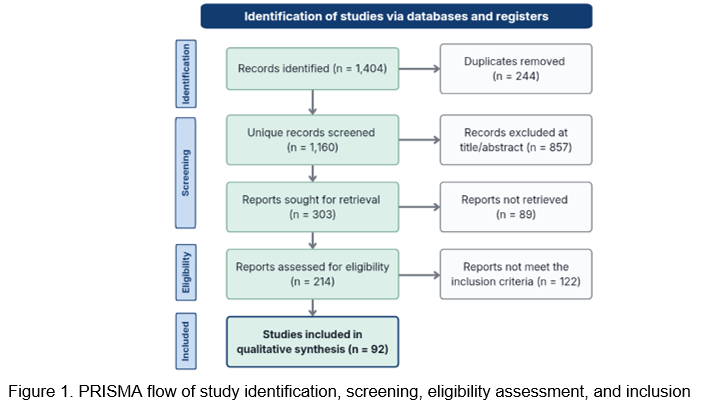
The literature search identified 1,404 records, comprising 817 records from Scopus and 587 from Google Scholar. After removing 244 duplicate records, 1,160 unique publications remained for title and abstract screening. Of these, 857 records were excluded, leaving 303 reports for full-text retrieval. After excluding 89 reports due to insufficient information, 214 studies underwent full eligibility assessment. A further 122 studies did not meet the inclusion criteria, resulting in a final dataset of 92 studies included in the qualitative synthesis (Figure 1).
Among the 92 included studies, 17 were supported by directly accessible primary sources, whereas 75 were supported primarily by structured indexed abstracts containing sufficient methodological and outcome information for qualitative synthesis. The temporal development of biofungicide research in Indonesia was evaluated by summarizing the publication year of each included study. Publication trends provide insights into the evolution of research interest and the expansion of microbial biofungicide applications over time. Figure 2 presents the annual distribution of the 92 included studies. The publication trend increased markedly after 2010, indicating growing research interest in microbial biofungicides in Indonesia.
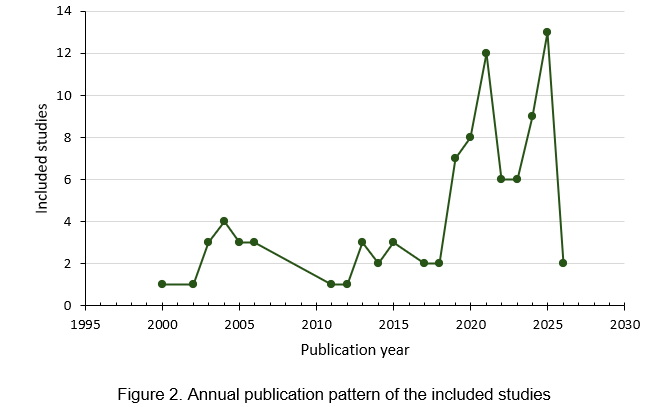
A review covering 92 studies published between 2000 and June 2026 showed that 77 studies (83.7%) were published after 2010, and 56 studies (60.9%) were published between 2020 and June 2026. Studies on microbial biofungicides in Indonesia were relatively limited during the early 2000s, with only one to four publications per year. Research activity increased gradually after 2010 and accelerated markedly after 2019. The highest number of publications was recorded in 2025 (13 studies), followed by 2021 (12 studies), indicating growing scientific interest in environmentally friendly disease management strategies (Figure 2). Although publications fluctuated year to year, the overall trend shows a substantial increase in research output over the past decade. The lower number of studies in 2026 should be interpreted cautiously because the literature search was conducted before the end of the publication year, meaning that recently published studies may not yet have been indexed or retrieved.
Dominant biofungicide agents
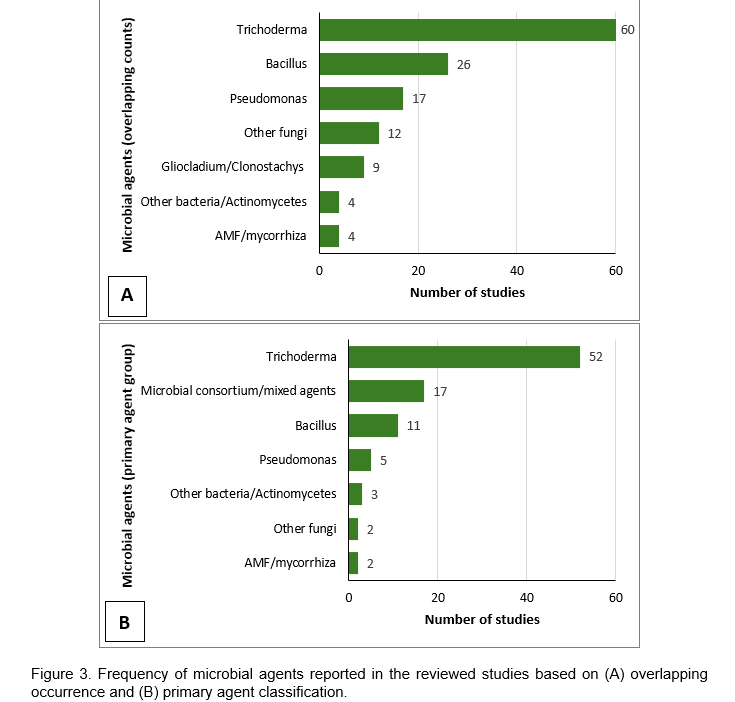
Trichoderma was the most commonly investigated microbial agent, appearing in 60 studies, followed by Bacillus (26 studies), Pseudomonas (17 studies), Gliocladium/Clonostachys (9 studies), AMF (4 studies) (Figure 3A). Because several studies evaluated more than one microbial agent, these frequencies are not mutually exclusive and therefore represent overlapping occurrences rather than the total number of individual studies. To facilitate direct comparison among microbial groups, we then assigned each study to a single primary microbial agent. Based on this approach, 52 studies were classified as Trichoderma-based, 17 as mixed-agent or consortium studies, 11 as Bacillus-based, 5 as Pseudomonas-based, and 7 as AMF or other antagonistic microorganisms (Figure 3B).
The reviewed studies employed a wide range of microbial agents with different mechanisms to suppress plant pathogens. Although several microbial groups were identified, fungal antagonists particularly Trichoderma spp. were the most frequently investigated, followed by bacterial antagonists such as Bacillus and Pseudomonas, as well as AMF. These microorganisms differ in their modes of action, including direct pathogen inhibition, mycoparasitism, competition for nutrients and space, antimicrobial metabolite production, induction of plant defense responses, and enhancement of plant growth. Table 3 summarizes the major microbial groups, representative species reported in the literature, and their principal mechanisms of disease suppression.
Table 3. Microbial-agent groups and their main mechanism in reviewed studies
|
Microbial group
|
Common species
|
Strains
|
Main mechanism
|
|
Fungal antagonists
|
Trichoderma spp.
|
T. harzianum, T. asperellum, T. viride, T. atroviride, T. koningii, T. lignorum, T. virens, T. hamatum
|
Direct antagonism and disease suppression; competition, antibiosis, mycoparasitism; endophytic/rhizosphere association and plant-growth benefits
|
|
Gliocladium / Clonostachys
|
G. roseum, C. rosea, and records identified only to Gliocladium spp.
|
Direct antagonism, endophytic association, formulated soil application, and metabolite activity
|
|
Other fungal antagonists
|
Penicillium, Paecilomyces, Nigrospora, Phlebiopsis, nonpathogenic Fusarium
|
Direct inhibition, endophytic association, metabolite activity, or mycoparasitism
|
|
Bacterial antagonists
|
Bacillus spp.
|
B. subtilis, B. amyloliquefaciens, B. velezensis B-27, B. firmus, B. pumilus, and B. thuringiensis
|
Pathogen inhibition and disease suppression, antibiotic production, chitinolytic or antifungal-metabolite activity, PGPR-associated growth responses
|
|
Pseudomonas spp.
|
P. fluorescens, P. putida BB.R1, P. protegens A-CMC-05, P. versuta
|
Rhizosphere or endophytic antagonism; siderophore, chitinase, hydrogen-cyanide, or antifungal-metabolite production; disease suppression and growth promotion
|
|
Other bacterial antagonists
|
Paenibacillus polymyxa, Streptomyces-like bacteria, Gordonia paraffinivorans
|
Antifungal-compound production and pathogen inhibition; some studies also reported plant-growth benefits
|
|
Symbiotic fungi
|
Arbuscular mycorrhizal fungi (AMF)
|
Rhizophagus intraradices and AMF without species-level identification
|
Root colonization, nutrient uptake enhancement, induced systemic resistance
|
Trichoderma spp. exhibit the broadest range of disease-suppression mechanisms, combining direct antagonism, mycoparasitism, antibiotic production, rhizosphere colonization, and stimulation of plant growth. Bacterial antagonists, particularly Bacillus spp. and Pseudomonas spp., primarily suppress pathogens through antimicrobial metabolite production, competition, and the induction of plant resistance, while also contributing to plant growth. Meanwhile, AMFs function primarily by enhancing nutrient uptake, root development, and systemic resistance, rather than directly inhibiting pathogens. Overall, the reviewed studies indicate that microbial biofungicides rely on a variety of complementary mechanisms, which explains their widespread application across various crops and plant diseases.
Target crops and oathogens
Target pathogens were categorized according to the disease-causing organisms addressed in the reviewed studies to provide an overview of current research priorities in microbial biofungicide development. Identifying the pathogens most frequently investigated helps reveal which economically important plant diseases have received the greatest scientific attention while highlighting pathogen groups that remain relatively understudied. The frequencies presented represent overlapping counts rather than mutually exclusive categories, because several studies evaluated biofungicides against more than one pathogen. Figure 4 shows the distribution of target pathogen groups across the reviewed studies.
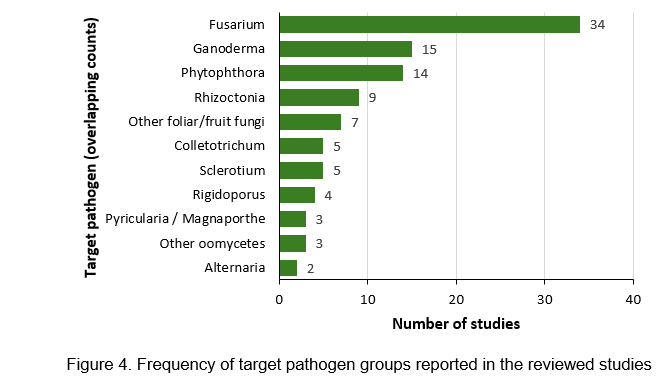
The reviewed literature showed that Fusarium was the most frequently investigated pathogen, appearing in 34 studies (Figure 4). These studies mainly focused on diseases such as wilt, basal rot, and rhizome rot affecting economically important crops, including banana, shallot, ginger, vanilla, and chrysanthemum (Prabowo et al., 2006; Sibagariang et al., 2019; Sudantha, 2021; Taufiq, 2022; Wibowo et al., 2013). Ganoderma was the second most common target, reported in 15 studies, with research largely concentrated on oil palm and other woody crop production systems (Agustini et al., 2014; Haryadi et al., 2019). Phytophthora was represented in 14 studies, mainly associated with cacao black pod, potato late blight, citrus diseases, and tobacco lanas disease (Abadi et al., 2024; Roeswitawati, 2004; Sriwati et al., 2019). Fewer studies examined Rhizoctonia (9 studies), while Colletotrichum and Sclerotium were each reported in 5 studies. In contrast, Pyricularia/Magnaporthe and other oomycete pathogens were comparatively underrepresented, each appearing in only 3 studies (Figure 4). Overall, the distribution indicates that research on microbial biofungicides in Indonesia has primarily focused on economically important soil-borne pathogens, while several foliar and less common pathogen groups remain relatively understudied.
Application methods and formulations
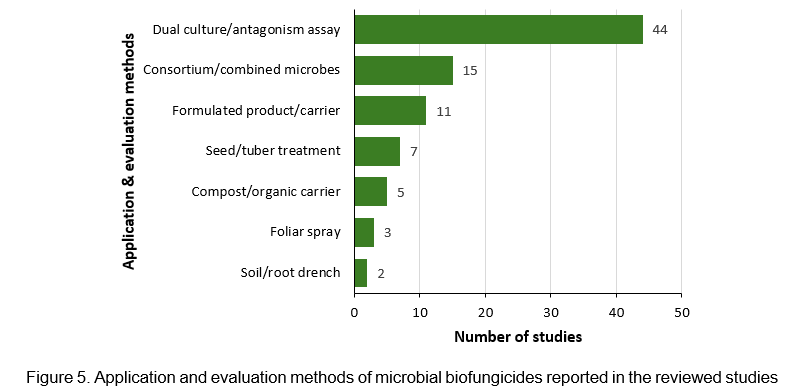
Dual-culture and other in vitro antagonism assays were the most common experimental approach, being reported in 44 studies. These methods were mainly used to screen the antagonistic activity of microbial agents against plant pathogens before further testing. A further 15 studies investigated microbial consortia or combinations of multiple beneficial microorganisms. Eleven studies evaluated formulated biofungicide products or carrier-based preparations, while 7 studies applied microbial agents as seed or tuber treatments. Compost or other organic carrier materials were used in 5 studies, whereas foliar application and soil or root drench methods were reported in 3 and 2 studies (Figure 5). These frequencies should be interpreted conservatively because many publications, particularly abstracts, did not provide sufficient methodological detail to allow more specific classification.
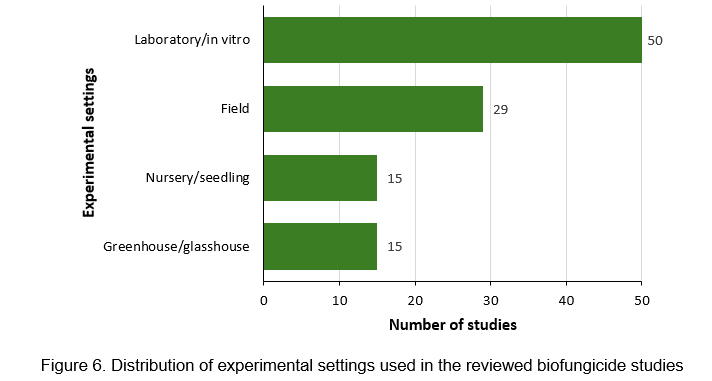
The reviewed studies were conducted across different experimental settings. Laboratory or in vitro experiments were the most common, accounting for 50 studies, followed by field trials (29 studies). Greenhouse or glasshouse experiments and nursery or seedling evaluations were each reported in 15 studies (Figure 6). Although many studies progressed beyond laboratory screening to field validation, many field trials lacked standardized control treatments, multi-location replication, or detailed information on formulation characteristics and microbial viability. These limitations reduce comparability and highlight the need for more rigorous field evaluation protocols.
The effectiveness of microbial biofungicides was also strongly influenced by formulation and application methods. Formulations varied widely, including talc-based powders, liquid suspensions, granular products, and compost-enriched inoculants. Carrier quality and microbial viability were repeatedly identified as critical factors affecting performance. Istifadah et al., (2024) reported that incorporating a microbial consortium into compost applied in the planting medium reduced disease severity by 37.8-39.5%, whereas combining planting-hole application, soil drenching, and weekly foliar spraying increased disease suppression to 80.8%. Furthermore, Muis et al., (2015) identified talc and corn flour as suitable carrier materials for Bacillus subtilis formulations in maize. More recently, Simamora et al., (2025) demonstrated that trichocompost effectively suppressed potato diseases while improving crop yield under tropical dryland field conditions. These findings indicate that the success of microbial biofungicides depends not only on the microbial agent itself but also on appropriate formulation and delivery strategies.
Reported efficacy
A total of 48 studies reported quantitative measures of disease suppression or antagonistic efficacy that could be directly extracted. In contrast, the remaining studies primarily presented qualitative findings, statistical significance, or comparative performance without sufficient numerical data for direct extraction. The reported outcomes were not pooled into a single summary value, because efficacy was evaluated using different pathogens, host plants, experimental conditions, formulations, and response variables. Instead, representative studies are presented to illustrate the diversity of efficacy measures and application contexts reported in the Indonesian literature. Table 4 summarizes the efficacy data.
Table 4. Representative efficacy of microbial biofungicides reported in reviewed studies
|
System
|
Agent/application
|
Reported outcome
|
References
|
|
Potato-Alternaria
|
Trichoderma + Bacillus + Pseudomonas consortium; combined delivery
|
80.8% disease suppression; lower values for compost-only placement
|
Istifadah et al., (2024)
|
|
Maize downy mildew
|
Bacillus + Pseudomonas consortium
|
76.68-100% spore-germination suppression; 85.77% lower disease intensity; 83.02% lower AUDPC
|
Mugiastuti et al., (2023)
|
|
Rice blast
|
Local antagonistic fungi
|
Eleven isolates inhibited >50%; best isolate reached 82.52% in vitro
|
Sari et al., (2026)
|
|
Oil palm-Ganoderma
|
Endophytic Trichoderma
|
Best isolate produced 13.4% disease incidence after ten months
|
Haryadi et al., (2021)
|
|
Cacao-Phytophthora
|
Trichoderma suspension in field
|
48.57% reduction in infected fruit and 46.04% reduction in disease intensity at 12 weeks
|
Sriwati et al., (2019)
|
|
Chili-Colletotrichum
|
Antagonistic rhizobacteria
|
Ten isolates inhibited >80%; strongest isolates were approximately 94%
|
Darmadi et al., (2020)
|
|
Rice-Rhizoctonia
|
Bacillus firmus from local microorganism preparation
|
62.5% suppression in seedlings and 51.8% in potted plants
|
Hersanti & Nursusilawati, (2012)
|
|
Banana-Fusarium
|
Trichoderma isolates
|
In vitro inhibition was observed, but glasshouse disease intensity was not reduced
|
Wibowo et al., (2013)
|
Overall, microbial biofungicides consistently reduce disease severity across various plant-pathogen systems, although the degree of suppression varies significantly across studies. The highest efficacy is generally achieved when microbial agents are applied in integrated formulations or combined delivery systems, whereas single applications or laboratory antagonism assays often yield more variable results (Table 4). Differences in microbial strains, host plants, target pathogens, formulation methods, and environmental conditions likely contribute to the observed variability. Overall, these findings indicate that microbial biofungicides can provide effective disease management under both experimental and field conditions. However, their performance depends heavily on appropriate formulation and application strategies. Furthermore, biofungicide efficacy often varies more widely under field conditions due to environmental factors such as temperature, humidity, soil type, and competing microflora.
DİSCUSSİON
Role of biofungicides in sustainable agriculture
The reviewed studies indicate that microbial biofungicides play various roles in supporting sustainable agriculture in Indonesia. Their application has expanded to food crops, horticultural crops, plantation commodities, and forest nurseries, reflecting a growing interest in reducing dependence on synthetic fungicides. This is particularly important because plant diseases remain a major constraint on agricultural productivity, especially in tropical regions where environmental conditions favor pathogen development (Savary et al., 2019). Consequently, microbial biofungicides are increasingly recognized as a key component of environmentally friendly disease control strategies.
The primary function of microbial biofungicides is to suppress plant pathogens through complementary mechanisms, including competition for nutrients and infection sites, antibiosis, mycoparasitism, and the production of lytic enzymes (Cook & Baker, 1983; Harman et al., 2004; Raaijmakers et al., 2006). Consistent with these mechanisms, the Indonesian studies included in this review demonstrated disease-suppression potential of Trichoderma, Bacillus, and Pseudomonas effectively control economically important pathogens. Examples include the use of Trichoderma against Fusarium in ginger and banana, Ganoderma boninense in oil palm, and Phytophthora palmivora in cacao, as well as bacterial antagonists against Rhizoctonia and Colletotrichum (Prabowo et al., 2006; Wibowo et al., 2013; Hersanti & Nursusilawati, 2012; Darmadi et al., 2020; Haryadi et al., 2021; Sriwati et al., 2019). In addition to suppressing disease, many studies also report improvements in root development, nutrient uptake, seedling vigor, and crop productivity, indicating that these microorganisms also function as plant growth-promoting agents. Their ability to colonize the rhizosphere and interact with plant roots further contributes to improved nutrient availability and greater tolerance to environmental stress (Harman et al., 2004; Win et al., 2025).
In addition to improving crop performance, microbial biofungicides support a healthier soil ecosystem by enhancing beneficial microbial activity and reducing reliance on chemical fungicides (Larkin, 2015). means that these agents can also help delay the development of fungicide-resistant pathogen populations (Weller, 2007). Overall, the findings of this review support Indonesia’s strategy to promote biological control agents for sustainable crop protection (Kementerian Pertanian Republik Indonesia, 1997). However, wider adoption will require standardized formulations, reliable product quality, and field evaluations at more locations to ensure consistent performance under diverse agroecological conditions.
Why Trichoderma dominates Indonesian research
Trichoderma was the most frequently investigated microbial agent in the reviewed studies, occurring in 60 studies, with 52 studies classified as Trichoderma-based when each study was assigned to a single primary microbial group. The included studies demonstrated its application against a wide range of plant pathogens, including Fusarium, Ganoderma, Phytophthora, Sclerotium, Rhizoctonia, Pyricularia/Magnaporthe, and several foliar and fruit pathogens. This broad representation suggests that the prominence of Trichoderma in Indonesian research is associated with its applicability across multiple crop-pathogen systems rather than with a single target disease. Indonesian studies have demonstrated this versatility in different production contexts, such as Trichoderma harzianum has been evaluated against Fusarium associated with ginger disease (Prabowo et al., 2006), while endophytic Trichoderma isolates from oil palm have been investigated against Ganoderma boninense in North Sumatra (Haryadi et al., 2019; Haryadi et al., 2021). Field application of Trichoderma suspension has also been reported for the management of cacao pod rot caused by Phytophthora palmivora (Sriwati et al., 2019). These studies demonstrate that Trichoderma research in Indonesia extends from laboratory and nursery screening to field level disease management.
Indonesian studies have examined isolates obtained from local crops, rhizospheres, and other plant-associated environments, providing a potential source of strains adapted to specific agroecosystems. In addition to directly suppressing pathogens through competition, mycoparasitism, and the production of antifungal metabolites, Trichoderma effectively colonizes plant roots and the rhizosphere, thereby enhancing plant defense responses and improving overall plant health (Harman et al., 2004; Win et al., 2025). These characteristics make Trichoderma suitable for application in diverse cropping systems and environmental conditions. Local studies also demonstrate that its use is not restricted to a single delivery strategy. Applications reported in the reviewed literature include direct antagonism assays, endophytic inoculation, soil application, and field-applied suspensions (Haryadi et al., 2021; Sriwati et al., 2019).
Another factor contributing to its widespread use is its practical suitability for biofungicide development. Trichoderma can be mass-produced relatively easily on inexpensive substrates and is highly compatible with organic amendments such as compost and other carrier materials, facilitating formulation and field application. Moreover, several studies highlighted the potential of indigenous Trichoderma isolates, which are often better adapted to local environmental conditions and may exhibit greater survival and efficacy under tropical climates (Rivera-Mendez et al., 2020). Despite these advantages, direct comparisons among studies remain challenging because important information, such as strain identity, inoculum concentration, formulation type, and storage stability, was frequently reported inconsistently or omitted. Greater standardization in reporting these methodological aspects would improve result comparability and support the development of more effective and reliable Trichoderma-based biofungicides.
The high frequency of Trichoderma studies should not necessarily be interpreted as evidence that it is consistently superior to other microbial agents. The reviewed studies varied substantially in strain identity, inoculum concentration, formulation, application method, target pathogen, and experimental conditions. Wibowo et al. (2013) for example, observed inhibition of Fusarium by Trichoderma isolates in vitro, but disease intensity was not reduced under glasshouse conditions. In contrast, Sriwati et al. (2019) reported reductions in cacao pod infection and disease intensity following field application. Such differences illustrate the importance of distinguishing between antagonistic potential demonstrated under controlled conditions and consistent disease suppression under field conditions. Further Indonesian research should therefore focus not only on identifying new Trichoderma isolates but also on standardized formulation, field validation, and comparison of strain performance across agroecological conditions.
Challenges limiting wider adoption
Despite the encouraging results reported in the reviewed studies, several challenges continue to limit the wider adoption of microbial biofungicides in Indonesia. One of the most frequently identified issues is the inconsistency between laboratory and field performance. Although many studies demonstrate strong antagonistic activity under in vitro conditions, few have validated these findings through field trials under different agroecological conditions. Laboratory and in vitro studies accounted for 50 of the 92 included studies, whereas only 29 studies included field evaluation. Several studies also demonstrated that performance under controlled conditions did not necessarily translate into comparable disease suppression under greenhouse or field conditions. Environmental factors, including soil properties, temperature, humidity, native microbial communities, and pathogen pressure, can affect the survival and effectiveness of microorganisms, resulting in variable field performance (Cook & Baker, 1983; Larkin, 2015). This pattern is also reflected in this review, where laboratory-based studies outnumber field evaluations, indicating that most of the current evidence remains at the experimental stage.
Another major challenge concerns the formulation and commercialization of microbial biofungicides. Maintaining microbial viability during production, storage, and distribution remains difficult, particularly under tropical conditions characterized by high temperatures and humidity. Although some studies have successfully developed formulations using carriers such as talc, compost, and other organic materials, information regarding shelf life, storage stability, and quality control is often limited. As a result, only a small number of microbial biofungicides have achieved widespread commercial application in Indonesia. Furthermore, product registration requirements and regulations can pose significant financial and administrative barriers for universities, research institutions, and small-scale producers seeking to commercialize locally developed microbial agents (Kementerian Pertanian Republik Indonesia, 1997).
Farmer adoption also remains constrained by limited technical knowledge and economic considerations. The effectiveness of microbial biofungicides depends heavily on proper formulation, application timing, dosage, and environmental conditions, making extension services and farmer training essential for successful implementation. Compared with chemical fungicides, whose effects are often rapid and immediately visible, microbial biofungicides generally take longer to establish and suppress pathogen populations. This slower response may reduce farmer confidence, particularly when disease outbreaks require immediate intervention. Therefore, increasing farmer awareness, strengthening extension programs, improving formulation technology, and expanding multi-location field validation will be critical to accelerate the adoption of microbial biofungicides as part of sustainable disease management in Indonesia (Weller, 2007; Win et al., 2025).
Opportunities for future development
The findings of this review indicate that Indonesia has considerable potential to expand the use of microbial biofungicides, supported by its rich microbial biodiversity and diverse agroecosystems. The predominance of Trichoderma, Bacillus, and Pseudomonas in the reviewed studies demonstrates that many indigenous microorganisms have already shown promising biocontrol activity against economically important plant pathogens. Future research should place greater emphasis on exploring and characterizing native microbial isolates, particularly those adapted to local soils and climatic conditions, as these are likely to provide more stable performance in tropical environments. At the same time, developing multi-strain microbial consortia could improve disease suppression by combining complementary mechanisms of action and enhancing resilience under variable field conditions.
Advances in formulation technology will also play a crucial role in transforming laboratory findings into practical agricultural products. Improvements in fermentation processes, carrier materials, and storage technologies are essential to maintain microbial viability and extend product shelf life without compromising effectiveness. Furthermore, integrating microbial biofungicides with organic farming practices and Integrated Pest Management (IPM) programs can enhance disease control while reducing reliance on synthetic fungicides. This integration aligns with Indonesia’s strategy to promote environmentally friendly crop protection and sustainable agricultural production (Kementerian Pertanian Republik Indonesia, 1997).
The success of expanding the use of biofungicides depends not only on technological innovation but also on effective knowledge transfer and institutional support. Strengthening extension services, digital consultation platforms, and farmer training programs can improve understanding of proper formulations, application timing, and product handling, thereby increasing farmers’ confidence in biological pest and disease management. Furthermore, collaboration among universities, government research institutions, private companies, and farmer organizations will be crucial for accelerating product development, field validation, commercialization, and adoption. Supportive public policies, including incentives for biological inputs and streamlined regulatory procedures, will further encourage investment and facilitate the wider adoption of microbial biofungicides in Indonesian agriculture.
CONCLUSION
Biofungicides represent a promising component of sustainable disease management in Indonesia. Over the past two decades, research has increasingly focused on using Trichoderma, Bacillus, and Pseudomonas to control economically important plant pathogens across food crops, horticultural crops, plantation commodities, and forestry species. These microbial agents suppress diseases through multiple biological mechanisms while also promoting plant growth and improving soil health, highlighting their potential as environmentally friendly alternatives to synthetic fungicides. However, broader adoption remains constrained by inconsistent field performance, formulation limitations, a limited range of target microbial groups and pathogens, regulatory barriers, and limited farmer awareness.
Future research should prioritize exploring indigenous microbial resources, developing standardized and stable formulations, and conducting rigorous multi-location field validation under diverse agroecological conditions. Integrating microbial biofungicides into IPM programs, along with improved commercialization, farmer extension, and supportive regulatory policies, will be essential to translate research findings into practical agricultural solutions. The successful implementation of microbial biofungicides will depend on coordinated efforts among academia, government, industry, and farming communities to support research, commercialization, technology transfer, and large-scale adoption. Such collaboration will strengthen the role of biofungicides in reducing reliance on synthetic fungicides while advancing sustainable agricultural development in Indonesia.
ACKNOWLEDGEMENTS
We thank our colleagues at IPB University who carefully reviewed the initial draft of this manuscript. We also thank the researchers whose publications were used in this review.
REFERENCES
Abadi, A. L., Trianti, I., Choliq, F. A., Sektiono, A. W., & Yulianti, N. D. (2024). Efficacy of biofungicide with active ıngredients Trichoderma sp. against late blight disease (Phytophthora infestans) in potato plants. Agro Bali: Agricultural Journal, 7(1), 81-91.
Agustini, L., Wahyuno, D., Indrayadi, H., & Glen, M. (2014). In vitro interaction between Phlebiopsis sp. and Ganoderma philippii isolates. Forest Pathology, 44(6), 472-476.
Cook, R. J., & Baker, K. F. (1983). The Nature and Practice of Biological Control of Plant Pathogens. APS Press (pp. 539-pp).
Darmadi, A. A. K., Suprapta, D. N., & Khalimi, K. (2020). Potential antagonistic rhizobacteria to control Colletotrichum scovillei, the cause of anthracnose disease in chili pepper. Biodiversitas, 21, 2727-2734.
Hanada, R. E., Pomella, A. W., Soberanis, W., Loguercio, L. L., & Pereira, J. O. (2009). Biocontrol potential of Trichoderma martiale against the black-pod disease (Phytophthora palmivora) of cacao. Biological Control, 50(2), 143-149.
Harman, G. E., Howell, C. R., Viterbo, A., Chet, I., & Lorito, M. (2004). Trichoderma species—opportunistic, avirulent plant symbionts. Nature Reviews Microbiology, 2(1), 43-56.
Haryadi, D., Hendra, H., Sidhu, M., Panjaitan, T., & Chong, K. P. (2021). Nursery evaluation of potential endophytic Trichoderma spp. from North Sumatra, Indonesia as a biocontrol agent against Ganoderma boninense. Indian Phytopathology, 74(3), 803-808.
Haryadi, D., Sidhu, M. S., Panjaitan, T., Hendra, H., & Chong, K. P. (2019). The potential of endophytic Trichoderma from oil palm (Elaeis guineensis Jacq.) roots of North Sumatra, Indonesia against Ganoderma boninense. J Oil Palm Res, 31(4), 592-603.
Hersanti, H., & Nursusilawati, N. (2012). Ability of bacteria isolated from local microorganism (MOL) of maja fruit (Aeglemarmelos L.) to suppress sheath blight diseases on rice. Journal of Applied Sciences Research, 4802-4805.
Istifadah, N., Anastasya, N., Maharani, Y., & Widiantini, F. (2024). Effects of application methods of microbial mixture on early blight disease (Alternaria solani) and growth of potato. Research on Crops, 25(3), 456.
Kementerian Pertanian Republik Indonesia. (1997). Keputusan Menteri Pertanian Nomor 887/Kpts/OT.210/9/1997 Tentang Pedoman Pengendalian Organisme Pengganggu Tanaman. (in Indonesian) (Ministry of Agriculture of the Republic of Indonesia (1997) Decree of the Minister of Agriculture of the Republic of Indonesia No. 887/Kpts/OT.210/9/1997 on Guidelines for the Use of Biological Control Agents in the Management of Plant Pests. https://psp.pertanian.go.id/storage/557/KEPMENTAN-NO-887-TH-97-TTG-PEDOMAN-PENGENDALIAN-ORG-PENGG-TNM.pdf.
Larkin, R. P. (2015). Soil health paradigms and implications for disease management. Annual Review of Phytopathology, 53(1), 199-221.
Mugiastuti, E., Manan, A., & Soesanto, L. (2023). Biological control of maize downy mildew with the antagonistic bacterial consortium. Biodiversitas: Journal of Biological Diversity, 24(9), 4644.
Muis A., Djaenuddin N., Nonci N. (2015). Evaluation of five inner carriers and Bacillus subtilis formulation to control banded leaf and sheath blight (Rhizoctonia solani Kuhn). Journal of Tropical Plant Pests and Diseases, 15(2), 164-169.
Page, M. J., McKenzie, J. E., Bossuyt, P. M., Boutron, I., Hoffmann, T. C., Mulrow, C. D., et al. (2021). The PRISMA 2020 statement: An updated guideline for reporting systematic reviews. BMJ, 372.
Prabowo, A.K.E., Prihatiningsih, N., & Soesanto, L. (2006). Potensi Trichoderma harzianum dalam mengendalikan sembilan isolat Fusarium oxysporum Schlecht. f. sp. zingiberi Trujillo pada kencur. Jurnal Ilmu-Ilmu Pertanian Indonesia, 8(2), 76-84. (in Indonesian)
Raaijmakers, J. M., De Bruijn, I., & De Kock, M. J. (2006). Cyclic lipopeptide production by plant-associated Pseudomonas spp.: diversity, activity, biosynthesis, and regulation. Molecular Plant-Microbe Interactions, 19(7), 699-710.
Rivera-Mendez, W., Obregón, M., Morán-Diez, M. E., Hermosa, R., & Monte, E. (2020). Trichoderma asperellum biocontrol activity and induction of systemic defenses against Sclerotium cepivorum in onion plants under tropical climate conditions. Biological Control, 141, 104145.
Roeswitawati, D. (2004). Antagonistic ability of fungi and bacteria to suppress lanas disease (Phytophthora parasitica var. nicotianae) on tobacco. Tropika (Indonesia), 12(1).
Sari D.E., Sjam S., Rosmana A., Melina, Sulfiani (2026). Isolation of antagonistic fungi from local rice and rhizosphere as potential biocontrol agents against Pyricularia oryzae. Biodiversitas, 27(4), 1-15.
Savary, S., Willocquet, L., Pethybridge, S. J., Esker, P., McRoberts, N., & Nelson, A. (2019). The global burden of pathogens and pests on major food crops. Nature ecology & evolution, 3(3), 430-439.
Sibagariang, A., Suryanto, D., Nurtjahja, K. (2019). A possibility of using antagonistic bacterial isolates in controlling Fusarium wilt of chrysanth (Chrysanthemum sp.). J Pure Appl Microbiol, 13(1), 297-305.
Simamora A.V., Serangmo D.Y.L., Londingkene J.A., Nahas A.E., Nenotek P.S., Hahuly M.V., Kasim M., Mahayasa I.N.W., Gandut Y.R.Y., Widinugraheni S., Hosang E.Y. (2025). Evaluating trichocompost for disease control and yield improvement in potatoes under tropical dryland conditions in South Central Timor, Indonesia. International Journal of Tropical Drylands, 9(2), 159-168.
Sriwati, R., Chamzurn, T., Soesanto, L., & Munazhirah, M. (2019). Field application of Trichoderma suspension to control cacao pod rot (Phytophthora palmivora). AGRIVITA Journal of Agricultural Science, 41(1), 175-182.
Sudantha, I.M. (2021, November). Characterization and virulence of Fusarium oxysporum f. sp. cubense cause wilt disease in banana plants and its biological control using endophytic fungi Trichoderma spp. at West Nusa Tenggara, Indonesia. In IOP Conference Series: Earth and Environmental Science (Vol. 886, No. 1, p. 012016). IOP Publishing.
Taufiq, E. (2022. Sustainable agriculture practice using Trichoderma and nonpathogenic Fusarium to control Vanilla Shoot Rot disease. In IOP Conference Series: Earth and Environmental Science (Vol. 974, No. 1, p. 012074). IOP Publishing.
Wibowo, A., Santosa, A. T., Subandiyah, S., Hermanto, C., & Taylor, M. F. P. (2013). Control of Fusarium wilt of banana by using Trichoderma harzianum and resistant banana cultivars. Acta Horticulturae, 975(18), 173-177.
Widyantoro, A., & Subagiya, H. (2020). Biological control of Fusarium wilt on banana plants using biofertilizers. Biodiversitas, 21(5), 2119-2123.
Win, T. T., Bo, B., Khan, S., & Fu, P. (2025). Ecological dominance, functional roles, and biosafety of Trichoderma spp. as a biofertilizer fungus. Frontiers in Fungal Biology, 6, 1641004.
Weller, D. M. (2007). Pseudomonas biocontrol agents of soilborne pathogens: looking back over 30 years. Phytopathology, 97(2), 250–256.

Biofungicide: Role and Application in Indonesia — A Systematic Review
ABSTRACT
Microbial biofungicides have emerged as promising alternatives to synthetic fungicides for supporting sustainable crop protection in Indonesia. This systematic review synthesizes the current state of biofungicide research in Indonesia, focusing on microbial agents, target pathogens, application strategies, efficacy, and challenges for wider adoption. A systematic literature search was conducted following the PRISMA framework using Scopus, Google Scholar, and Indonesian scientific repositories, covering publications from January 2000 to June 2026. The results showed that Trichoderma spp. was the dominant microbial agent, followed by Bacillus spp., Pseudomonas spp., and arbuscular mycorrhizal fungi (AMF). Research primarily targeted economically important pathogens, particularly Fusarium, Ganoderma, and Phytophthora, across food crops, horticultural crops, plantation commodities, and forestry nurseries. Reported disease suppression generally ranged from 30% to 90%, depending on the crop-pathogen system, microbial strain, formulation, and application method. Beyond disease control, microbial biofungicides improved plant growth and soil health through multiple biological mechanisms. However, inconsistent field performance, limited formulation standardization, commercialization challenges, regulatory constraints, and insufficient farmer awareness continue to hinder wider adoption. Future efforts should prioritize exploring indigenous microbial resources, developing robust formulations, conducting multi-location field validation, integrating with Integrated Pest Management (IPM), and strengthening collaboration among research institutions, industry, government, and farmer organizations to accelerate the adoption of microbial biofungicides in Indonesia.
Keyword: Agriculture, biofungicides, efficacy, environmentally friendly, forestry
INTRODUCTION
Indonesia’s agriculture and forestry sectors play a vital role in supporting national food security, economic development, and the livelihoods of rural communities. However, the productivity and sustainability of these two sectors continue to be threatened by fungal diseases that attack major food crops, horticultural commodities, plantation crops, and forest tree species. Pathogens such as Fusarium oxysporum, Rhizoctonia solani, Phytophthora infestans, Magnaporthe oryzae, and Ganoderma boninense cause significant crop yield losses and economic losses across various production systems (Savary et al., 2019). Disease control in Indonesia has traditionally relied on synthetic fungicides due to their rapid effectiveness and broad spectrum of activity. However, the intensive and prolonged use of these chemicals has led to environmental pollution, disruption of beneficial soil microorganisms, the emergence of fungicide-resistant pathogen populations, and potential risks to human health (Cook & Baker, 1983; Larkin, 2015). These limitations have spurred the search for environmentally friendly and sustainable alternatives that can effectively suppress plant diseases while minimizing harmful ecological impacts.
Among the available alternatives, biofungicides have emerged as one of the most promising components of sustainable plant disease management. Biofungicides are biological products containing living microorganisms or their bioactive metabolites that suppress plant pathogens through multiple mechanisms, including mycoparasitism, competition for nutrients and ecological niches, antibiosis, production of hydrolytic enzymes, and induction of systemic resistance in host plants (Harman et al., 2004). In addition to disease suppression, many microbial biofungicides function as plant growth-promoting microorganisms by enhancing nutrient availability, stimulating root development, improving tolerance to abiotic stresses, and maintaining soil microbial balance (Larkin, 2015). Consequently, biofungicides contribute not only to reducing disease incidence but also to improving soil health and promoting more sustainable agricultural production systems. Among the most extensively studied microbial agents are Trichoderma spp., Bacillus spp., Pseudomonas spp., and arbuscular mycorrhizal fungi (AMF), all of which have shown significant potential to suppress diverse fungal pathogens while enhancing plant performance across various agroecosystems (Harman et al., 2004; Raaijmakers et al., 2006).
Globally, the biofungicide industry has expanded rapidly over the last two decades, driven by increasing demand for environmentally friendly agricultural inputs, stricter regulations on synthetic pesticide use, and advances in microbial biotechnology and formulation technologies (Win et al., 2025). Indonesia possesses exceptional potential for biofungicide development because of its rich microbial biodiversity and highly diverse agroecosystems, ranging from tropical forests and peatlands to agricultural and plantation landscapes. Numerous universities and research institutions have explored indigenous microbial isolates for controlling economically important pathogens affecting rice, vegetables, fruits, plantation crops, and forestry species. In particular, indigenous isolates of Trichoderma, Bacillus, Pseudomonas, and AMF have demonstrated promising efficacy in suppressing diseases while simultaneously improving plant growth and nutrient uptake under laboratory, greenhouse, nursery, and field conditions (Widyantoro & Subagiya, 2020; Hanada et al., 2009). These findings indicate that Indonesia possesses abundant biological resources that could support the development of locally adapted biofungicide products.
Despite the increasing number of studies conducted in Indonesia, information regarding biofungicide development and application remains fragmented across different crops, microbial groups, and research disciplines. Most studies focus on individual microbial isolates or specific crop-pathogen systems, making it difficult to understand research progress, dominant microbial agents, formulation strategies, and implementation challenges at the national level. Furthermore, variations in microbial strains, application methods, environmental conditions, and efficacy assessments complicate direct comparisons among studies. Therefore, a systematic synthesis of the available literature is required to consolidate existing knowledge, identify current research trends, evaluate the effectiveness of biofungicides across different agricultural and forestry systems, and highlight future research priorities. This review addresses these gaps by systematically examining published studies on biofungicides conducted in Indonesia between 2000 and 2026, with particular emphasis on microbial diversity, mechanisms of action, application methods, efficacy, commercialization prospects, and challenges for wider adoption in sustainable agriculture and forestry.
METHODOLOGY
Review framework
This study followed the Preferred Reporting Items for Systematic Reviews and Meta-Analyses (PRISMA) approach for literature identification, screening, eligibility assessment, and synthesis (Page et al., 2021). The literature searches were conducted in Scopus and Google Scholar, with some records discovered through Google Scholar were hosted by Garuda or institutional repositories. The search strategy combined keywords related to biofungicides (biofungicide, biological control, fungal disease management), major microbial agents (Trichoderma, Bacillus, Pseudomonas, and Mycorrhiza), and disease-related terms (plant disease, crop disease, forest nursery disease, and Indonesia). The search syntax was adapted to each database's requirements. The search covered publications from January 2000 to June 2026.
Inclusion and exclusion criteria
The inclusion criteria for the searches were: (1) Studies conducted in Indonesia or using Indonesian microbial isolates. (2) Research evaluating biofungicide agents, formulations, or applications against fungal pathogens. (3) The target was plant-pathogenic fungi and fungus-like oomycetes. (4) Field, greenhouse, laboratory, or nursery experiments with direct antagonism/disease-control outcome, and (5). Peer-reviewed articles, conference papers, theses, and government research reports with accessible methodology and results. The exclusion criteria were (1) Studies unrelated to fungal disease control. (2) Reviews without original Indonesian data. (3) Target was bacterial, viral, nematode, insect, animal, or human targets only. (4) Observational identification, ecology, or growth promotion without a fungal-disease test, and (5) Publications lacking sufficient methodological detail. Phytophthora, Pythium, Peronospora, and Peronosclerospora were retained as fungus-like oomycete plant pathogens because they are commonly managed within the biofungicide literature. Their inclusion is stated explicitly to avoid implying that they are true fungi.
Data extraction and synthesis
Data extracted from eligible studies included: (1) Microbial agent(s) (2) Target crop or tree species (3) Target pathogen (4) Application method and formulation (5) Experimental setting and (6) Reported efficacy and additional plant benefits. To assess the accessibility and strength of the evidence used for data extraction, the included studies were classified into two evidence-access tiers based on the level of source verification. Tier A comprised studies for which the directly accessible primary source was available for verification. Tier B comprised studies for which the synthesis relied primarily on structured indexed abstracts containing sufficient information on the study methods and results. This classification was developed specifically for this review and was not adopted from a previously published framework. Tier B studies were retained when the available information was sufficient to meet the eligibility criteria. However, information that was not reported in the accessible source was not inferred from secondary sources.
Data were summarized using descriptive frequency analysis. Counts of microbial agents, target pathogens, experimental settings, and application methods were not mutually exclusive, as a single study could report multiple agents or methodological approaches. To facilitate comparison among microbial groups, each study was additionally assigned to one mutually exclusive primary-agent category for graphical presentation. Because efficacy was reported using diverse outcome measures, we synthesized the results narratively while preserving the original metrics. Consequently, in vitro inhibition percentages were not combined with measures of disease incidence, disease severity, AUDPC (Area Under the Disease Progress Curve), yield, or plant growth.
RESULTS
Overview of included studies
The literature search identified 1,404 records, comprising 817 records from Scopus and 587 from Google Scholar. After removing 244 duplicate records, 1,160 unique publications remained for title and abstract screening. Of these, 857 records were excluded, leaving 303 reports for full-text retrieval. After excluding 89 reports due to insufficient information, 214 studies underwent full eligibility assessment. A further 122 studies did not meet the inclusion criteria, resulting in a final dataset of 92 studies included in the qualitative synthesis (Figure 1).
Among the 92 included studies, 17 were supported by directly accessible primary sources, whereas 75 were supported primarily by structured indexed abstracts containing sufficient methodological and outcome information for qualitative synthesis. The temporal development of biofungicide research in Indonesia was evaluated by summarizing the publication year of each included study. Publication trends provide insights into the evolution of research interest and the expansion of microbial biofungicide applications over time. Figure 2 presents the annual distribution of the 92 included studies. The publication trend increased markedly after 2010, indicating growing research interest in microbial biofungicides in Indonesia.
A review covering 92 studies published between 2000 and June 2026 showed that 77 studies (83.7%) were published after 2010, and 56 studies (60.9%) were published between 2020 and June 2026. Studies on microbial biofungicides in Indonesia were relatively limited during the early 2000s, with only one to four publications per year. Research activity increased gradually after 2010 and accelerated markedly after 2019. The highest number of publications was recorded in 2025 (13 studies), followed by 2021 (12 studies), indicating growing scientific interest in environmentally friendly disease management strategies (Figure 2). Although publications fluctuated year to year, the overall trend shows a substantial increase in research output over the past decade. The lower number of studies in 2026 should be interpreted cautiously because the literature search was conducted before the end of the publication year, meaning that recently published studies may not yet have been indexed or retrieved.
Dominant biofungicide agents
Trichoderma was the most commonly investigated microbial agent, appearing in 60 studies, followed by Bacillus (26 studies), Pseudomonas (17 studies), Gliocladium/Clonostachys (9 studies), AMF (4 studies) (Figure 3A). Because several studies evaluated more than one microbial agent, these frequencies are not mutually exclusive and therefore represent overlapping occurrences rather than the total number of individual studies. To facilitate direct comparison among microbial groups, we then assigned each study to a single primary microbial agent. Based on this approach, 52 studies were classified as Trichoderma-based, 17 as mixed-agent or consortium studies, 11 as Bacillus-based, 5 as Pseudomonas-based, and 7 as AMF or other antagonistic microorganisms (Figure 3B).
The reviewed studies employed a wide range of microbial agents with different mechanisms to suppress plant pathogens. Although several microbial groups were identified, fungal antagonists particularly Trichoderma spp. were the most frequently investigated, followed by bacterial antagonists such as Bacillus and Pseudomonas, as well as AMF. These microorganisms differ in their modes of action, including direct pathogen inhibition, mycoparasitism, competition for nutrients and space, antimicrobial metabolite production, induction of plant defense responses, and enhancement of plant growth. Table 3 summarizes the major microbial groups, representative species reported in the literature, and their principal mechanisms of disease suppression.
Table 3. Microbial-agent groups and their main mechanism in reviewed studies
Microbial group
Common species
Strains
Main mechanism
Fungal antagonists
Trichoderma spp.
T. harzianum, T. asperellum, T. viride, T. atroviride, T. koningii, T. lignorum, T. virens, T. hamatum
Direct antagonism and disease suppression; competition, antibiosis, mycoparasitism; endophytic/rhizosphere association and plant-growth benefits
Gliocladium / Clonostachys
G. roseum, C. rosea, and records identified only to Gliocladium spp.
Direct antagonism, endophytic association, formulated soil application, and metabolite activity
Other fungal antagonists
Penicillium, Paecilomyces, Nigrospora, Phlebiopsis, nonpathogenic Fusarium
Direct inhibition, endophytic association, metabolite activity, or mycoparasitism
Bacterial antagonists
Bacillus spp.
B. subtilis, B. amyloliquefaciens, B. velezensis B-27, B. firmus, B. pumilus, and B. thuringiensis
Pathogen inhibition and disease suppression, antibiotic production, chitinolytic or antifungal-metabolite activity, PGPR-associated growth responses
Pseudomonas spp.
P. fluorescens, P. putida BB.R1, P. protegens A-CMC-05, P. versuta
Rhizosphere or endophytic antagonism; siderophore, chitinase, hydrogen-cyanide, or antifungal-metabolite production; disease suppression and growth promotion
Other bacterial antagonists
Paenibacillus polymyxa, Streptomyces-like bacteria, Gordonia paraffinivorans
Antifungal-compound production and pathogen inhibition; some studies also reported plant-growth benefits
Symbiotic fungi
Arbuscular mycorrhizal fungi (AMF)
Rhizophagus intraradices and AMF without species-level identification
Root colonization, nutrient uptake enhancement, induced systemic resistance
Trichoderma spp. exhibit the broadest range of disease-suppression mechanisms, combining direct antagonism, mycoparasitism, antibiotic production, rhizosphere colonization, and stimulation of plant growth. Bacterial antagonists, particularly Bacillus spp. and Pseudomonas spp., primarily suppress pathogens through antimicrobial metabolite production, competition, and the induction of plant resistance, while also contributing to plant growth. Meanwhile, AMFs function primarily by enhancing nutrient uptake, root development, and systemic resistance, rather than directly inhibiting pathogens. Overall, the reviewed studies indicate that microbial biofungicides rely on a variety of complementary mechanisms, which explains their widespread application across various crops and plant diseases.
Target crops and oathogens
Target pathogens were categorized according to the disease-causing organisms addressed in the reviewed studies to provide an overview of current research priorities in microbial biofungicide development. Identifying the pathogens most frequently investigated helps reveal which economically important plant diseases have received the greatest scientific attention while highlighting pathogen groups that remain relatively understudied. The frequencies presented represent overlapping counts rather than mutually exclusive categories, because several studies evaluated biofungicides against more than one pathogen. Figure 4 shows the distribution of target pathogen groups across the reviewed studies.
The reviewed literature showed that Fusarium was the most frequently investigated pathogen, appearing in 34 studies (Figure 4). These studies mainly focused on diseases such as wilt, basal rot, and rhizome rot affecting economically important crops, including banana, shallot, ginger, vanilla, and chrysanthemum (Prabowo et al., 2006; Sibagariang et al., 2019; Sudantha, 2021; Taufiq, 2022; Wibowo et al., 2013). Ganoderma was the second most common target, reported in 15 studies, with research largely concentrated on oil palm and other woody crop production systems (Agustini et al., 2014; Haryadi et al., 2019). Phytophthora was represented in 14 studies, mainly associated with cacao black pod, potato late blight, citrus diseases, and tobacco lanas disease (Abadi et al., 2024; Roeswitawati, 2004; Sriwati et al., 2019). Fewer studies examined Rhizoctonia (9 studies), while Colletotrichum and Sclerotium were each reported in 5 studies. In contrast, Pyricularia/Magnaporthe and other oomycete pathogens were comparatively underrepresented, each appearing in only 3 studies (Figure 4). Overall, the distribution indicates that research on microbial biofungicides in Indonesia has primarily focused on economically important soil-borne pathogens, while several foliar and less common pathogen groups remain relatively understudied.
Application methods and formulations
Dual-culture and other in vitro antagonism assays were the most common experimental approach, being reported in 44 studies. These methods were mainly used to screen the antagonistic activity of microbial agents against plant pathogens before further testing. A further 15 studies investigated microbial consortia or combinations of multiple beneficial microorganisms. Eleven studies evaluated formulated biofungicide products or carrier-based preparations, while 7 studies applied microbial agents as seed or tuber treatments. Compost or other organic carrier materials were used in 5 studies, whereas foliar application and soil or root drench methods were reported in 3 and 2 studies (Figure 5). These frequencies should be interpreted conservatively because many publications, particularly abstracts, did not provide sufficient methodological detail to allow more specific classification.
The reviewed studies were conducted across different experimental settings. Laboratory or in vitro experiments were the most common, accounting for 50 studies, followed by field trials (29 studies). Greenhouse or glasshouse experiments and nursery or seedling evaluations were each reported in 15 studies (Figure 6). Although many studies progressed beyond laboratory screening to field validation, many field trials lacked standardized control treatments, multi-location replication, or detailed information on formulation characteristics and microbial viability. These limitations reduce comparability and highlight the need for more rigorous field evaluation protocols.
The effectiveness of microbial biofungicides was also strongly influenced by formulation and application methods. Formulations varied widely, including talc-based powders, liquid suspensions, granular products, and compost-enriched inoculants. Carrier quality and microbial viability were repeatedly identified as critical factors affecting performance. Istifadah et al., (2024) reported that incorporating a microbial consortium into compost applied in the planting medium reduced disease severity by 37.8-39.5%, whereas combining planting-hole application, soil drenching, and weekly foliar spraying increased disease suppression to 80.8%. Furthermore, Muis et al., (2015) identified talc and corn flour as suitable carrier materials for Bacillus subtilis formulations in maize. More recently, Simamora et al., (2025) demonstrated that trichocompost effectively suppressed potato diseases while improving crop yield under tropical dryland field conditions. These findings indicate that the success of microbial biofungicides depends not only on the microbial agent itself but also on appropriate formulation and delivery strategies.
Reported efficacy
A total of 48 studies reported quantitative measures of disease suppression or antagonistic efficacy that could be directly extracted. In contrast, the remaining studies primarily presented qualitative findings, statistical significance, or comparative performance without sufficient numerical data for direct extraction. The reported outcomes were not pooled into a single summary value, because efficacy was evaluated using different pathogens, host plants, experimental conditions, formulations, and response variables. Instead, representative studies are presented to illustrate the diversity of efficacy measures and application contexts reported in the Indonesian literature. Table 4 summarizes the efficacy data.
Table 4. Representative efficacy of microbial biofungicides reported in reviewed studies
System
Agent/application
Reported outcome
References
Potato-Alternaria
Trichoderma + Bacillus + Pseudomonas consortium; combined delivery
80.8% disease suppression; lower values for compost-only placement
Istifadah et al., (2024)
Maize downy mildew
Bacillus + Pseudomonas consortium
76.68-100% spore-germination suppression; 85.77% lower disease intensity; 83.02% lower AUDPC
Mugiastuti et al., (2023)
Rice blast
Local antagonistic fungi
Eleven isolates inhibited >50%; best isolate reached 82.52% in vitro
Sari et al., (2026)
Oil palm-Ganoderma
Endophytic Trichoderma
Best isolate produced 13.4% disease incidence after ten months
Haryadi et al., (2021)
Cacao-Phytophthora
Trichoderma suspension in field
48.57% reduction in infected fruit and 46.04% reduction in disease intensity at 12 weeks
Sriwati et al., (2019)
Chili-Colletotrichum
Antagonistic rhizobacteria
Ten isolates inhibited >80%; strongest isolates were approximately 94%
Darmadi et al., (2020)
Rice-Rhizoctonia
Bacillus firmus from local microorganism preparation
62.5% suppression in seedlings and 51.8% in potted plants
Hersanti & Nursusilawati, (2012)
Banana-Fusarium
Trichoderma isolates
In vitro inhibition was observed, but glasshouse disease intensity was not reduced
Wibowo et al., (2013)
Overall, microbial biofungicides consistently reduce disease severity across various plant-pathogen systems, although the degree of suppression varies significantly across studies. The highest efficacy is generally achieved when microbial agents are applied in integrated formulations or combined delivery systems, whereas single applications or laboratory antagonism assays often yield more variable results (Table 4). Differences in microbial strains, host plants, target pathogens, formulation methods, and environmental conditions likely contribute to the observed variability. Overall, these findings indicate that microbial biofungicides can provide effective disease management under both experimental and field conditions. However, their performance depends heavily on appropriate formulation and application strategies. Furthermore, biofungicide efficacy often varies more widely under field conditions due to environmental factors such as temperature, humidity, soil type, and competing microflora.
DİSCUSSİON
Role of biofungicides in sustainable agriculture
The reviewed studies indicate that microbial biofungicides play various roles in supporting sustainable agriculture in Indonesia. Their application has expanded to food crops, horticultural crops, plantation commodities, and forest nurseries, reflecting a growing interest in reducing dependence on synthetic fungicides. This is particularly important because plant diseases remain a major constraint on agricultural productivity, especially in tropical regions where environmental conditions favor pathogen development (Savary et al., 2019). Consequently, microbial biofungicides are increasingly recognized as a key component of environmentally friendly disease control strategies.
The primary function of microbial biofungicides is to suppress plant pathogens through complementary mechanisms, including competition for nutrients and infection sites, antibiosis, mycoparasitism, and the production of lytic enzymes (Cook & Baker, 1983; Harman et al., 2004; Raaijmakers et al., 2006). Consistent with these mechanisms, the Indonesian studies included in this review demonstrated disease-suppression potential of Trichoderma, Bacillus, and Pseudomonas effectively control economically important pathogens. Examples include the use of Trichoderma against Fusarium in ginger and banana, Ganoderma boninense in oil palm, and Phytophthora palmivora in cacao, as well as bacterial antagonists against Rhizoctonia and Colletotrichum (Prabowo et al., 2006; Wibowo et al., 2013; Hersanti & Nursusilawati, 2012; Darmadi et al., 2020; Haryadi et al., 2021; Sriwati et al., 2019). In addition to suppressing disease, many studies also report improvements in root development, nutrient uptake, seedling vigor, and crop productivity, indicating that these microorganisms also function as plant growth-promoting agents. Their ability to colonize the rhizosphere and interact with plant roots further contributes to improved nutrient availability and greater tolerance to environmental stress (Harman et al., 2004; Win et al., 2025).
In addition to improving crop performance, microbial biofungicides support a healthier soil ecosystem by enhancing beneficial microbial activity and reducing reliance on chemical fungicides (Larkin, 2015). means that these agents can also help delay the development of fungicide-resistant pathogen populations (Weller, 2007). Overall, the findings of this review support Indonesia’s strategy to promote biological control agents for sustainable crop protection (Kementerian Pertanian Republik Indonesia, 1997). However, wider adoption will require standardized formulations, reliable product quality, and field evaluations at more locations to ensure consistent performance under diverse agroecological conditions.
Why Trichoderma dominates Indonesian research
Trichoderma was the most frequently investigated microbial agent in the reviewed studies, occurring in 60 studies, with 52 studies classified as Trichoderma-based when each study was assigned to a single primary microbial group. The included studies demonstrated its application against a wide range of plant pathogens, including Fusarium, Ganoderma, Phytophthora, Sclerotium, Rhizoctonia, Pyricularia/Magnaporthe, and several foliar and fruit pathogens. This broad representation suggests that the prominence of Trichoderma in Indonesian research is associated with its applicability across multiple crop-pathogen systems rather than with a single target disease. Indonesian studies have demonstrated this versatility in different production contexts, such as Trichoderma harzianum has been evaluated against Fusarium associated with ginger disease (Prabowo et al., 2006), while endophytic Trichoderma isolates from oil palm have been investigated against Ganoderma boninense in North Sumatra (Haryadi et al., 2019; Haryadi et al., 2021). Field application of Trichoderma suspension has also been reported for the management of cacao pod rot caused by Phytophthora palmivora (Sriwati et al., 2019). These studies demonstrate that Trichoderma research in Indonesia extends from laboratory and nursery screening to field level disease management.
Indonesian studies have examined isolates obtained from local crops, rhizospheres, and other plant-associated environments, providing a potential source of strains adapted to specific agroecosystems. In addition to directly suppressing pathogens through competition, mycoparasitism, and the production of antifungal metabolites, Trichoderma effectively colonizes plant roots and the rhizosphere, thereby enhancing plant defense responses and improving overall plant health (Harman et al., 2004; Win et al., 2025). These characteristics make Trichoderma suitable for application in diverse cropping systems and environmental conditions. Local studies also demonstrate that its use is not restricted to a single delivery strategy. Applications reported in the reviewed literature include direct antagonism assays, endophytic inoculation, soil application, and field-applied suspensions (Haryadi et al., 2021; Sriwati et al., 2019).
Another factor contributing to its widespread use is its practical suitability for biofungicide development. Trichoderma can be mass-produced relatively easily on inexpensive substrates and is highly compatible with organic amendments such as compost and other carrier materials, facilitating formulation and field application. Moreover, several studies highlighted the potential of indigenous Trichoderma isolates, which are often better adapted to local environmental conditions and may exhibit greater survival and efficacy under tropical climates (Rivera-Mendez et al., 2020). Despite these advantages, direct comparisons among studies remain challenging because important information, such as strain identity, inoculum concentration, formulation type, and storage stability, was frequently reported inconsistently or omitted. Greater standardization in reporting these methodological aspects would improve result comparability and support the development of more effective and reliable Trichoderma-based biofungicides.
The high frequency of Trichoderma studies should not necessarily be interpreted as evidence that it is consistently superior to other microbial agents. The reviewed studies varied substantially in strain identity, inoculum concentration, formulation, application method, target pathogen, and experimental conditions. Wibowo et al. (2013) for example, observed inhibition of Fusarium by Trichoderma isolates in vitro, but disease intensity was not reduced under glasshouse conditions. In contrast, Sriwati et al. (2019) reported reductions in cacao pod infection and disease intensity following field application. Such differences illustrate the importance of distinguishing between antagonistic potential demonstrated under controlled conditions and consistent disease suppression under field conditions. Further Indonesian research should therefore focus not only on identifying new Trichoderma isolates but also on standardized formulation, field validation, and comparison of strain performance across agroecological conditions.
Challenges limiting wider adoption
Despite the encouraging results reported in the reviewed studies, several challenges continue to limit the wider adoption of microbial biofungicides in Indonesia. One of the most frequently identified issues is the inconsistency between laboratory and field performance. Although many studies demonstrate strong antagonistic activity under in vitro conditions, few have validated these findings through field trials under different agroecological conditions. Laboratory and in vitro studies accounted for 50 of the 92 included studies, whereas only 29 studies included field evaluation. Several studies also demonstrated that performance under controlled conditions did not necessarily translate into comparable disease suppression under greenhouse or field conditions. Environmental factors, including soil properties, temperature, humidity, native microbial communities, and pathogen pressure, can affect the survival and effectiveness of microorganisms, resulting in variable field performance (Cook & Baker, 1983; Larkin, 2015). This pattern is also reflected in this review, where laboratory-based studies outnumber field evaluations, indicating that most of the current evidence remains at the experimental stage.
Another major challenge concerns the formulation and commercialization of microbial biofungicides. Maintaining microbial viability during production, storage, and distribution remains difficult, particularly under tropical conditions characterized by high temperatures and humidity. Although some studies have successfully developed formulations using carriers such as talc, compost, and other organic materials, information regarding shelf life, storage stability, and quality control is often limited. As a result, only a small number of microbial biofungicides have achieved widespread commercial application in Indonesia. Furthermore, product registration requirements and regulations can pose significant financial and administrative barriers for universities, research institutions, and small-scale producers seeking to commercialize locally developed microbial agents (Kementerian Pertanian Republik Indonesia, 1997).
Farmer adoption also remains constrained by limited technical knowledge and economic considerations. The effectiveness of microbial biofungicides depends heavily on proper formulation, application timing, dosage, and environmental conditions, making extension services and farmer training essential for successful implementation. Compared with chemical fungicides, whose effects are often rapid and immediately visible, microbial biofungicides generally take longer to establish and suppress pathogen populations. This slower response may reduce farmer confidence, particularly when disease outbreaks require immediate intervention. Therefore, increasing farmer awareness, strengthening extension programs, improving formulation technology, and expanding multi-location field validation will be critical to accelerate the adoption of microbial biofungicides as part of sustainable disease management in Indonesia (Weller, 2007; Win et al., 2025).
Opportunities for future development
The findings of this review indicate that Indonesia has considerable potential to expand the use of microbial biofungicides, supported by its rich microbial biodiversity and diverse agroecosystems. The predominance of Trichoderma, Bacillus, and Pseudomonas in the reviewed studies demonstrates that many indigenous microorganisms have already shown promising biocontrol activity against economically important plant pathogens. Future research should place greater emphasis on exploring and characterizing native microbial isolates, particularly those adapted to local soils and climatic conditions, as these are likely to provide more stable performance in tropical environments. At the same time, developing multi-strain microbial consortia could improve disease suppression by combining complementary mechanisms of action and enhancing resilience under variable field conditions.
Advances in formulation technology will also play a crucial role in transforming laboratory findings into practical agricultural products. Improvements in fermentation processes, carrier materials, and storage technologies are essential to maintain microbial viability and extend product shelf life without compromising effectiveness. Furthermore, integrating microbial biofungicides with organic farming practices and Integrated Pest Management (IPM) programs can enhance disease control while reducing reliance on synthetic fungicides. This integration aligns with Indonesia’s strategy to promote environmentally friendly crop protection and sustainable agricultural production (Kementerian Pertanian Republik Indonesia, 1997).
The success of expanding the use of biofungicides depends not only on technological innovation but also on effective knowledge transfer and institutional support. Strengthening extension services, digital consultation platforms, and farmer training programs can improve understanding of proper formulations, application timing, and product handling, thereby increasing farmers’ confidence in biological pest and disease management. Furthermore, collaboration among universities, government research institutions, private companies, and farmer organizations will be crucial for accelerating product development, field validation, commercialization, and adoption. Supportive public policies, including incentives for biological inputs and streamlined regulatory procedures, will further encourage investment and facilitate the wider adoption of microbial biofungicides in Indonesian agriculture.
CONCLUSION
Biofungicides represent a promising component of sustainable disease management in Indonesia. Over the past two decades, research has increasingly focused on using Trichoderma, Bacillus, and Pseudomonas to control economically important plant pathogens across food crops, horticultural crops, plantation commodities, and forestry species. These microbial agents suppress diseases through multiple biological mechanisms while also promoting plant growth and improving soil health, highlighting their potential as environmentally friendly alternatives to synthetic fungicides. However, broader adoption remains constrained by inconsistent field performance, formulation limitations, a limited range of target microbial groups and pathogens, regulatory barriers, and limited farmer awareness.
Future research should prioritize exploring indigenous microbial resources, developing standardized and stable formulations, and conducting rigorous multi-location field validation under diverse agroecological conditions. Integrating microbial biofungicides into IPM programs, along with improved commercialization, farmer extension, and supportive regulatory policies, will be essential to translate research findings into practical agricultural solutions. The successful implementation of microbial biofungicides will depend on coordinated efforts among academia, government, industry, and farming communities to support research, commercialization, technology transfer, and large-scale adoption. Such collaboration will strengthen the role of biofungicides in reducing reliance on synthetic fungicides while advancing sustainable agricultural development in Indonesia.
ACKNOWLEDGEMENTS
We thank our colleagues at IPB University who carefully reviewed the initial draft of this manuscript. We also thank the researchers whose publications were used in this review.
REFERENCES
Abadi, A. L., Trianti, I., Choliq, F. A., Sektiono, A. W., & Yulianti, N. D. (2024). Efficacy of biofungicide with active ıngredients Trichoderma sp. against late blight disease (Phytophthora infestans) in potato plants. Agro Bali: Agricultural Journal, 7(1), 81-91.
Agustini, L., Wahyuno, D., Indrayadi, H., & Glen, M. (2014). In vitro interaction between Phlebiopsis sp. and Ganoderma philippii isolates. Forest Pathology, 44(6), 472-476.
Cook, R. J., & Baker, K. F. (1983). The Nature and Practice of Biological Control of Plant Pathogens. APS Press (pp. 539-pp).
Darmadi, A. A. K., Suprapta, D. N., & Khalimi, K. (2020). Potential antagonistic rhizobacteria to control Colletotrichum scovillei, the cause of anthracnose disease in chili pepper. Biodiversitas, 21, 2727-2734.
Hanada, R. E., Pomella, A. W., Soberanis, W., Loguercio, L. L., & Pereira, J. O. (2009). Biocontrol potential of Trichoderma martiale against the black-pod disease (Phytophthora palmivora) of cacao. Biological Control, 50(2), 143-149.
Harman, G. E., Howell, C. R., Viterbo, A., Chet, I., & Lorito, M. (2004). Trichoderma species—opportunistic, avirulent plant symbionts. Nature Reviews Microbiology, 2(1), 43-56.
Haryadi, D., Hendra, H., Sidhu, M., Panjaitan, T., & Chong, K. P. (2021). Nursery evaluation of potential endophytic Trichoderma spp. from North Sumatra, Indonesia as a biocontrol agent against Ganoderma boninense. Indian Phytopathology, 74(3), 803-808.
Haryadi, D., Sidhu, M. S., Panjaitan, T., Hendra, H., & Chong, K. P. (2019). The potential of endophytic Trichoderma from oil palm (Elaeis guineensis Jacq.) roots of North Sumatra, Indonesia against Ganoderma boninense. J Oil Palm Res, 31(4), 592-603.
Hersanti, H., & Nursusilawati, N. (2012). Ability of bacteria isolated from local microorganism (MOL) of maja fruit (Aeglemarmelos L.) to suppress sheath blight diseases on rice. Journal of Applied Sciences Research, 4802-4805.
Istifadah, N., Anastasya, N., Maharani, Y., & Widiantini, F. (2024). Effects of application methods of microbial mixture on early blight disease (Alternaria solani) and growth of potato. Research on Crops, 25(3), 456.
Kementerian Pertanian Republik Indonesia. (1997). Keputusan Menteri Pertanian Nomor 887/Kpts/OT.210/9/1997 Tentang Pedoman Pengendalian Organisme Pengganggu Tanaman. (in Indonesian) (Ministry of Agriculture of the Republic of Indonesia (1997) Decree of the Minister of Agriculture of the Republic of Indonesia No. 887/Kpts/OT.210/9/1997 on Guidelines for the Use of Biological Control Agents in the Management of Plant Pests. https://psp.pertanian.go.id/storage/557/KEPMENTAN-NO-887-TH-97-TTG-PEDOMAN-PENGENDALIAN-ORG-PENGG-TNM.pdf.
Larkin, R. P. (2015). Soil health paradigms and implications for disease management. Annual Review of Phytopathology, 53(1), 199-221.
Mugiastuti, E., Manan, A., & Soesanto, L. (2023). Biological control of maize downy mildew with the antagonistic bacterial consortium. Biodiversitas: Journal of Biological Diversity, 24(9), 4644.
Muis A., Djaenuddin N., Nonci N. (2015). Evaluation of five inner carriers and Bacillus subtilis formulation to control banded leaf and sheath blight (Rhizoctonia solani Kuhn). Journal of Tropical Plant Pests and Diseases, 15(2), 164-169.
Page, M. J., McKenzie, J. E., Bossuyt, P. M., Boutron, I., Hoffmann, T. C., Mulrow, C. D., et al. (2021). The PRISMA 2020 statement: An updated guideline for reporting systematic reviews. BMJ, 372.
Prabowo, A.K.E., Prihatiningsih, N., & Soesanto, L. (2006). Potensi Trichoderma harzianum dalam mengendalikan sembilan isolat Fusarium oxysporum Schlecht. f. sp. zingiberi Trujillo pada kencur. Jurnal Ilmu-Ilmu Pertanian Indonesia, 8(2), 76-84. (in Indonesian)
Raaijmakers, J. M., De Bruijn, I., & De Kock, M. J. (2006). Cyclic lipopeptide production by plant-associated Pseudomonas spp.: diversity, activity, biosynthesis, and regulation. Molecular Plant-Microbe Interactions, 19(7), 699-710.
Rivera-Mendez, W., Obregón, M., Morán-Diez, M. E., Hermosa, R., & Monte, E. (2020). Trichoderma asperellum biocontrol activity and induction of systemic defenses against Sclerotium cepivorum in onion plants under tropical climate conditions. Biological Control, 141, 104145.
Roeswitawati, D. (2004). Antagonistic ability of fungi and bacteria to suppress lanas disease (Phytophthora parasitica var. nicotianae) on tobacco. Tropika (Indonesia), 12(1).
Sari D.E., Sjam S., Rosmana A., Melina, Sulfiani (2026). Isolation of antagonistic fungi from local rice and rhizosphere as potential biocontrol agents against Pyricularia oryzae. Biodiversitas, 27(4), 1-15.
Savary, S., Willocquet, L., Pethybridge, S. J., Esker, P., McRoberts, N., & Nelson, A. (2019). The global burden of pathogens and pests on major food crops. Nature ecology & evolution, 3(3), 430-439.
Sibagariang, A., Suryanto, D., Nurtjahja, K. (2019). A possibility of using antagonistic bacterial isolates in controlling Fusarium wilt of chrysanth (Chrysanthemum sp.). J Pure Appl Microbiol, 13(1), 297-305.
Simamora A.V., Serangmo D.Y.L., Londingkene J.A., Nahas A.E., Nenotek P.S., Hahuly M.V., Kasim M., Mahayasa I.N.W., Gandut Y.R.Y., Widinugraheni S., Hosang E.Y. (2025). Evaluating trichocompost for disease control and yield improvement in potatoes under tropical dryland conditions in South Central Timor, Indonesia. International Journal of Tropical Drylands, 9(2), 159-168.
Sriwati, R., Chamzurn, T., Soesanto, L., & Munazhirah, M. (2019). Field application of Trichoderma suspension to control cacao pod rot (Phytophthora palmivora). AGRIVITA Journal of Agricultural Science, 41(1), 175-182.
Sudantha, I.M. (2021, November). Characterization and virulence of Fusarium oxysporum f. sp. cubense cause wilt disease in banana plants and its biological control using endophytic fungi Trichoderma spp. at West Nusa Tenggara, Indonesia. In IOP Conference Series: Earth and Environmental Science (Vol. 886, No. 1, p. 012016). IOP Publishing.
Taufiq, E. (2022. Sustainable agriculture practice using Trichoderma and nonpathogenic Fusarium to control Vanilla Shoot Rot disease. In IOP Conference Series: Earth and Environmental Science (Vol. 974, No. 1, p. 012074). IOP Publishing.
Wibowo, A., Santosa, A. T., Subandiyah, S., Hermanto, C., & Taylor, M. F. P. (2013). Control of Fusarium wilt of banana by using Trichoderma harzianum and resistant banana cultivars. Acta Horticulturae, 975(18), 173-177.
Widyantoro, A., & Subagiya, H. (2020). Biological control of Fusarium wilt on banana plants using biofertilizers. Biodiversitas, 21(5), 2119-2123.
Win, T. T., Bo, B., Khan, S., & Fu, P. (2025). Ecological dominance, functional roles, and biosafety of Trichoderma spp. as a biofertilizer fungus. Frontiers in Fungal Biology, 6, 1641004.
Weller, D. M. (2007). Pseudomonas biocontrol agents of soilborne pathogens: looking back over 30 years. Phytopathology, 97(2), 250–256.