This manuscript was originally presented at the ACRI, ATRI, WorldVeg, and FFTC workshop titled “Pest and Disease Management Strategies for Sustainable Agriculture,” held in Taichung, Taiwan, on May 5–6, 2026.
ABSTRACT
This paper provides a review of the integration of innovative pest management strategies and advanced agricultural technologies to support sustainable agriculture in Thailand. It synthesizes information from national policies, existing literature, and available data to present an overview of the country’s agricultural background, trends in pesticide use, and associated environmental and health concerns. The paper highlights the promotion of alternative pest management approaches, including Integrated Pest Management (IPM), Good Agricultural Practices (GAP), and organic agriculture, as well as the development and application of biopesticides in Thailand. It also discusses the role of government policies and institutional support in encouraging the adoption of sustainable practices among farmers. The review indicates that while chemical pesticide use has historically increased, recent regulatory measures and growing awareness have accelerated the transition toward biological control methods and environmentally friendly technologies. However, challenges remain in terms of accessibility, farmer knowledge, and regulatory implementation. The paper concludes that strengthening policy enforcement, promoting biopesticides, and enhancing access to innovative technologies are essential to achieving long-term sustainability in Thai agriculture.
Keywords: Thailand, integrated pest management, biopesticides, sustainable agriculture, agricultural technology, pest control
INTRODUCTION
In response to the global shift towards sustainable farming, Thailand is making significant strides in transforming its agricultural practices to prioritize both productivity and environmental responsibility. The agricultural sector, a cornerstone of Thailand’s economy, faces mounting challenges from climate change, resource depletion, and the environmental toll of traditional farming methods. Recognizing these issues, the Thai government has introduced strategic frameworks such as the 20-Year National Strategy, Agricultural and Cooperatives Strategy, and Agriculture Climate Change Strategy. These policies aim to future-proof the sector by fostering innovation, resilience, and sustainability.
Alongside these measures, advancements in sustainable farming practices and agricultural technology in Thailand are creating opportunities for greener practices and increased productivity. Thai farmers have accessed innovative solutions developed in Thailand, including biological pest control, precision nutrient delivery, and cutting-edge agricultural technologies. These advancements are designed to address modern agricultural challenges by increasing productivity, reducing environmental impact, conserving resources, and ensuring long-term sustainability. By leveraging these locally developed technologies, Thailand is building a foundation for a resilient and eco-friendly agricultural sector that aligns with global sustainability goals (IPACE, 2023).
Moreover, the Green Recovery stands among the Thai government’s post-COVID economic recovery policies. It places emphasis on creating sustainable economic growth while safeguarding the environment. To support the green recovery policy, the government has developed a Standard Operating Procedure (SOP) for integrated pest management in many crops such as rice, coconut, and durian. The SOP offers a comprehensive, effective, and eco-friendly approach to pest and disease management, assisting farmers in protecting crops from major pests and diseases such as root rot and stem rot.
For over four decades of research, the Department of Agriculture (DOA) and the National Center for Genetic Engineering and Biotechnology (BIOTEC) have developed an array of biocontrol products, including Beauveria bassiana, Metarhizium, and Trichoderma. These biological agents are used to control various pests such as brown planthoppers, thrips, aphids, leafhoppers, and whiteflies, as well as fungal pathogens like Phytophthora, which causes root rot and stem rot in durian trees (BIOTEC, 2024).
This paper provides a country-level review of pest management practices and technological advancements supporting sustainable agriculture in Thailand. It aims to synthesize existing information on agricultural development, pesticide use trends, and the promotion of alternative pest management approaches, including integrated pest management (IPM) and biopesticides. In addition, the paper examines the role of government policies and institutional support in facilitating the transition toward more sustainable agricultural systems. The findings are expected to provide insights for policymakers, researchers, and stakeholders seeking to enhance sustainable farming practices in Thailand and similar agricultural contexts.
METHODOLOGY
This study adopts a systematic review approach to synthesize existing knowledge on pest management and sustainable agriculture in Thailand. Relevant information was collected from scientific literature, government policy documents, institutional reports, and publicly available databases.
Sources were selected based on their relevance to pesticide use, integrated pest management (IPM), biopesticide development, and sustainable agricultural practices in Thailand. Both peer-reviewed publications and credible institutional sources were included to ensure comprehensive coverage of the topic.
The collected information was analyzed and categorized into key thematic areas, including agricultural background, pesticide use trends, alternative pest management approaches, and technological innovations. This approach enables a structured understanding of current practices and future directions for sustainable agriculture in Thailand.
COUNTRY CONTEXT OF THAILAND
Thailand’s agricultural sector provides an important context for understanding pest management practices, pesticide use trends, and sustainability challenges. As a country with a strong agricultural foundation and significant role in global food production, Thailand faces the dual challenge of maintaining productivity while ensuring environmental sustainability.
Thailand occupies an area of 51 million hectare. Geographically, it is divided into four major regions, namely the Northern, Northeastern, Central plain, and Southern regions, with Bangkok Metropolis serving as the capital. The country is characterized by high biodiversity, with at least 18,000 plant species, representing approximately 8% of the world’s total. Among these, rice is the most diverse species, with a wide range of genetic diversity distributed across the country.
Thailand is widely recognized as an agricultural country, with approximately 21 million hectare. (41%) of its total land area devoted to agriculture. Of this agricultural land, about 49%, 21%, and 21% are allocated to paddy rice, field crops, and fruit trees, respectively. Historically, agricultural expansion has been driven by deforestation; however, despite the increase in farmland, crop productivity has remained stagnant or even declined, while land quality has deteriorated significantly. In addition, parts of agricultural land have been converted to non-agricultural uses due to urbanization and industrial expansion. These trends have led to increasing emphasis on land reform, land quality improvement, productivity enhancement, and conservation in national land development policies.
The development of agriculture in Thailand can be understood through its historical, scientific, and socio-economic dimensions, which together shape the country’s unique agricultural system. Due to favorable topographic and climatic conditions, Thailand remains a major global producer and exporter of agricultural commodities. Approximately 20.8 million hectare. are used for agricultural purposes, including paddy rice, field crops, fruit trees, vegetables, flowers, and other uses. Major agricultural and export products include rice, rubber, cassava, maize, coconut, tropical fruits, flowers, and vegetables (Chutima, 2017).
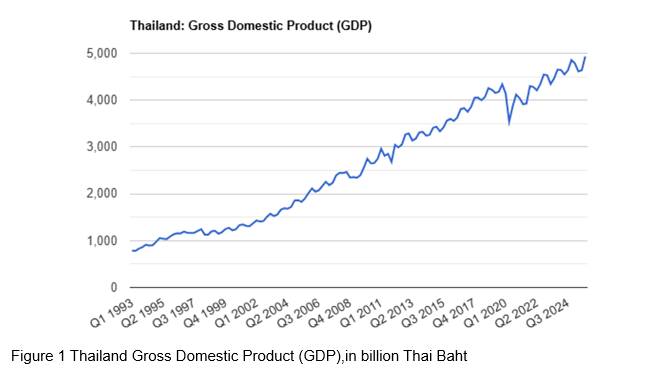
In economic terms, Thailand’s Gross Domestic Product (GDP) was valued at approximately USD 526.41 billion in 2024. As the second-largest economy in Southeast Asia, it experienced a growth rate of 2.4% in 2025, driven by private consumption and investment, and is projected to reach USD 534.83 billion by 2026 (Anonymous, 2026a).
Thailand’s agricultural sector also plays a critical role in international trade. In 2024, the country exported 9.95 million tons of rice, achieving a six-year high valued at 225.66 billion baht (approximately USD 6.43 billion), representing a 13% increase compared to 2023. Major export markets include Indonesia, Iraq, the United States, South Africa, and the Philippines. However, due to increasing global competition and production in other countries, rice exports are projected to decline to approximately 7.5 million tons in 2025.
This agricultural context underpins the observed trends in pesticide use and highlights the growing need for more sustainable and integrated pest management strategies, which are discussed in the following sections.
DEVELOPMENT OF PESTICIDE USE IN THAILAND
The development of pesticide use in Thailand reflects the country’s transition from traditional agricultural practices to more intensive and commercialized farming systems. As agricultural production expanded to meet increasing domestic and global demand, the use of chemical pesticides became a central component of crop protection strategies.
For several decades, crop protection in Thailand has relied heavily on chemical pesticides. Their use began during World War II with the introduction of dichlorodiphenyltrichloroethane (DDT) for malaria control. Following the war, pesticide use expanded rapidly, particularly in agriculture, as more synthetic chemical products were introduced. Since Thailand does not manufacture most pesticides domestically, the majority of products have been imported in both technical and formulated forms.
After 2006, pesticide imports increased markedly. The total volume of imported pesticides rose from approximately 53,575 tons in 2006 to 77,205 tons in 2014, indicating a rapid expansion in pesticide use during this period (Table 1, Figure 2). Herbicides accounted for the largest proportion of pesticide imports, reflecting their widespread use in crop production systems.
Table 1
|
Year
|
Insecticides
|
Fungicides
|
Herbicides
|
Bio-pesticides
|
Total
|
|
Volume (Tones)
|
Volume (Ton)
|
Volume (Ton)
|
Volume (Ton)
|
Volume (Ton)
|
|
2006
|
8,099
|
5,733
|
39,611
|
132
|
53,575
|
|
2007
|
8,609
|
6,609
|
50,176
|
143
|
65,537
|
|
2008
|
9,471
|
7,098
|
44,063
|
616
|
61,248
|
|
2009
|
3,043
|
2,037
|
30,865
|
883
|
36,828
|
|
2010
|
9,995
|
5,972
|
51,903
|
117
|
67,987
|
|
2011
|
10,671
|
6,980
|
67,608
|
156
|
85,415
|
|
2012
|
4,066
|
4,421
|
60,232
|
103
|
68,822
|
|
2013
|
3,022
|
2,829
|
42,360
|
60
|
48,271
|
|
2014
|
5,987
|
6,683
|
64,429
|
106
|
77,205
|
Source: Agricultural Regulatory Division
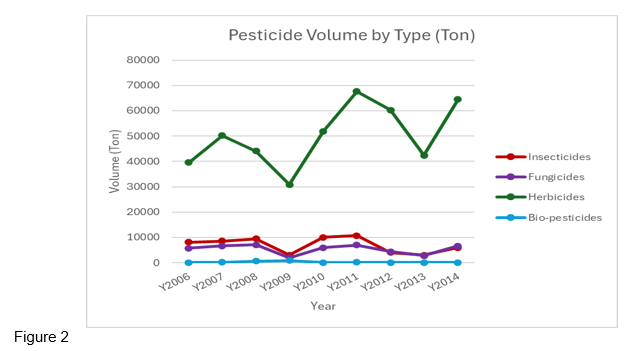
The increasing trend in pesticide imports during this period highlights the intensification of agricultural practices and growing reliance on chemical inputs. However, this trend did not continue in subsequent years. Data from 2015 to 2024 shows fluctuations in pesticide imports, with a notable decline after 2020, which is associated with regulatory changes and the banning of certain hazardous pesticides (Table 2 & Figure 3). (Anonymous,2026b)
Table 2
|
Year
|
Insecticides
|
Fungicides
|
Herbicides
|
Bio-pesticides
|
Total
|
|
Volume (Ton)
|
Volume (Ton)
|
Volume (Ton)
|
Volume (Ton)
|
Volume (Ton)
|
|
2015
|
5,385
|
7,041
|
64,446
|
87
|
76,959
|
|
2016
|
6,841
|
7,958
|
67,456
|
137
|
82,392
|
|
2017
|
8,390
|
12,029
|
73,391
|
112
|
93,922
|
|
2018
|
6,978
|
13168
|
70598
|
106
|
90,850
|
|
2019
|
5,437
|
12,322
|
53,858
|
154
|
71,771
|
|
2020
|
9,471
|
7,098
|
44,063
|
171
|
60,803
|
|
2021
|
10,308
|
12,513
|
35,943
|
826
|
59,590
|
|
2022
|
6,075
|
9,004
|
32,397
|
171
|
47,647
|
|
2023
|
6,520
|
12,284
|
42,750
|
-
|
61,554
|
|
2024
|
11,224
|
11,198
|
54,874
|
142
|
77,438
|
Source: Agricultural Regulatory Division
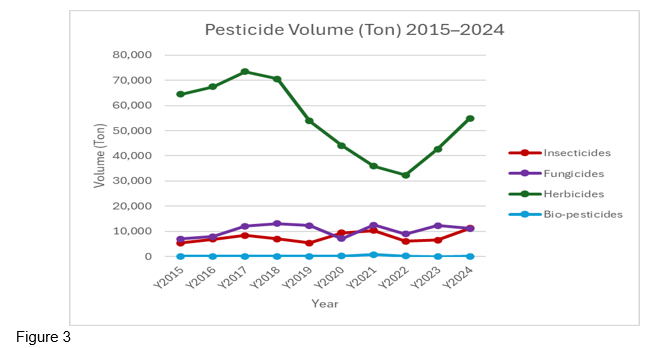
The decline in pesticide imports after 2020 reflects the impact of stricter regulations, including the ban on paraquat and chlorpyrifos and restrictions on glyphosate use. These regulatory measures were implemented in response to increasing concerns regarding human health, environmental contamination, and food safety.
Despite these efforts, pesticide use in Thailand remains relatively high. In 2020, the country imported approximately 98,260 tons of chemical pesticides, valued at 29.3 billion Thai baht (approximately USD 945 million), with herbicides accounting for about 70% of total imports. The overuse and misuse of pesticides have resulted in adverse impacts on farm workers’ health, environmental degradation, and reduced consumer confidence in food safety.
There has been an intense social debate in Thailand over the past decade regarding the role of pesticides in agriculture. This debate has focused on the banning of three major pesticides: the herbicides glyphosate and paraquat, and the insecticide chlorpyrifos, as well as the broader role of chemical pesticides in Thai agriculture. Paraquat and chlorpyrifos were banned in July 2020, while the use of glyphosate has been restricted to certain crops and is expected to be phased out in the near future.
Opponents of the pesticide ban have argued that there are limited alternatives available in Thailand, leaving farmers with few practical options for pest control. Biopesticides, as alternatives to chemical pesticides, are still not widely available. In 2020, Thailand imported microbial biopesticides worth 44.4 million Thai baht (US$ 1.43 million) and pheromones worth 5.6 million baht (US$ 0.18 million), although some products are manufactured locally.
The relatively low adoption of biopesticides raises important questions regarding whether Thailand, and other developing countries, are fully benefiting from the increasing global availability of these products, and how access to and adoption of biopesticides can be improved among Thai farmers. A better understanding of the biopesticide sector is therefore essential to inform policy decisions aimed at promoting more sustainable agricultural systems for the benefit of farmers, consumers, the environment, and agricultural trade.
The use of pesticides in agriculture plays an important role in protecting crop production from pests, diseases, and competition from weeds. However, pesticide use is also associated with significant risks, including early mortality among farmers and agricultural workers, environmental pollution, loss of biodiversity, and potential health impacts on consumers.
Globally, pesticide use has increased rapidly, particularly in many lower-income countries where regulatory systems are relatively weak, enforcement is limited, farmers have insufficient knowledge regarding proper use, and markets are often saturated with low-cost pesticide products. It has been observed that the higher the expected profit of a crop, the greater the quantity of pesticides applied, as farmers tend to use pesticides as a form of insurance against potential yield losses through preventive spraying.
In Thailand, pesticide expenditure for key vegetable crops has been estimated to exceed the economic optimum by approximately 78–79%, indicating substantial overuse. In contrast, the adoption of biopesticides has been associated with reduced levels of overuse, suggesting that promoting biopesticides could be an effective strategy to mitigate excessive pesticide application.
Biopesticides include naturally occurring substances such as biochemicals, microbial agents, semiochemicals, enzymes, plant extracts, and other biologically derived products. Most biopesticides have relatively low impacts on human health and the environment, as they are derived from natural sources including plants, animals, and microorganisms.
The growing popularity of biopesticides is driven by increasing restrictions on chemical pesticide use, ambitious policy targets for organic agriculture in many countries, streamlined regulatory approval processes, and greater awareness among farmers of the benefits associated with biopesticide use (Suwanna et al., 2024).
The growing awareness of these issues has led to increased policy attention and public debate regarding pesticide use in Thailand over the past decade. In particular, the regulation and banning of hazardous pesticides have stimulated interest in alternative pest management approaches, including biopesticides and integrated pest management strategies.
PROMOTION OF ALTERNATIVE PEST MANAGEMENT
Alternative pest management approaches have been increasingly promoted in Thailand by government agencies and relevant organizations as a strategy to reduce reliance on chemical pesticides and support sustainable agriculture. These approaches encompass a range of practices, including Integrated Pest Management (IPM), Good Agricultural Practices (GAP), organic agriculture, agronomic practices, and the use of resistant crop varieties.
INTEGRATED PEST MANAGEMENT (IPM)
IPM represents a key framework for sustainable pest control by integrating multiple techniques such as cultural, mechanical, physical, biological, and chemical methods. The objective is to minimize risks to human health and non-target organisms while maintaining crop productivity.
In Thailand, IPM implementation focuses on the selective and rational use of pesticides in combination with alternative methods. Criteria for pesticide selection within IPM include effectiveness against target organisms, low toxicity to humans and non-target species, rapid environmental degradation, and economic viability for farmers. Despite its advantages, IPM adoption remains limited in some areas due to knowledge gaps and implementation challenges.
GOOD AGRICULTURAL PRACTICES (GAP)
GAP serves as a certification system to ensure food safety and agricultural product quality. In Thailand, GAP standards were established under the Agricultural Standards Act, B.E. 2551 (2008). The Department of Agriculture and the National Bureau of Agricultural Commodity and Food Standards (ACFS) are responsible for monitoring and certification.
GAP promotes safe pesticide use, traceability, and compliance with production standards. However, its implementation is constrained by limited knowledge among farmers, insufficient access to inputs, and the complexity of certification procedures.
ORGANIC AGRICULTURE
Organic agriculture in Thailand emphasizes ecological balance, biodiversity, and the avoidance of synthetic chemicals. Certification systems are managed by the Department of Agriculture and the Rice Department. Key requirements include the absence of chemical residues, non-use of genetically modified organisms, and adherence to environmentally sustainable practices.
Despite policy support, organic agriculture faces challenges such as limited market access, high production costs, and labor-intensive practices, which restrict its widespread adoption.
SUPPORTING MECHANISMS AND CHALLENGES
Government initiatives have played a critical role in promoting alternative pest management through training programs, extension services, and policy support. Farmer Field Schools (FFS), safety training, and collaboration with international organizations have contributed to knowledge dissemination and capacity building.
However, several constraints remain, including limited farmer awareness, inadequate extension support, lack of access to alternative inputs, and the absence of integrated data systems for monitoring certification and implementation. These challenges highlight the need for continuous capacity development and institutional strengthening.
Overall, the promotion of alternative pest management in Thailand reflects a transition from conventional pesticide-dependent practices toward more sustainable and integrated approaches. While progress has been made, further efforts are required to enhance adoption and ensure long-term sustainability.
BIOPESTICIDES
Development of Biopesticides in Thailand
The development of biopesticides in Thailand began in 1971, initially focusing on controlling key insect pests such as the diamondback moth (Plutella xylostella) and cabbage looper (Trichoplusia ni). Early research primarily emphasized efficacy testing of biological agents under laboratory and field conditions. However, adoption was initially limited due to the relatively slower action of biopesticides compared to synthetic chemical insecticides.
As research progressed and field effectiveness was demonstrated, interest in biopesticides increased among researchers, government agencies, universities, and the private sector. Field surveys conducted by the Department of Agriculture (DOA) identified several promising biological control agents, including Bacillus thuringiensis, Bacillus subtilis, nucleopolyhedrovirus (NPV), Metarhizium anisopliae, Beauveria bassiana, Trichoderma harzianum, Steinernema siamkayai, and Sarcocystis singaporensis. These organisms have been extensively studied for their efficacy, application techniques, and mass production potential.
The DOA established pilot-scale production facilities for microbial biopesticides such as Bacillus thuringiensis (Bt) and NPV. Technology transfer to the private sector has enabled commercialization and wider distribution, contributing to increased availability of biopesticides in Thailand.
APPLICATION AND EFFECTIVENESS
Among the biopesticides developed, Bacillus thuringiensis var. kurstaki (Btk) has been widely used to control lepidopteran pests in vegetable crops. It has proven effective against pests that have developed resistance to synthetic pesticides, such as Spodoptera exigua and Heliothis armigera.
Field studies have demonstrated that combining or alternating the use of biopesticides with synthetic pesticides can enhance pest control effectiveness and delay the development of resistance. For example, the use of Bt in combination with NPV has shown acceptable levels of control for S. exigua.
Biopesticides derived from bacteria, viruses, fungi, nematodes, and protozoa are currently used in Thailand to manage a wide range of economically important pests. Their low environmental impact and compatibility with integrated pest management (IPM) make them suitable alternatives to conventional pesticides.
INSTITUTIONAL AND MARKET STRUCTURE
Biopesticide supply in Thailand can be categorized into two main groups:
- Non-commercial organizations
These include government agencies such as the DOA and Department of Agricultural Extension (DOAE), universities, and non-governmental organizations. These entities focus on research, development, and technology transfer. They often provide biopesticides to farmers at low or no cost to promote adoption and reduce dependence on chemical pesticides.
- Commercial organizations
These include multinational companies, local agents, and domestic producers. Commercial entities are responsible for the production, importation, and distribution of biopesticides for profit. Products are typically distributed through local dealers, which may increase costs for farmers. (Paisan et al.,2005)
Government initiatives, such as the “Hygienic Food and Safety” program, are expected to further promote the production and use of biopesticides by supporting both public and private sector participation.
CHALLENGES AND LIMITATIONS
Despite their advantages, the adoption of biopesticides in Thailand remains limited. Key challenges include slower action compared to chemical pesticides, limited availability, higher costs, and insufficient farmer knowledge regarding proper use.
In addition, regulatory processes and market accessibility can hinder the widespread adoption of biopesticides. Farmers often rely on chemical pesticides due to their immediate effectiveness and familiarity, particularly in high-value crops where pest damage can result in significant economic losses.
SYNTHESIS AND IMPLICATIONS
The development of biopesticides in Thailand reflects a gradual transition toward more sustainable pest management practices. Evidence suggests that biopesticides can effectively control pests while reducing environmental and health risks. However, their successful adoption depends on improved accessibility, farmer education, and supportive policy frameworks.
Strengthening research, enhancing extension services, and promoting public-private collaboration are essential to increase the role of biopesticides in Thai agriculture. Integrating biopesticides into broader IPM strategies will be critical in achieving long-term sustainability.
CONCLUSION
This paper has reviewed the development of pest management practices and the integration of advanced agricultural technologies in Thailand within the context of sustainable agriculture. The findings highlight a clear transition from conventional pesticide-dependent approaches toward more integrated and environmentally friendly strategies.
The increasing promotion of integrated pest management (IPM), Good Agricultural Practices (GAP), and organic agriculture reflects the growing recognition of the need to balance productivity with environmental and human health considerations. In particular, the development and application of biopesticides represent a promising pathway to reduce reliance on synthetic chemical pesticides while maintaining effective pest control.
Despite these advancements, several challenges continue to limit the widespread adoption of sustainable pest management approaches. These include limited farmer awareness, accessibility of alternative inputs, regulatory constraints, and economic considerations. Addressing these barriers requires coordinated efforts across government agencies, research institutions, and the private sector.
Strengthening policy enforcement, enhancing extension services, and promoting innovation and technology transfer are essential to support the transition toward sustainable agricultural systems. In addition, increasing investment in research and development, particularly in biopesticide technologies and application strategies, will further improve their effectiveness and adoption.
Overall, Thailand demonstrates strong potential to serve as a model for integrating innovative pest management and advanced technologies in support of sustainable agriculture. Continued collaboration among stakeholders and alignment of policy, technology, and practice will be critical to achieving long-term sustainability and resilience in the agricultural sector.
REFERENCES
Anonymous, 2026a. Agricultural Regulatory Division. Import & Export Statistics. Retrieved 4 April 2026 from: https://www.doa.go.th/ard/?page_id=386
Anonymous, 2026b. Thailand GDP. Retrieved 4 April 2026 from: https://www.theglobaleconomy.com/Thailand/gdp_current_local_currency
BIOTEC-NSTDA (The National Center for Genetic Engineering and Biotechnology). 2024. Retrieved 20 March 2026 from: http://www.biotec.or.th
Chutima R. 2017. Thailand Pesticide Product Registration Overview. 2017. 127 pp.
IPACE (IP Acceleration & Commercialization Enterprise). 2023. Accelerating Innovation
Shaping the Future. Retrieved 4 April 2026 from: https://ipcommercialize.com
Paisan et al., 2005. Positioning of Biopesticides in Thailand. Retrieved 20 March 2026 from: https://www.erudit.org/fr/livres/hors-collection/proceedings-of-the-6th-pacific-rim-conference-on-the-biotechnology-of-bacillus--978-2-9810223-1-8/000224co.pdf
Suwanna et al., 2024. Policy options for promoting wider use of biopesticides in Thai agriculture. Retrieved 20 March 2026 from: journal homepage: www.cell.com/heliyon

Integrating Innovative Pest Management and Advanced Technologies to Support Sustainable Agriculture in Thailand
This manuscript was originally presented at the ACRI, ATRI, WorldVeg, and FFTC workshop titled “Pest and Disease Management Strategies for Sustainable Agriculture,” held in Taichung, Taiwan, on May 5–6, 2026.
ABSTRACT
This paper provides a review of the integration of innovative pest management strategies and advanced agricultural technologies to support sustainable agriculture in Thailand. It synthesizes information from national policies, existing literature, and available data to present an overview of the country’s agricultural background, trends in pesticide use, and associated environmental and health concerns. The paper highlights the promotion of alternative pest management approaches, including Integrated Pest Management (IPM), Good Agricultural Practices (GAP), and organic agriculture, as well as the development and application of biopesticides in Thailand. It also discusses the role of government policies and institutional support in encouraging the adoption of sustainable practices among farmers. The review indicates that while chemical pesticide use has historically increased, recent regulatory measures and growing awareness have accelerated the transition toward biological control methods and environmentally friendly technologies. However, challenges remain in terms of accessibility, farmer knowledge, and regulatory implementation. The paper concludes that strengthening policy enforcement, promoting biopesticides, and enhancing access to innovative technologies are essential to achieving long-term sustainability in Thai agriculture.
Keywords: Thailand, integrated pest management, biopesticides, sustainable agriculture, agricultural technology, pest control
INTRODUCTION
In response to the global shift towards sustainable farming, Thailand is making significant strides in transforming its agricultural practices to prioritize both productivity and environmental responsibility. The agricultural sector, a cornerstone of Thailand’s economy, faces mounting challenges from climate change, resource depletion, and the environmental toll of traditional farming methods. Recognizing these issues, the Thai government has introduced strategic frameworks such as the 20-Year National Strategy, Agricultural and Cooperatives Strategy, and Agriculture Climate Change Strategy. These policies aim to future-proof the sector by fostering innovation, resilience, and sustainability.
Alongside these measures, advancements in sustainable farming practices and agricultural technology in Thailand are creating opportunities for greener practices and increased productivity. Thai farmers have accessed innovative solutions developed in Thailand, including biological pest control, precision nutrient delivery, and cutting-edge agricultural technologies. These advancements are designed to address modern agricultural challenges by increasing productivity, reducing environmental impact, conserving resources, and ensuring long-term sustainability. By leveraging these locally developed technologies, Thailand is building a foundation for a resilient and eco-friendly agricultural sector that aligns with global sustainability goals (IPACE, 2023).
Moreover, the Green Recovery stands among the Thai government’s post-COVID economic recovery policies. It places emphasis on creating sustainable economic growth while safeguarding the environment. To support the green recovery policy, the government has developed a Standard Operating Procedure (SOP) for integrated pest management in many crops such as rice, coconut, and durian. The SOP offers a comprehensive, effective, and eco-friendly approach to pest and disease management, assisting farmers in protecting crops from major pests and diseases such as root rot and stem rot.
For over four decades of research, the Department of Agriculture (DOA) and the National Center for Genetic Engineering and Biotechnology (BIOTEC) have developed an array of biocontrol products, including Beauveria bassiana, Metarhizium, and Trichoderma. These biological agents are used to control various pests such as brown planthoppers, thrips, aphids, leafhoppers, and whiteflies, as well as fungal pathogens like Phytophthora, which causes root rot and stem rot in durian trees (BIOTEC, 2024).
This paper provides a country-level review of pest management practices and technological advancements supporting sustainable agriculture in Thailand. It aims to synthesize existing information on agricultural development, pesticide use trends, and the promotion of alternative pest management approaches, including integrated pest management (IPM) and biopesticides. In addition, the paper examines the role of government policies and institutional support in facilitating the transition toward more sustainable agricultural systems. The findings are expected to provide insights for policymakers, researchers, and stakeholders seeking to enhance sustainable farming practices in Thailand and similar agricultural contexts.
METHODOLOGY
This study adopts a systematic review approach to synthesize existing knowledge on pest management and sustainable agriculture in Thailand. Relevant information was collected from scientific literature, government policy documents, institutional reports, and publicly available databases.
Sources were selected based on their relevance to pesticide use, integrated pest management (IPM), biopesticide development, and sustainable agricultural practices in Thailand. Both peer-reviewed publications and credible institutional sources were included to ensure comprehensive coverage of the topic.
The collected information was analyzed and categorized into key thematic areas, including agricultural background, pesticide use trends, alternative pest management approaches, and technological innovations. This approach enables a structured understanding of current practices and future directions for sustainable agriculture in Thailand.
COUNTRY CONTEXT OF THAILAND
Thailand’s agricultural sector provides an important context for understanding pest management practices, pesticide use trends, and sustainability challenges. As a country with a strong agricultural foundation and significant role in global food production, Thailand faces the dual challenge of maintaining productivity while ensuring environmental sustainability.
Thailand occupies an area of 51 million hectare. Geographically, it is divided into four major regions, namely the Northern, Northeastern, Central plain, and Southern regions, with Bangkok Metropolis serving as the capital. The country is characterized by high biodiversity, with at least 18,000 plant species, representing approximately 8% of the world’s total. Among these, rice is the most diverse species, with a wide range of genetic diversity distributed across the country.
Thailand is widely recognized as an agricultural country, with approximately 21 million hectare. (41%) of its total land area devoted to agriculture. Of this agricultural land, about 49%, 21%, and 21% are allocated to paddy rice, field crops, and fruit trees, respectively. Historically, agricultural expansion has been driven by deforestation; however, despite the increase in farmland, crop productivity has remained stagnant or even declined, while land quality has deteriorated significantly. In addition, parts of agricultural land have been converted to non-agricultural uses due to urbanization and industrial expansion. These trends have led to increasing emphasis on land reform, land quality improvement, productivity enhancement, and conservation in national land development policies.
The development of agriculture in Thailand can be understood through its historical, scientific, and socio-economic dimensions, which together shape the country’s unique agricultural system. Due to favorable topographic and climatic conditions, Thailand remains a major global producer and exporter of agricultural commodities. Approximately 20.8 million hectare. are used for agricultural purposes, including paddy rice, field crops, fruit trees, vegetables, flowers, and other uses. Major agricultural and export products include rice, rubber, cassava, maize, coconut, tropical fruits, flowers, and vegetables (Chutima, 2017).
In economic terms, Thailand’s Gross Domestic Product (GDP) was valued at approximately USD 526.41 billion in 2024. As the second-largest economy in Southeast Asia, it experienced a growth rate of 2.4% in 2025, driven by private consumption and investment, and is projected to reach USD 534.83 billion by 2026 (Anonymous, 2026a).
Thailand’s agricultural sector also plays a critical role in international trade. In 2024, the country exported 9.95 million tons of rice, achieving a six-year high valued at 225.66 billion baht (approximately USD 6.43 billion), representing a 13% increase compared to 2023. Major export markets include Indonesia, Iraq, the United States, South Africa, and the Philippines. However, due to increasing global competition and production in other countries, rice exports are projected to decline to approximately 7.5 million tons in 2025.
This agricultural context underpins the observed trends in pesticide use and highlights the growing need for more sustainable and integrated pest management strategies, which are discussed in the following sections.
DEVELOPMENT OF PESTICIDE USE IN THAILAND
The development of pesticide use in Thailand reflects the country’s transition from traditional agricultural practices to more intensive and commercialized farming systems. As agricultural production expanded to meet increasing domestic and global demand, the use of chemical pesticides became a central component of crop protection strategies.
For several decades, crop protection in Thailand has relied heavily on chemical pesticides. Their use began during World War II with the introduction of dichlorodiphenyltrichloroethane (DDT) for malaria control. Following the war, pesticide use expanded rapidly, particularly in agriculture, as more synthetic chemical products were introduced. Since Thailand does not manufacture most pesticides domestically, the majority of products have been imported in both technical and formulated forms.
After 2006, pesticide imports increased markedly. The total volume of imported pesticides rose from approximately 53,575 tons in 2006 to 77,205 tons in 2014, indicating a rapid expansion in pesticide use during this period (Table 1, Figure 2). Herbicides accounted for the largest proportion of pesticide imports, reflecting their widespread use in crop production systems.
Table 1
Year
Insecticides
Fungicides
Herbicides
Bio-pesticides
Total
Volume (Tones)
Volume (Ton)
Volume (Ton)
Volume (Ton)
Volume (Ton)
2006
8,099
5,733
39,611
132
53,575
2007
8,609
6,609
50,176
143
65,537
2008
9,471
7,098
44,063
616
61,248
2009
3,043
2,037
30,865
883
36,828
2010
9,995
5,972
51,903
117
67,987
2011
10,671
6,980
67,608
156
85,415
2012
4,066
4,421
60,232
103
68,822
2013
3,022
2,829
42,360
60
48,271
2014
5,987
6,683
64,429
106
77,205
Source: Agricultural Regulatory Division
The increasing trend in pesticide imports during this period highlights the intensification of agricultural practices and growing reliance on chemical inputs. However, this trend did not continue in subsequent years. Data from 2015 to 2024 shows fluctuations in pesticide imports, with a notable decline after 2020, which is associated with regulatory changes and the banning of certain hazardous pesticides (Table 2 & Figure 3). (Anonymous,2026b)
Table 2
Year
Insecticides
Fungicides
Herbicides
Bio-pesticides
Total
Volume (Ton)
Volume (Ton)
Volume (Ton)
Volume (Ton)
Volume (Ton)
2015
5,385
7,041
64,446
87
76,959
2016
6,841
7,958
67,456
137
82,392
2017
8,390
12,029
73,391
112
93,922
2018
6,978
13168
70598
106
90,850
2019
5,437
12,322
53,858
154
71,771
2020
9,471
7,098
44,063
171
60,803
2021
10,308
12,513
35,943
826
59,590
2022
6,075
9,004
32,397
171
47,647
2023
6,520
12,284
42,750
-
61,554
2024
11,224
11,198
54,874
142
77,438
Source: Agricultural Regulatory Division
The decline in pesticide imports after 2020 reflects the impact of stricter regulations, including the ban on paraquat and chlorpyrifos and restrictions on glyphosate use. These regulatory measures were implemented in response to increasing concerns regarding human health, environmental contamination, and food safety.
Despite these efforts, pesticide use in Thailand remains relatively high. In 2020, the country imported approximately 98,260 tons of chemical pesticides, valued at 29.3 billion Thai baht (approximately USD 945 million), with herbicides accounting for about 70% of total imports. The overuse and misuse of pesticides have resulted in adverse impacts on farm workers’ health, environmental degradation, and reduced consumer confidence in food safety.
There has been an intense social debate in Thailand over the past decade regarding the role of pesticides in agriculture. This debate has focused on the banning of three major pesticides: the herbicides glyphosate and paraquat, and the insecticide chlorpyrifos, as well as the broader role of chemical pesticides in Thai agriculture. Paraquat and chlorpyrifos were banned in July 2020, while the use of glyphosate has been restricted to certain crops and is expected to be phased out in the near future.
Opponents of the pesticide ban have argued that there are limited alternatives available in Thailand, leaving farmers with few practical options for pest control. Biopesticides, as alternatives to chemical pesticides, are still not widely available. In 2020, Thailand imported microbial biopesticides worth 44.4 million Thai baht (US$ 1.43 million) and pheromones worth 5.6 million baht (US$ 0.18 million), although some products are manufactured locally.
The relatively low adoption of biopesticides raises important questions regarding whether Thailand, and other developing countries, are fully benefiting from the increasing global availability of these products, and how access to and adoption of biopesticides can be improved among Thai farmers. A better understanding of the biopesticide sector is therefore essential to inform policy decisions aimed at promoting more sustainable agricultural systems for the benefit of farmers, consumers, the environment, and agricultural trade.
The use of pesticides in agriculture plays an important role in protecting crop production from pests, diseases, and competition from weeds. However, pesticide use is also associated with significant risks, including early mortality among farmers and agricultural workers, environmental pollution, loss of biodiversity, and potential health impacts on consumers.
Globally, pesticide use has increased rapidly, particularly in many lower-income countries where regulatory systems are relatively weak, enforcement is limited, farmers have insufficient knowledge regarding proper use, and markets are often saturated with low-cost pesticide products. It has been observed that the higher the expected profit of a crop, the greater the quantity of pesticides applied, as farmers tend to use pesticides as a form of insurance against potential yield losses through preventive spraying.
In Thailand, pesticide expenditure for key vegetable crops has been estimated to exceed the economic optimum by approximately 78–79%, indicating substantial overuse. In contrast, the adoption of biopesticides has been associated with reduced levels of overuse, suggesting that promoting biopesticides could be an effective strategy to mitigate excessive pesticide application.
Biopesticides include naturally occurring substances such as biochemicals, microbial agents, semiochemicals, enzymes, plant extracts, and other biologically derived products. Most biopesticides have relatively low impacts on human health and the environment, as they are derived from natural sources including plants, animals, and microorganisms.
The growing popularity of biopesticides is driven by increasing restrictions on chemical pesticide use, ambitious policy targets for organic agriculture in many countries, streamlined regulatory approval processes, and greater awareness among farmers of the benefits associated with biopesticide use (Suwanna et al., 2024).
The growing awareness of these issues has led to increased policy attention and public debate regarding pesticide use in Thailand over the past decade. In particular, the regulation and banning of hazardous pesticides have stimulated interest in alternative pest management approaches, including biopesticides and integrated pest management strategies.
PROMOTION OF ALTERNATIVE PEST MANAGEMENT
Alternative pest management approaches have been increasingly promoted in Thailand by government agencies and relevant organizations as a strategy to reduce reliance on chemical pesticides and support sustainable agriculture. These approaches encompass a range of practices, including Integrated Pest Management (IPM), Good Agricultural Practices (GAP), organic agriculture, agronomic practices, and the use of resistant crop varieties.
INTEGRATED PEST MANAGEMENT (IPM)
IPM represents a key framework for sustainable pest control by integrating multiple techniques such as cultural, mechanical, physical, biological, and chemical methods. The objective is to minimize risks to human health and non-target organisms while maintaining crop productivity.
In Thailand, IPM implementation focuses on the selective and rational use of pesticides in combination with alternative methods. Criteria for pesticide selection within IPM include effectiveness against target organisms, low toxicity to humans and non-target species, rapid environmental degradation, and economic viability for farmers. Despite its advantages, IPM adoption remains limited in some areas due to knowledge gaps and implementation challenges.
GOOD AGRICULTURAL PRACTICES (GAP)
GAP serves as a certification system to ensure food safety and agricultural product quality. In Thailand, GAP standards were established under the Agricultural Standards Act, B.E. 2551 (2008). The Department of Agriculture and the National Bureau of Agricultural Commodity and Food Standards (ACFS) are responsible for monitoring and certification.
GAP promotes safe pesticide use, traceability, and compliance with production standards. However, its implementation is constrained by limited knowledge among farmers, insufficient access to inputs, and the complexity of certification procedures.
ORGANIC AGRICULTURE
Organic agriculture in Thailand emphasizes ecological balance, biodiversity, and the avoidance of synthetic chemicals. Certification systems are managed by the Department of Agriculture and the Rice Department. Key requirements include the absence of chemical residues, non-use of genetically modified organisms, and adherence to environmentally sustainable practices.
Despite policy support, organic agriculture faces challenges such as limited market access, high production costs, and labor-intensive practices, which restrict its widespread adoption.
SUPPORTING MECHANISMS AND CHALLENGES
Government initiatives have played a critical role in promoting alternative pest management through training programs, extension services, and policy support. Farmer Field Schools (FFS), safety training, and collaboration with international organizations have contributed to knowledge dissemination and capacity building.
However, several constraints remain, including limited farmer awareness, inadequate extension support, lack of access to alternative inputs, and the absence of integrated data systems for monitoring certification and implementation. These challenges highlight the need for continuous capacity development and institutional strengthening.
Overall, the promotion of alternative pest management in Thailand reflects a transition from conventional pesticide-dependent practices toward more sustainable and integrated approaches. While progress has been made, further efforts are required to enhance adoption and ensure long-term sustainability.
BIOPESTICIDES
Development of Biopesticides in Thailand
The development of biopesticides in Thailand began in 1971, initially focusing on controlling key insect pests such as the diamondback moth (Plutella xylostella) and cabbage looper (Trichoplusia ni). Early research primarily emphasized efficacy testing of biological agents under laboratory and field conditions. However, adoption was initially limited due to the relatively slower action of biopesticides compared to synthetic chemical insecticides.
As research progressed and field effectiveness was demonstrated, interest in biopesticides increased among researchers, government agencies, universities, and the private sector. Field surveys conducted by the Department of Agriculture (DOA) identified several promising biological control agents, including Bacillus thuringiensis, Bacillus subtilis, nucleopolyhedrovirus (NPV), Metarhizium anisopliae, Beauveria bassiana, Trichoderma harzianum, Steinernema siamkayai, and Sarcocystis singaporensis. These organisms have been extensively studied for their efficacy, application techniques, and mass production potential.
The DOA established pilot-scale production facilities for microbial biopesticides such as Bacillus thuringiensis (Bt) and NPV. Technology transfer to the private sector has enabled commercialization and wider distribution, contributing to increased availability of biopesticides in Thailand.
APPLICATION AND EFFECTIVENESS
Among the biopesticides developed, Bacillus thuringiensis var. kurstaki (Btk) has been widely used to control lepidopteran pests in vegetable crops. It has proven effective against pests that have developed resistance to synthetic pesticides, such as Spodoptera exigua and Heliothis armigera.
Field studies have demonstrated that combining or alternating the use of biopesticides with synthetic pesticides can enhance pest control effectiveness and delay the development of resistance. For example, the use of Bt in combination with NPV has shown acceptable levels of control for S. exigua.
Biopesticides derived from bacteria, viruses, fungi, nematodes, and protozoa are currently used in Thailand to manage a wide range of economically important pests. Their low environmental impact and compatibility with integrated pest management (IPM) make them suitable alternatives to conventional pesticides.
INSTITUTIONAL AND MARKET STRUCTURE
Biopesticide supply in Thailand can be categorized into two main groups:
These include government agencies such as the DOA and Department of Agricultural Extension (DOAE), universities, and non-governmental organizations. These entities focus on research, development, and technology transfer. They often provide biopesticides to farmers at low or no cost to promote adoption and reduce dependence on chemical pesticides.
These include multinational companies, local agents, and domestic producers. Commercial entities are responsible for the production, importation, and distribution of biopesticides for profit. Products are typically distributed through local dealers, which may increase costs for farmers. (Paisan et al.,2005)
Government initiatives, such as the “Hygienic Food and Safety” program, are expected to further promote the production and use of biopesticides by supporting both public and private sector participation.
CHALLENGES AND LIMITATIONS
Despite their advantages, the adoption of biopesticides in Thailand remains limited. Key challenges include slower action compared to chemical pesticides, limited availability, higher costs, and insufficient farmer knowledge regarding proper use.
In addition, regulatory processes and market accessibility can hinder the widespread adoption of biopesticides. Farmers often rely on chemical pesticides due to their immediate effectiveness and familiarity, particularly in high-value crops where pest damage can result in significant economic losses.
SYNTHESIS AND IMPLICATIONS
The development of biopesticides in Thailand reflects a gradual transition toward more sustainable pest management practices. Evidence suggests that biopesticides can effectively control pests while reducing environmental and health risks. However, their successful adoption depends on improved accessibility, farmer education, and supportive policy frameworks.
Strengthening research, enhancing extension services, and promoting public-private collaboration are essential to increase the role of biopesticides in Thai agriculture. Integrating biopesticides into broader IPM strategies will be critical in achieving long-term sustainability.
CONCLUSION
This paper has reviewed the development of pest management practices and the integration of advanced agricultural technologies in Thailand within the context of sustainable agriculture. The findings highlight a clear transition from conventional pesticide-dependent approaches toward more integrated and environmentally friendly strategies.
The increasing promotion of integrated pest management (IPM), Good Agricultural Practices (GAP), and organic agriculture reflects the growing recognition of the need to balance productivity with environmental and human health considerations. In particular, the development and application of biopesticides represent a promising pathway to reduce reliance on synthetic chemical pesticides while maintaining effective pest control.
Despite these advancements, several challenges continue to limit the widespread adoption of sustainable pest management approaches. These include limited farmer awareness, accessibility of alternative inputs, regulatory constraints, and economic considerations. Addressing these barriers requires coordinated efforts across government agencies, research institutions, and the private sector.
Strengthening policy enforcement, enhancing extension services, and promoting innovation and technology transfer are essential to support the transition toward sustainable agricultural systems. In addition, increasing investment in research and development, particularly in biopesticide technologies and application strategies, will further improve their effectiveness and adoption.
Overall, Thailand demonstrates strong potential to serve as a model for integrating innovative pest management and advanced technologies in support of sustainable agriculture. Continued collaboration among stakeholders and alignment of policy, technology, and practice will be critical to achieving long-term sustainability and resilience in the agricultural sector.
REFERENCES
Anonymous, 2026a. Agricultural Regulatory Division. Import & Export Statistics. Retrieved 4 April 2026 from: https://www.doa.go.th/ard/?page_id=386
Anonymous, 2026b. Thailand GDP. Retrieved 4 April 2026 from: https://www.theglobaleconomy.com/Thailand/gdp_current_local_currency
BIOTEC-NSTDA (The National Center for Genetic Engineering and Biotechnology). 2024. Retrieved 20 March 2026 from: http://www.biotec.or.th
Chutima R. 2017. Thailand Pesticide Product Registration Overview. 2017. 127 pp.
IPACE (IP Acceleration & Commercialization Enterprise). 2023. Accelerating Innovation
Shaping the Future. Retrieved 4 April 2026 from: https://ipcommercialize.com
Paisan et al., 2005. Positioning of Biopesticides in Thailand. Retrieved 20 March 2026 from: https://www.erudit.org/fr/livres/hors-collection/proceedings-of-the-6th-pacific-rim-conference-on-the-biotechnology-of-bacillus--978-2-9810223-1-8/000224co.pdf
Suwanna et al., 2024. Policy options for promoting wider use of biopesticides in Thai agriculture. Retrieved 20 March 2026 from: journal homepage: www.cell.com/heliyon