DOI: https://doi.org/10.56669/ONWU4374
This manuscript was originally presented at the ACRI, ATRI, WorldVeg, and FFTC workshop titled “Pest and Disease Management Strategies for Sustainable Agriculture,” held in Taichung, Taiwan, on May 5–6, 2026.
ABSTRACT
Biological control is increasingly important in integrated pest management systems. It provides non-chemical and environmentally friendly means for the control of target pests through use natural enemies. In Viet Nam, the studies on biological control commenced in the early 1970s. Recently, the government initiatives promoting sustainable agriculture and reducing chemical pesticide risks are driving the adoption of biocontrol solutions. It requires intensive studies to explore the biological control approaches and to enhance its utilisattion in pest management of the economically important crops. This paper provides the summary of recent research and application of biological control of some key insect pests and mites in Plant Protection Research Institute, the leading national plant protection research institution in Viet Nam. Viet Nam is known as one of the most biodiverse countries in the world, comprising the rich ecosystems. The biodiversity provides the great advantages for the conservation biological control approach. The study on the armoured scale insects and their natural enemies indicated that most commonly recorded primary parasitoids are species of Aphytis, Encarsia and Pteroptrix and Comperiella. The field survey showed that the level of parasitism on false scale, Aspidiotus rigidus, was 46% by Aphytis sp., 54% by Comperiella calauanica, and 47% by Pteroptrix parvipennis. The augmentative biological control is a key component of the integrated pest management. The mass rearing of beneficial organisms, including predators, parasitoids, and entomopathogens, has been extensively studied and applied in PPRI. The most extensively studied parasitoids in Viet Nam are species of Trichogramma for the control of rice, corn, cotton and sugarcane insect pests. Recently, the mass rearing and release of mealybug parasitoids (Leptomastrix dactylopii, Anagyrus lopezi) and coconut hispine beetle were successfully implemented and adopted. A number of predators have been mass produced and applied for the biological control, including predatory mites, predatory bugs, coccinellid beetles,….for the control of wide range of insect pests and mites. Entomopathogens used for biological control in Viet Nam include fungi, bacteria, viruses and nematodes. The most commonly used entomopathogenic fungi are Metarhizium anisopliae and Beauveria bassiana that have been mass produced by Biological Control Centre, PPRI and applied to control wide range of target pests. Entomopathogenic nematodes are obligate parasites of insects and are effective biological control agent of many insect pests. The great efforts have been made to develop and utilise this highly potential biocontrol agent for crop protection.
INTRODUCTION
Biological control is considered as an important component of Integrated pest management worldwide (Colmenarez et al. 2018). It provides non-chemical and environmentally friendly means for the control of target pests through use natural enemies, such as predators, parasites, and beneficial microorganisms. The application of the biological control reduces the environmental impact as well as minimizes the risk of pesticide resistance, and sustainably improves the biodiversity.
In general, biological control comprises three approaches: importation (also referred to as classical biological control), augmentation and conservation of natural enemies. Practically, depending to the circumstance, these approaches are adopted individually or in combination.
Viet Nam is known as one of the most biodiverse countries in the world, comprising the rich ecosystems. The biodiversity provides the great advantages for the conservation biological control approach. Biological control studies commenced in Viet Nam in the early 1970s. These studies focused on surveys of natural enemies of insect pests in agricultural crops. On rice, Luong Minh Khoi et al. (1976) recorded 45 primary parasitoid species and 14 secondary parasitoid species of 12 rice insect pests. Among them were 12 parasitoids of rice leafroller (Cnaphalocrocis medinalis (Guenée) [Lepidoptera: Crambidae] and seven primary parasitoids of the rice plant skipper (Parnara guttata Bremer et Grey) [Lepidoptera: Hesperiidae]. More than 100 predators and parasitoids occur in cotton fields (Pham Van Lam et al. 1993). Pham Van Lam (2011) listed 454 natural enemy species collected and identified during the perios from 1981 to 2002. These species belong to Hymenoptera (225 species); Coleoptera (78 species); Araneae (59 species); Hemiptera (32 species); Diptera (27 species).
Viet Nam agriculture is transforming towards green and sustainable production. ‘Green’ agriculture is an approach and method in the field of agriculture aimed at ensuring sustainable development, protecting the environment and enhancing human health. It requires the balance between agricultural production development and the protection of natural resources. The green agriculture focuses on the application and adoption of smart farming practices, including the use of organic fertilizers and biological control, reducing the use of chemical pesticides, etc (Nguyen, 2024). There are national initiatives promoting the sustainable agriculture and adoption of biocontrol solutions such as the Integrated Plant Health Management Program, Production and Use of Biopesticides scheme.
In order to align with the agricultural industry priorities, Plant Protection Research Institute (hereafter referred as PPRI), has focused on the promotion of research and development of biological pest control solutions. The recent studies on biological control have been conducted to (1) explore the natural enemies in association with the major target pests; (2) identify the role of natural enemies in the suppression of insect pest populations; (3) recommend the possible practices to reducing the negative impacts on the natural enemies or providing favourable resources for natural enemies; (4) produce and release of natural enemies for control of insect pests. This paper highlights the recent research and application of biological control of some key insect pests and mites in PPRI.
Table 1. Biological Control Agents: recently studied and applied for biological pest control in PPRI
|
Natural enemies
|
Target pests
|
References
|
|
Parasitoids
|
|
Trichogramma spp.
|
Many species
|
|
|
Leptomastrix dactylopii Howard
|
Mealybugs
|
Dao et al. 2023
|
|
Apoanagyrus lopezi De Santis
|
Phenacoccus manihoti Matile-Ferrero
|
Nguyen et al. 2019
|
|
Anagyrus jennifeae Noyes & Hayat
|
Mealybugs
|
Dao et al. 2023
|
|
Anagyrus mangicola Noyes
|
Rastrococcus invadens
|
Dao et al. 2023
|
|
Asecodes hispinarum Boucek
|
Brontispa longissima (Gestro)
|
PPRI 2018
|
|
Telenomus remus (Nixon)
|
Spodoptera frugiperda J.E.Smith
|
Dao et al. 2024
|
|
Pteroptrix parvipennis (Gahan)
|
Aspidiotus rigidus Reyne
|
Dao et al. 2020
|
|
Aphytis sp.
|
Aspidiotus rigidus Reyne
|
Dao et al. 2020
|
|
Comperiella calauanica Barrion, Almarinez & Amalin
|
Aspidiotus rigidus Reyne
|
Dao et al. 2020
|
|
Predator
|
|
Scymnus bipunctatus Kugelann
|
Mealybugs
|
Dao et al. 2023
|
|
Amblyseius spp.
|
Thrips, whiteflies, spider mites
|
Nguyen et al. 2022
|
|
Neoseiulus longispinosus Evans
|
spider mites
|
Nhung et al. 2023
|
|
Orius spp
|
Thrips, whiteflies,
|
Nguyen et al. 2022
|
|
Euborellia annulipes
|
|
Lai Tien Dung unpibish data
|
|
Entomopathogenic nematodes
|
|
|
|
Heterorhabditis indica
|
Many species
|
Dao et al. 2024
|
|
Steinernema eapokense
|
Many species
|
Dao et al. 2024
|
|
Steinernema pakistanense
|
Many species
|
Dao et al. 2024
|
|
Steinernema huense
|
Many species
|
Dao et al. 2024
|
|
Beneficial microorganism
|
|
|
|
Metarizhium anisopliae
|
Many species
|
Pham 1994
|
|
Beauveria bassiana
|
Many species
|
Pham 1994
|
|
Trichoderma spp.
|
|
|
PARASITOIDS
Parasitoids, an organism that lives on or in a host and ultimately kills the host, are considered as highly effective biological control agents of important agricultural insect pests. Most parasitic insects belong to the order Hymenoptera, with some belonging to the order Diptera, and very few to the orders Coleoptera and Lepidoptera. In Viet Nam, from 1981 to 1995, a total of 176 Hymenopterous parasitoid species was collected and identify (Pham Van Lam. 1996). The species of Trichogramma are minute waps that primarily parasite eggs of Lepidopterous species (Knutson, 2005). The most extensively studied parasitoids in Viet Nam are species of Trichogramma [Hymenoptera: Trichogrammatidae] (NIPP 1977, Pham Van Lam, 1995, Truong Xuan Lam, 2013). Three species of Trichogramma (T. chilonis, T. japonicum and T. dendrolimi) have been mass reared and released for biocontrol of insect pests on rice, corn, sugarcane, etc (Pham Van Lam, pers. comm).
Mealybug species (Hemiptera: Pseudococcidae) are key pests causing the significant losses in crops and ornamental plants. Many mealybug species are considered as invasion risks for the international trade of agricultural commodity (Miller et al. 2002). Population outbreaks are frequent when mealybugs are introduced into new areas without their specific natural enemies and therefore classical biological control programmes have been widely used for their management (Moore, 1988). Although, wide range of natural enemies have been recorded, parasitoids have been the most successful biological control agents of mealybugs (Moore, 1988). Mealybugs are common and important pests on various agricultural crops and ornamental plant in Viet Nam. According to the ScaleNet, 45 pseudococcid species have been recorded in Viet Nam (Morales et al., 2016).
Cassava mealybug, Phenacoccus manihoti Matile-Ferrero [Hemiptera: Pseudococcidae], one of the most serious pests on cassava worldwide, was first recorded in Viet Nam in 2012 (Parsa et al., 2012). For long term management of the invasive mealybug species, its parasitoid, Apoanagyrus lopezi De Santis [Hymenoptera: Encyrtidae] has been introduced to some Southeast Asian countries, including Viet Nam. After being introduced, the attempts have been made to adopt and transferred it to farmers and technical workers. A procedure for mass-producing A. lopezi wasps using hydroponic cassava cultivation has been developed and successfully adopted because of its practicability, simplicity and economy.
Leptomastix dactylopii Howard (Hymenoptera: Encyrtidae), primary solitary endoparasitoid, is a beneficial organism providing the significant role in biological control of mealybug in Florida and other locations (Al-Shami and Qureshi., 2024). It has been recorded to parasitise 20 species of mealybugs (Hemiptera: Pseudococcidae) (Noyes and Hayat 1994). The parasitoid is native to South America, introduced to Canada, USA, Caribbean, Mediterranean Europe, Africa, Australia, Hawaii, and the Indian subcontinent, and recently has been recorded to be naturally occurred in Central Highlands in Viet Nam (Dao et al., 2023). In order to target the sustainable and environmentally friendly approach to control mealybugs in Viet Nam, studies have been conducted to evaluate and optimise the L. dactylopii mass rearing and release protocols. In the custard apple and orange demonstration pilots with the release of L. dactylopii, the mealybug infestation significantly reduced. The protocols have been successfully adopted and transferred to production.
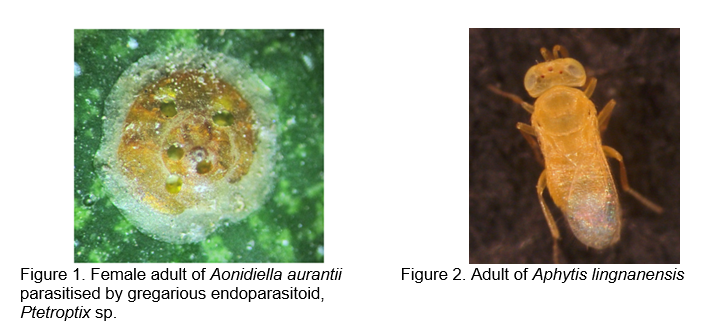
Similar to mealybugs, armoured scale insects, (Hemiptera: Diaspididae), are common and important pests in association with many agricultural crops and ornamental plants. In Viet Nam, 63 Diaspidid species have been recorded (Morales et al., 2016). Recent studies indicate that wide range of parasitoids of armoured scales [Hemiptera: Coccomorpha: Diaspididae] occur in citrus orchards in Viet Nam. Most commonly recorded primary parasitoids are species of Aphytis, Encarsia and Pteroptrix [Hymenoptera: Aphelinidae] and Comperiella [Hymenoptera: Encyrtidae] (Figs 1 & 2). Levels of parasitism are relatively high in the home gardens and abandon orchards where no chemical pesticides are applied (Dao Thi Hang et al. unpublished data). The field survey showed that the level of parasitism on false scale, Aspidiotus rigidus, was 46% by Aphytis sp., 54% by Comperiella calauanica, and 47% by Pteroptrix parvipennis (Dao et al. 2020) (Table 1).
PREDATORS
Common predators associated with insect pests are coccinellid beetles, lacewings, hover flies, predatory stink bugs, spiders, predatory mites, and the weaver ant. Predators belonging to various insect orders including Hemiptera, Neuroptera, Coleoptera, Diptera and Lepidoptera, play an important role in suppressing the pest population under control in various crop ecosystems. Pham (2011) reported 230 predacious insects and spiders on rice paddy in Viet Nam and highlighted that the natural predators are able to keep the pest population under the economic threshold. Many coccinellid [Coleoptera: Coccinellidae] beetles are highly effective biological control agents. Common predatory coccinellid species in Viet Nam are Menochilus sexmaculatus Fabricius, Micraspis discolour (Fabricius), Henosepilachna vigintioctopunctata (Fabricius) and Coccinella transversalis Fabricius (Pham Van Lam, 1994, 2004, Nguyen Thi Viet et al. 2014; Nguyen Thi Thanh & Nguyen Thi Huyen, 2014; Truong Xuan Lam et al. 2014). Most studies have been focused on the insect fauna, biology and behaviour, and rearing diets (Pham Van Lam, 1994; 2004; Nguyen Van Cuong, 2012).
The coccinellid beetle, Scymnus bipunctatus, has been recorded as a key natural enemy of mealybugs on many crops in Viet Nam (Nguyen Thi Nga et al., 2006; Nguyen Trong Nham and Nguyen Thi Thu Cuc, 2009; Luong Thi Duyen et al., 2019). In 2022, PPRI has implemented a research activity to develop the rearing and release protocols for the control of mealybugs on some fruit trees. Following the release of S. bipunctatus, the mealybug population and its damage significantly declined. After the three releases, the mealybug population in the treatment block was 3.2-5 times lower than in the check block. The results of the studies suggested that S. bipunctatus is highly potential biological control agent of mealybugs in Viet Nam.
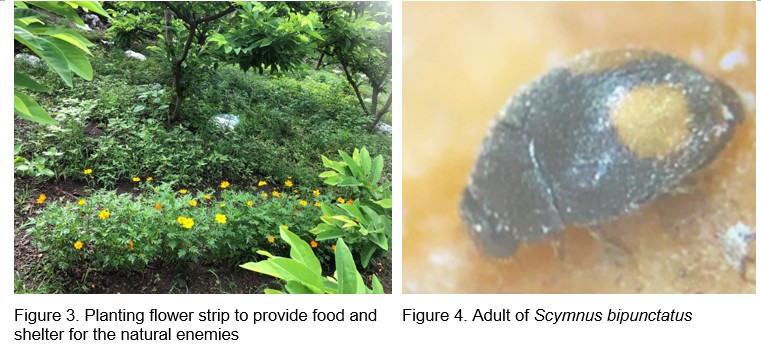
In Vietnam, predatory mites associated with greenhouse insect pests has also received great attention. These studies have been focused on the species of Amblyseius spp. in association with thrips, spider mites and whiteflies (Nguyen Van Dinh et al., 2006; Tran Xuan Dung, 2003; Nguyen Tuan Loc and Nguyen Van Dinh, 2007; Pham Thi Hieu et al., 2013, 2015). The recent studies from 2019 to 2022 reported 15 predator species and two parasitic fungi of thrips pests on citrus and mango plantations in Viet Nam (Nguyen Thi Hoa et al., 2023). The commonly found natural enemies of thrips are predatory bugs (Orius sauteri and Deraeocoris nebulosus), predatory mites (Amblyseius largoensis, Euseius nicholsi, N. californicus), green lacewings larvae.
Orius sauteri is a common natural enemy on many different agricultural crops in Vietnam (Vu Quang Con, Truong Xuan Lam, 2002; Tran Dinh Chien et al., 2008). Research by the Institute of Plant Protection shows that the predatory bug O. sauteri is an important predatory enemy of thrips on citrus fruits, vegetables, cucumbers, chili peppers, etc. Mass rearing of O. sauteri was implemented using rice moth (Corcyra cephaỉonica) egg. At the same time, it was determined that releasing 5 O. sauteri bugs/m2 was effective to control thrips on cucumbers in greenhouses, 70% effectiveness (Nguyen Thi Hoa et al., 2023). The field trials were conducted to evaluate the combination of Orius and Amblyseius as the natural enemies to control thrips and mites on cucumber in the greenhouse. The one release of Amblyseius and three releases of Orius resulted in average efficacy of 78.29% against thrips.
ENTOMOPATHOGENIC NEMATODES
Entomopathogenic nematodes (EPNs) are obligate parasites of insects and are used for biological control of many insect pests (Shapiro-Ilan et al., 2022). The two major genera are Heterorhabditis (Rhabditida: Heterorhabditidae) and Steinernema (Rhabditida: Steinernemadidae) with 121 species described to date (Bhat et al., 2020). The species have symbiotic associations with pathogenic bacteria with species of Heterorhabditis associated with species of Photorhabdus (Enterobacterales: Morganellaceae) and species of Steinernema with species of Xenorhabdus (Morganellaceae) (Poinar, 1990). Virulence depends on the species and strain of the nematodes and the symbiotic bacteria they contain (Sharmila et al., 2018).
In attempt to diversify the biological control agents, PPRI has conducted studies to explore the potential application of EPNs in the biological control strategies. With more than 100 soil sampled have been collected from various geographical regions in Viet Nam in the last few years, 25 EPN isolates of 5 species have been recorded, including Heterorhabditis indica, Oscheius myriophilus, Steinernema eapokense, Steinernema huense and Steinernema pakistanense. The studies have been conducted to understand the effects of temperature and humidity on the pathogenicity and survival, and to evaluate the virulence of the local EPNs against target inset pests. Table 2 refers to the LC50 and LT 50 values of some EPN strains against Galleria mellonella, Phyllotreta striolata, and Halyomorpha halys. The In vivo and In Vitro (solid culture) production procedures of EPNs have been intensively studied in PPRI and currently used for the control of Phyllotreta striolata on cruciferous vegetables.
Table 2. Lethal time (LT50) and concentration (LC50) of native strains of EPNs against some key insect pests
|
EPN species
|
Target pest/stage
|
LC50
|
LT50
|
|
Galleria mellonella
|
|
Heterorhabditis indica
|
Larva
|
4
|
|
|
Steinernema huense
|
Larva
|
7
|
|
|
Phyllotreta striolata
|
|
Heterorhabditis indica
|
Larva
|
36
|
|
|
Steinernema huense
|
Larva
|
61
|
|
|
Halyomorpha halys
|
|
Heterorhabditis indica
|
Nymph
|
248
|
6.195
|
|
Adult
|
46
|
2.975
|
|
Oscheius myriophilus
|
Nymph
|
247
|
5.45
|
|
Adult
|
122
|
5.606
|
|
Steinernema eapokense
|
Nymph
|
167
|
6.645
|
|
Adult
|
|
|
|
Steinernema pakistanense
|
Nymph
|
118
|
2.955
|
|
Adult
|
49
|
3.362
|
MICROBIAL BIOPESTICIDES
Entomopathogens used for biological control in Viet Nam include fungi, bacteria, viruses and nematodes. The entomopathogens can be naturally occurring or applied as microbial pesticides. A number of entomopathogenic fungi have been recorded on various insects (Pham Van Lam, 1994; Pham Thi Thuy 2005; Nguyen Xuan Niem et al. 2005; Pham Thi Thuy & Phan Due Thanh 2015). A total of more than 130 isolates, 25 sets bio-agents are being exploited for further studies on development of bio-pesticides. Protocols for production of bio-pesticides have been studied and developed (with 25 protocols related to production and 27 technical procedures of utilization of bio-pesticides, and 23 bio-products have been developed successfully by PPRI) (Nguyen Van Liem, pers. comm). The most commonly used entomopathogenic fungi are Metarhizium anisopliae (Metchnikoff) Sorokin and Beauveria bassiana (Bals.-Criv.) Vuill. [Hypocreales: Clavicipitaceae] that have been mass produced by Biological Control Centre, PPRI and applied to control wide range of target pests. Earlier study was conducted by Forestry University to control pine caterpillar, Dendrolimus punctatus Walker [Lepidoptera: Lasiocampidae] and by PPRI to control brown planthopper (Nilaparvata lugens (Stål) [Hemiptera: Delphacidae)] on rice, coconut hispine beetle, grasshopper, cotton looper, scale insects....using some strains of Metarhizium anisopliae and Beauveria bassiana.
Bacillus thuringiensis Berliner [Bacillales: Bacillaceae] is widely regarded as microbial pesticides of various target pests worldwide. In Viet Nam, long term studies on Bacillus thuringiensis have been conducted since early 1970s, with significant achievements. Nguyen Van Cam et al. (1996) recorded five entomogenous viruses on lepidopterous insect pests, including four Nuclear polyhedrosis-NPV, and one granular virus. Trichoderma spp. has gained significant attention in the field of agriculture due to its potential as a biological control agent against various phytopathogens. Its effectiveness lies not only in its direct antagonistic action against pathogens, but also in its ability to trigger various regulatory mechanisms in plants, leading to enhanced disease resistance.
CONCLUSION
The recent research summary indicated the significant achievement in biological control of PPRI in the recent years. Biological control in Viet Nam has received great attention by the government due to the raising of chemical pesticide concerns in the recent years. The non-chemical plant protection solutions are among the priorities of the Government. Additionally, the high biodiversity offers great advantages in the natural enemy community. The positive foundation and the resources are the driving force for the future development of biological control. With the high demand of its products, advanced technologies are required for ensure the effectiveness and better utilisation of the biological control techniques and resources. Study and recommendation to develop sustainable agriculture, reduce pest damages, contributing to enhance productivity, quality and ensuring food safety, food security, and environmental protection are of high priority. Although research and application of bio-control in agriculture in Viet Nam have been intensified and have gained encouraging achievements but need more improvement and up-scale.
REFERENCES
Colmenarez, Yelitza & Corniani, Natália & Jahnke, Simone & Sampaio, Marcus & Vásquez, Carlos. (2018). Use of Parasitoids as a Biocontrol Agent in the Neotropical Region: Challenges and Potential. 10.5772/intechopen.80720.
Dao Thi HT, Nguyen HT, Beattie GAC, Holford P, Trinh PQ, Bui PT, Tran HTT, Nguyen VD, Le HN, Phung HS. 2024. Efficacy of entomopathogenic nematodes present in Việt Nam against brown marmorated stink bug (Halyomorpha halys) under laboratory conditions. Helminthologia. Dec 12;61(3):263-271.
García Morales M, Denno BD, Miller DR, Miller GL, Ben-Dov Y, Hardy NB. 2016. ScaleNet: A literature-based model of scale insect biology and systematics. Database. doi: 10.1093/database/bav118. http://scalenet.info [April 12, 2026].
Hang Thi Dao, George Andrew Charles Beattie, Gillian W. Watson, Jason Mottern, Greg Evans, Liem Van Nguyen, Hoa Thi Nguyen, Viet Duc Nguyen, Paul Holford. 2020. Discovery of false coconut scale (Aspidiotus rigidus) and three of its primary parasitoids in Việt Nam, and likely species origins. Journal of Asia-Pacific Entomology, 23 (2): 395-403.
Knutson A (2005) 'The Trichogramma Manual: A guide to the use of Trichogramma for Biological Control with Special Reference to Augmentative Releases for Control of Bollworm and Budworm in Cotton.' (Texas Agricultural Extension Service).
Le Thi Tuyet Nhung, Kris Wyckhuys. 2014. Insights into mealybug-parasitoid food webs in Vietnamese cassava field affected by Phenacoccus manihoti Matile-Ferrero (Hemiptera:Pseudococcidae). ESA Annual Meeting, 16–19 November 2014.
Miller, Gary & Miller, Douglass & Watson, Gillian. (2002). Mealybug invasions, a threat to plants everywhere.. Bollettino di Zoologia agraria e Bachicoltura. 33. 507.
Ngo Tien Dung, Nguyen Van Son, Pham Van Lam, Le Tien Binh. 2015. Evaluation of using Diadegma semiclausum on controlling Plutella xylostella damages on cruciferous crops in da Lat, Lam Dong province. Proceedings of the Plant Protection conference. Ho Chi Minh Agricultural Publishing House (In Vietnamese).
Nguyen Nguyen Cu. 2024. Green Agricultural Growth in Vietnam: Present Situation and Recommendations. Số 13 - Tháng 9.2024 - Tạp chí KH&CN Trường Đại học Hòa Bình
Nguyen Thi Thanh & Nguyen Thi Huyen. 2014. Composition pests and predators on Cruciferea vegetable fields in Nam Dan district, Nghe An province, 2013. Proceedings of the 8th Vietnam National Conference on Entomology, Ha Noi April 10–11, 2014.pp 590–596 (in Vietnamese).
Nguyễn Thị Thủy, Phạm Văn Sơn, Phạm Duy Trọng Nguyễn Thị Mai Lƣơng, Hà Thị Kim Thoa, Đào Hải Long. 2019. Some Preliminary Results on Parasitic Capacity of Anagyrus lopezi De Santis (Hymenoptera: Encyrtidae) to Cassava Pink Mealybug. Journal of Plant Protection 5: 21-26.
Noyes JS, Hayat M. 1994. “Oriental Mealybug Parasitoids of the Anagyrini (Hymenoptera: Encyrtidae).” CAB International, Wallingford, Oxon, UK.
Pham Thi Thuy & Ngo Tu Thanh. 2005. Biology and effectiveness of Metarhizium flavovirid. Proceedings of the 2nd Plant Protection conference, Ha Noi 2005. pp 190–198.
Pham Van Lam 1995. Biological control of Agricultural Pests. Agricultural Publishing House. Ha Noi, Viet Nam (in Vietnamese).
Pham Van Lam. 1996. Contributions to the study of fauna of Hymenopterous parasitoids in Vietnam. Proceedings of Biological control method in Crop protection, centre for Biological Control, PPRI:95–103 (in Vietnamese)
Truong Xuan Lam, Nguyen Thi Tu Anh, Nguyen Quang Cuong, Nguyen Thi Hanh, Nguyen Thi Thuy, Nguyen Huy Trong. 2014. Study on composition of insect pests and their natural enemies on cruciferae inside and outside the greenhouse at some locations in Ha Noi. Proceedings of the 8th Vietnam National Conference on Entomology, Ha Noi April 10–11, 2014.pp 83–93 (in Vietnamese).
Van Mele P, Vayssiéres J-F, Adandonon A, Sinzogan A. 2009. Ant cues affect the oviposition behaviour of fruit flies (Diptera: Tephritidae) in Africa. Physiological Entomology 34: 256–261.
Van Mele P. 2000. Evaluating farmers’ knowledge, and perceptions and practices: a case study of pest management by fruit farmers in the Mekong Delta, Vietnam. Doctoral thesis, Wagenigen University, The Netherlands. 240 pp.
Zhang ZB, Gao SD, Zhou M, Li GH. 2010. Effects of Oecophylla smaragdina on the insect pests of grapefruit at flowering stage. Chinese Journal of Ecology 19: 329–332.

Summary of Recent Research on Biological Control in Plant Protection Research Institute
DOI: https://doi.org/10.56669/ONWU4374
This manuscript was originally presented at the ACRI, ATRI, WorldVeg, and FFTC workshop titled “Pest and Disease Management Strategies for Sustainable Agriculture,” held in Taichung, Taiwan, on May 5–6, 2026.
ABSTRACT
Biological control is increasingly important in integrated pest management systems. It provides non-chemical and environmentally friendly means for the control of target pests through use natural enemies. In Viet Nam, the studies on biological control commenced in the early 1970s. Recently, the government initiatives promoting sustainable agriculture and reducing chemical pesticide risks are driving the adoption of biocontrol solutions. It requires intensive studies to explore the biological control approaches and to enhance its utilisattion in pest management of the economically important crops. This paper provides the summary of recent research and application of biological control of some key insect pests and mites in Plant Protection Research Institute, the leading national plant protection research institution in Viet Nam. Viet Nam is known as one of the most biodiverse countries in the world, comprising the rich ecosystems. The biodiversity provides the great advantages for the conservation biological control approach. The study on the armoured scale insects and their natural enemies indicated that most commonly recorded primary parasitoids are species of Aphytis, Encarsia and Pteroptrix and Comperiella. The field survey showed that the level of parasitism on false scale, Aspidiotus rigidus, was 46% by Aphytis sp., 54% by Comperiella calauanica, and 47% by Pteroptrix parvipennis. The augmentative biological control is a key component of the integrated pest management. The mass rearing of beneficial organisms, including predators, parasitoids, and entomopathogens, has been extensively studied and applied in PPRI. The most extensively studied parasitoids in Viet Nam are species of Trichogramma for the control of rice, corn, cotton and sugarcane insect pests. Recently, the mass rearing and release of mealybug parasitoids (Leptomastrix dactylopii, Anagyrus lopezi) and coconut hispine beetle were successfully implemented and adopted. A number of predators have been mass produced and applied for the biological control, including predatory mites, predatory bugs, coccinellid beetles,….for the control of wide range of insect pests and mites. Entomopathogens used for biological control in Viet Nam include fungi, bacteria, viruses and nematodes. The most commonly used entomopathogenic fungi are Metarhizium anisopliae and Beauveria bassiana that have been mass produced by Biological Control Centre, PPRI and applied to control wide range of target pests. Entomopathogenic nematodes are obligate parasites of insects and are effective biological control agent of many insect pests. The great efforts have been made to develop and utilise this highly potential biocontrol agent for crop protection.
INTRODUCTION
Biological control is considered as an important component of Integrated pest management worldwide (Colmenarez et al. 2018). It provides non-chemical and environmentally friendly means for the control of target pests through use natural enemies, such as predators, parasites, and beneficial microorganisms. The application of the biological control reduces the environmental impact as well as minimizes the risk of pesticide resistance, and sustainably improves the biodiversity.
In general, biological control comprises three approaches: importation (also referred to as classical biological control), augmentation and conservation of natural enemies. Practically, depending to the circumstance, these approaches are adopted individually or in combination.
Viet Nam is known as one of the most biodiverse countries in the world, comprising the rich ecosystems. The biodiversity provides the great advantages for the conservation biological control approach. Biological control studies commenced in Viet Nam in the early 1970s. These studies focused on surveys of natural enemies of insect pests in agricultural crops. On rice, Luong Minh Khoi et al. (1976) recorded 45 primary parasitoid species and 14 secondary parasitoid species of 12 rice insect pests. Among them were 12 parasitoids of rice leafroller (Cnaphalocrocis medinalis (Guenée) [Lepidoptera: Crambidae] and seven primary parasitoids of the rice plant skipper (Parnara guttata Bremer et Grey) [Lepidoptera: Hesperiidae]. More than 100 predators and parasitoids occur in cotton fields (Pham Van Lam et al. 1993). Pham Van Lam (2011) listed 454 natural enemy species collected and identified during the perios from 1981 to 2002. These species belong to Hymenoptera (225 species); Coleoptera (78 species); Araneae (59 species); Hemiptera (32 species); Diptera (27 species).
Viet Nam agriculture is transforming towards green and sustainable production. ‘Green’ agriculture is an approach and method in the field of agriculture aimed at ensuring sustainable development, protecting the environment and enhancing human health. It requires the balance between agricultural production development and the protection of natural resources. The green agriculture focuses on the application and adoption of smart farming practices, including the use of organic fertilizers and biological control, reducing the use of chemical pesticides, etc (Nguyen, 2024). There are national initiatives promoting the sustainable agriculture and adoption of biocontrol solutions such as the Integrated Plant Health Management Program, Production and Use of Biopesticides scheme.
In order to align with the agricultural industry priorities, Plant Protection Research Institute (hereafter referred as PPRI), has focused on the promotion of research and development of biological pest control solutions. The recent studies on biological control have been conducted to (1) explore the natural enemies in association with the major target pests; (2) identify the role of natural enemies in the suppression of insect pest populations; (3) recommend the possible practices to reducing the negative impacts on the natural enemies or providing favourable resources for natural enemies; (4) produce and release of natural enemies for control of insect pests. This paper highlights the recent research and application of biological control of some key insect pests and mites in PPRI.
Table 1. Biological Control Agents: recently studied and applied for biological pest control in PPRI
Natural enemies
Target pests
References
Parasitoids
Trichogramma spp.
Many species
Leptomastrix dactylopii Howard
Mealybugs
Dao et al. 2023
Apoanagyrus lopezi De Santis
Phenacoccus manihoti Matile-Ferrero
Nguyen et al. 2019
Anagyrus jennifeae Noyes & Hayat
Mealybugs
Dao et al. 2023
Anagyrus mangicola Noyes
Rastrococcus invadens
Dao et al. 2023
Asecodes hispinarum Boucek
Brontispa longissima (Gestro)
PPRI 2018
Telenomus remus (Nixon)
Spodoptera frugiperda J.E.Smith
Dao et al. 2024
Pteroptrix parvipennis (Gahan)
Aspidiotus rigidus Reyne
Dao et al. 2020
Aphytis sp.
Aspidiotus rigidus Reyne
Dao et al. 2020
Comperiella calauanica Barrion, Almarinez & Amalin
Aspidiotus rigidus Reyne
Dao et al. 2020
Predator
Scymnus bipunctatus Kugelann
Mealybugs
Dao et al. 2023
Amblyseius spp.
Thrips, whiteflies, spider mites
Nguyen et al. 2022
Neoseiulus longispinosus Evans
spider mites
Nhung et al. 2023
Orius spp
Thrips, whiteflies,
Nguyen et al. 2022
Euborellia annulipes
Lai Tien Dung unpibish data
Entomopathogenic nematodes
Heterorhabditis indica
Many species
Dao et al. 2024
Steinernema eapokense
Many species
Dao et al. 2024
Steinernema pakistanense
Many species
Dao et al. 2024
Steinernema huense
Many species
Dao et al. 2024
Beneficial microorganism
Metarizhium anisopliae
Many species
Pham 1994
Beauveria bassiana
Many species
Pham 1994
Trichoderma spp.
PARASITOIDS
Parasitoids, an organism that lives on or in a host and ultimately kills the host, are considered as highly effective biological control agents of important agricultural insect pests. Most parasitic insects belong to the order Hymenoptera, with some belonging to the order Diptera, and very few to the orders Coleoptera and Lepidoptera. In Viet Nam, from 1981 to 1995, a total of 176 Hymenopterous parasitoid species was collected and identify (Pham Van Lam. 1996). The species of Trichogramma are minute waps that primarily parasite eggs of Lepidopterous species (Knutson, 2005). The most extensively studied parasitoids in Viet Nam are species of Trichogramma [Hymenoptera: Trichogrammatidae] (NIPP 1977, Pham Van Lam, 1995, Truong Xuan Lam, 2013). Three species of Trichogramma (T. chilonis, T. japonicum and T. dendrolimi) have been mass reared and released for biocontrol of insect pests on rice, corn, sugarcane, etc (Pham Van Lam, pers. comm).
Mealybug species (Hemiptera: Pseudococcidae) are key pests causing the significant losses in crops and ornamental plants. Many mealybug species are considered as invasion risks for the international trade of agricultural commodity (Miller et al. 2002). Population outbreaks are frequent when mealybugs are introduced into new areas without their specific natural enemies and therefore classical biological control programmes have been widely used for their management (Moore, 1988). Although, wide range of natural enemies have been recorded, parasitoids have been the most successful biological control agents of mealybugs (Moore, 1988). Mealybugs are common and important pests on various agricultural crops and ornamental plant in Viet Nam. According to the ScaleNet, 45 pseudococcid species have been recorded in Viet Nam (Morales et al., 2016).
Cassava mealybug, Phenacoccus manihoti Matile-Ferrero [Hemiptera: Pseudococcidae], one of the most serious pests on cassava worldwide, was first recorded in Viet Nam in 2012 (Parsa et al., 2012). For long term management of the invasive mealybug species, its parasitoid, Apoanagyrus lopezi De Santis [Hymenoptera: Encyrtidae] has been introduced to some Southeast Asian countries, including Viet Nam. After being introduced, the attempts have been made to adopt and transferred it to farmers and technical workers. A procedure for mass-producing A. lopezi wasps using hydroponic cassava cultivation has been developed and successfully adopted because of its practicability, simplicity and economy.
Leptomastix dactylopii Howard (Hymenoptera: Encyrtidae), primary solitary endoparasitoid, is a beneficial organism providing the significant role in biological control of mealybug in Florida and other locations (Al-Shami and Qureshi., 2024). It has been recorded to parasitise 20 species of mealybugs (Hemiptera: Pseudococcidae) (Noyes and Hayat 1994). The parasitoid is native to South America, introduced to Canada, USA, Caribbean, Mediterranean Europe, Africa, Australia, Hawaii, and the Indian subcontinent, and recently has been recorded to be naturally occurred in Central Highlands in Viet Nam (Dao et al., 2023). In order to target the sustainable and environmentally friendly approach to control mealybugs in Viet Nam, studies have been conducted to evaluate and optimise the L. dactylopii mass rearing and release protocols. In the custard apple and orange demonstration pilots with the release of L. dactylopii, the mealybug infestation significantly reduced. The protocols have been successfully adopted and transferred to production.
Similar to mealybugs, armoured scale insects, (Hemiptera: Diaspididae), are common and important pests in association with many agricultural crops and ornamental plants. In Viet Nam, 63 Diaspidid species have been recorded (Morales et al., 2016). Recent studies indicate that wide range of parasitoids of armoured scales [Hemiptera: Coccomorpha: Diaspididae] occur in citrus orchards in Viet Nam. Most commonly recorded primary parasitoids are species of Aphytis, Encarsia and Pteroptrix [Hymenoptera: Aphelinidae] and Comperiella [Hymenoptera: Encyrtidae] (Figs 1 & 2). Levels of parasitism are relatively high in the home gardens and abandon orchards where no chemical pesticides are applied (Dao Thi Hang et al. unpublished data). The field survey showed that the level of parasitism on false scale, Aspidiotus rigidus, was 46% by Aphytis sp., 54% by Comperiella calauanica, and 47% by Pteroptrix parvipennis (Dao et al. 2020) (Table 1).
PREDATORS
Common predators associated with insect pests are coccinellid beetles, lacewings, hover flies, predatory stink bugs, spiders, predatory mites, and the weaver ant. Predators belonging to various insect orders including Hemiptera, Neuroptera, Coleoptera, Diptera and Lepidoptera, play an important role in suppressing the pest population under control in various crop ecosystems. Pham (2011) reported 230 predacious insects and spiders on rice paddy in Viet Nam and highlighted that the natural predators are able to keep the pest population under the economic threshold. Many coccinellid [Coleoptera: Coccinellidae] beetles are highly effective biological control agents. Common predatory coccinellid species in Viet Nam are Menochilus sexmaculatus Fabricius, Micraspis discolour (Fabricius), Henosepilachna vigintioctopunctata (Fabricius) and Coccinella transversalis Fabricius (Pham Van Lam, 1994, 2004, Nguyen Thi Viet et al. 2014; Nguyen Thi Thanh & Nguyen Thi Huyen, 2014; Truong Xuan Lam et al. 2014). Most studies have been focused on the insect fauna, biology and behaviour, and rearing diets (Pham Van Lam, 1994; 2004; Nguyen Van Cuong, 2012).
The coccinellid beetle, Scymnus bipunctatus, has been recorded as a key natural enemy of mealybugs on many crops in Viet Nam (Nguyen Thi Nga et al., 2006; Nguyen Trong Nham and Nguyen Thi Thu Cuc, 2009; Luong Thi Duyen et al., 2019). In 2022, PPRI has implemented a research activity to develop the rearing and release protocols for the control of mealybugs on some fruit trees. Following the release of S. bipunctatus, the mealybug population and its damage significantly declined. After the three releases, the mealybug population in the treatment block was 3.2-5 times lower than in the check block. The results of the studies suggested that S. bipunctatus is highly potential biological control agent of mealybugs in Viet Nam.

In Vietnam, predatory mites associated with greenhouse insect pests has also received great attention. These studies have been focused on the species of Amblyseius spp. in association with thrips, spider mites and whiteflies (Nguyen Van Dinh et al., 2006; Tran Xuan Dung, 2003; Nguyen Tuan Loc and Nguyen Van Dinh, 2007; Pham Thi Hieu et al., 2013, 2015). The recent studies from 2019 to 2022 reported 15 predator species and two parasitic fungi of thrips pests on citrus and mango plantations in Viet Nam (Nguyen Thi Hoa et al., 2023). The commonly found natural enemies of thrips are predatory bugs (Orius sauteri and Deraeocoris nebulosus), predatory mites (Amblyseius largoensis, Euseius nicholsi, N. californicus), green lacewings larvae.
Orius sauteri is a common natural enemy on many different agricultural crops in Vietnam (Vu Quang Con, Truong Xuan Lam, 2002; Tran Dinh Chien et al., 2008). Research by the Institute of Plant Protection shows that the predatory bug O. sauteri is an important predatory enemy of thrips on citrus fruits, vegetables, cucumbers, chili peppers, etc. Mass rearing of O. sauteri was implemented using rice moth (Corcyra cephaỉonica) egg. At the same time, it was determined that releasing 5 O. sauteri bugs/m2 was effective to control thrips on cucumbers in greenhouses, 70% effectiveness (Nguyen Thi Hoa et al., 2023). The field trials were conducted to evaluate the combination of Orius and Amblyseius as the natural enemies to control thrips and mites on cucumber in the greenhouse. The one release of Amblyseius and three releases of Orius resulted in average efficacy of 78.29% against thrips.
ENTOMOPATHOGENIC NEMATODES
Entomopathogenic nematodes (EPNs) are obligate parasites of insects and are used for biological control of many insect pests (Shapiro-Ilan et al., 2022). The two major genera are Heterorhabditis (Rhabditida: Heterorhabditidae) and Steinernema (Rhabditida: Steinernemadidae) with 121 species described to date (Bhat et al., 2020). The species have symbiotic associations with pathogenic bacteria with species of Heterorhabditis associated with species of Photorhabdus (Enterobacterales: Morganellaceae) and species of Steinernema with species of Xenorhabdus (Morganellaceae) (Poinar, 1990). Virulence depends on the species and strain of the nematodes and the symbiotic bacteria they contain (Sharmila et al., 2018).
In attempt to diversify the biological control agents, PPRI has conducted studies to explore the potential application of EPNs in the biological control strategies. With more than 100 soil sampled have been collected from various geographical regions in Viet Nam in the last few years, 25 EPN isolates of 5 species have been recorded, including Heterorhabditis indica, Oscheius myriophilus, Steinernema eapokense, Steinernema huense and Steinernema pakistanense. The studies have been conducted to understand the effects of temperature and humidity on the pathogenicity and survival, and to evaluate the virulence of the local EPNs against target inset pests. Table 2 refers to the LC50 and LT 50 values of some EPN strains against Galleria mellonella, Phyllotreta striolata, and Halyomorpha halys. The In vivo and In Vitro (solid culture) production procedures of EPNs have been intensively studied in PPRI and currently used for the control of Phyllotreta striolata on cruciferous vegetables.
Table 2. Lethal time (LT50) and concentration (LC50) of native strains of EPNs against some key insect pests
EPN species
Target pest/stage
LC50
LT50
Galleria mellonella
Heterorhabditis indica
Larva
4
Steinernema huense
Larva
7
Phyllotreta striolata
Heterorhabditis indica
Larva
36
Steinernema huense
Larva
61
Halyomorpha halys
Heterorhabditis indica
Nymph
248
6.195
Adult
46
2.975
Oscheius myriophilus
Nymph
247
5.45
Adult
122
5.606
Steinernema eapokense
Nymph
167
6.645
Adult
Steinernema pakistanense
Nymph
118
2.955
Adult
49
3.362
MICROBIAL BIOPESTICIDES
Entomopathogens used for biological control in Viet Nam include fungi, bacteria, viruses and nematodes. The entomopathogens can be naturally occurring or applied as microbial pesticides. A number of entomopathogenic fungi have been recorded on various insects (Pham Van Lam, 1994; Pham Thi Thuy 2005; Nguyen Xuan Niem et al. 2005; Pham Thi Thuy & Phan Due Thanh 2015). A total of more than 130 isolates, 25 sets bio-agents are being exploited for further studies on development of bio-pesticides. Protocols for production of bio-pesticides have been studied and developed (with 25 protocols related to production and 27 technical procedures of utilization of bio-pesticides, and 23 bio-products have been developed successfully by PPRI) (Nguyen Van Liem, pers. comm). The most commonly used entomopathogenic fungi are Metarhizium anisopliae (Metchnikoff) Sorokin and Beauveria bassiana (Bals.-Criv.) Vuill. [Hypocreales: Clavicipitaceae] that have been mass produced by Biological Control Centre, PPRI and applied to control wide range of target pests. Earlier study was conducted by Forestry University to control pine caterpillar, Dendrolimus punctatus Walker [Lepidoptera: Lasiocampidae] and by PPRI to control brown planthopper (Nilaparvata lugens (Stål) [Hemiptera: Delphacidae)] on rice, coconut hispine beetle, grasshopper, cotton looper, scale insects....using some strains of Metarhizium anisopliae and Beauveria bassiana.
Bacillus thuringiensis Berliner [Bacillales: Bacillaceae] is widely regarded as microbial pesticides of various target pests worldwide. In Viet Nam, long term studies on Bacillus thuringiensis have been conducted since early 1970s, with significant achievements. Nguyen Van Cam et al. (1996) recorded five entomogenous viruses on lepidopterous insect pests, including four Nuclear polyhedrosis-NPV, and one granular virus. Trichoderma spp. has gained significant attention in the field of agriculture due to its potential as a biological control agent against various phytopathogens. Its effectiveness lies not only in its direct antagonistic action against pathogens, but also in its ability to trigger various regulatory mechanisms in plants, leading to enhanced disease resistance.
CONCLUSION
The recent research summary indicated the significant achievement in biological control of PPRI in the recent years. Biological control in Viet Nam has received great attention by the government due to the raising of chemical pesticide concerns in the recent years. The non-chemical plant protection solutions are among the priorities of the Government. Additionally, the high biodiversity offers great advantages in the natural enemy community. The positive foundation and the resources are the driving force for the future development of biological control. With the high demand of its products, advanced technologies are required for ensure the effectiveness and better utilisation of the biological control techniques and resources. Study and recommendation to develop sustainable agriculture, reduce pest damages, contributing to enhance productivity, quality and ensuring food safety, food security, and environmental protection are of high priority. Although research and application of bio-control in agriculture in Viet Nam have been intensified and have gained encouraging achievements but need more improvement and up-scale.
REFERENCES
Colmenarez, Yelitza & Corniani, Natália & Jahnke, Simone & Sampaio, Marcus & Vásquez, Carlos. (2018). Use of Parasitoids as a Biocontrol Agent in the Neotropical Region: Challenges and Potential. 10.5772/intechopen.80720.
Dao Thi HT, Nguyen HT, Beattie GAC, Holford P, Trinh PQ, Bui PT, Tran HTT, Nguyen VD, Le HN, Phung HS. 2024. Efficacy of entomopathogenic nematodes present in Việt Nam against brown marmorated stink bug (Halyomorpha halys) under laboratory conditions. Helminthologia. Dec 12;61(3):263-271.
García Morales M, Denno BD, Miller DR, Miller GL, Ben-Dov Y, Hardy NB. 2016. ScaleNet: A literature-based model of scale insect biology and systematics. Database. doi: 10.1093/database/bav118. http://scalenet.info [April 12, 2026].
Hang Thi Dao, George Andrew Charles Beattie, Gillian W. Watson, Jason Mottern, Greg Evans, Liem Van Nguyen, Hoa Thi Nguyen, Viet Duc Nguyen, Paul Holford. 2020. Discovery of false coconut scale (Aspidiotus rigidus) and three of its primary parasitoids in Việt Nam, and likely species origins. Journal of Asia-Pacific Entomology, 23 (2): 395-403.
Knutson A (2005) 'The Trichogramma Manual: A guide to the use of Trichogramma for Biological Control with Special Reference to Augmentative Releases for Control of Bollworm and Budworm in Cotton.' (Texas Agricultural Extension Service).
Le Thi Tuyet Nhung, Kris Wyckhuys. 2014. Insights into mealybug-parasitoid food webs in Vietnamese cassava field affected by Phenacoccus manihoti Matile-Ferrero (Hemiptera:Pseudococcidae). ESA Annual Meeting, 16–19 November 2014.
Miller, Gary & Miller, Douglass & Watson, Gillian. (2002). Mealybug invasions, a threat to plants everywhere.. Bollettino di Zoologia agraria e Bachicoltura. 33. 507.
Ngo Tien Dung, Nguyen Van Son, Pham Van Lam, Le Tien Binh. 2015. Evaluation of using Diadegma semiclausum on controlling Plutella xylostella damages on cruciferous crops in da Lat, Lam Dong province. Proceedings of the Plant Protection conference. Ho Chi Minh Agricultural Publishing House (In Vietnamese).
Nguyen Nguyen Cu. 2024. Green Agricultural Growth in Vietnam: Present Situation and Recommendations. Số 13 - Tháng 9.2024 - Tạp chí KH&CN Trường Đại học Hòa Bình
Nguyen Thi Thanh & Nguyen Thi Huyen. 2014. Composition pests and predators on Cruciferea vegetable fields in Nam Dan district, Nghe An province, 2013. Proceedings of the 8th Vietnam National Conference on Entomology, Ha Noi April 10–11, 2014.pp 590–596 (in Vietnamese).
Nguyễn Thị Thủy, Phạm Văn Sơn, Phạm Duy Trọng Nguyễn Thị Mai Lƣơng, Hà Thị Kim Thoa, Đào Hải Long. 2019. Some Preliminary Results on Parasitic Capacity of Anagyrus lopezi De Santis (Hymenoptera: Encyrtidae) to Cassava Pink Mealybug. Journal of Plant Protection 5: 21-26.
Noyes JS, Hayat M. 1994. “Oriental Mealybug Parasitoids of the Anagyrini (Hymenoptera: Encyrtidae).” CAB International, Wallingford, Oxon, UK.
Pham Thi Thuy & Ngo Tu Thanh. 2005. Biology and effectiveness of Metarhizium flavovirid. Proceedings of the 2nd Plant Protection conference, Ha Noi 2005. pp 190–198.
Pham Van Lam 1995. Biological control of Agricultural Pests. Agricultural Publishing House. Ha Noi, Viet Nam (in Vietnamese).
Pham Van Lam. 1996. Contributions to the study of fauna of Hymenopterous parasitoids in Vietnam. Proceedings of Biological control method in Crop protection, centre for Biological Control, PPRI:95–103 (in Vietnamese)
Truong Xuan Lam, Nguyen Thi Tu Anh, Nguyen Quang Cuong, Nguyen Thi Hanh, Nguyen Thi Thuy, Nguyen Huy Trong. 2014. Study on composition of insect pests and their natural enemies on cruciferae inside and outside the greenhouse at some locations in Ha Noi. Proceedings of the 8th Vietnam National Conference on Entomology, Ha Noi April 10–11, 2014.pp 83–93 (in Vietnamese).
Van Mele P, Vayssiéres J-F, Adandonon A, Sinzogan A. 2009. Ant cues affect the oviposition behaviour of fruit flies (Diptera: Tephritidae) in Africa. Physiological Entomology 34: 256–261.
Van Mele P. 2000. Evaluating farmers’ knowledge, and perceptions and practices: a case study of pest management by fruit farmers in the Mekong Delta, Vietnam. Doctoral thesis, Wagenigen University, The Netherlands. 240 pp.
Zhang ZB, Gao SD, Zhou M, Li GH. 2010. Effects of Oecophylla smaragdina on the insect pests of grapefruit at flowering stage. Chinese Journal of Ecology 19: 329–332.